
As of today, the Nasdaq & the S&P 500 has hit a new high. Recently, the US economy showed that GDP grew 2.1% annually in the second quarter of this year. It means that consumer is still […]


Options Selling
Options Selling Strategy – Wk 3 June 2017 (GameStop Inc (NYSE: GME)
Chris Lee Susanto, Founder and CEO, Re-ThinkWealth
16 June 2017
Many of you in Singapore might have heard of selling options as an income generating strategy. Maybe you have attended an investment course on it or you have read about it somewhere online.
But for the benefit of you who are not familiar with selling options, I will explain it again in this article.
If you would like to find out more about selling options, feel free to email me at Chris@Re-ThinkWealth.Sg.
Options are a form of derivates — financial instruments whose price is derived from other underlying financial instruments — In the case of options, their prices are derived from stocks.
Not all stock market allows options trading. For example, we cannot sell options in Singapore stock market but we can sell options in the United States stock market — which is what I do very often.
We can either buy or we can sell options. For this article, we will be focusing on selling options.
There are two kinds of options — put and call option.
You can either sell covered options or naked options.
I see that Apple Inc (NASDAQ: APPL) is currently selling at 143 USD. I want to buy 100 of the stocks — only if it is below 135 USD.
So what I do is that I sell 1 contract of the put option for the expiry date one month from today at the price of 135 USD. In return, I get 200 USD for doing that.
The danger is that if Apple Inc stocks fall to 100 USD one month from now, I still need to purchase it at 135 USD (that is a 35% immediate unrealized capital loss).
However, since I view anything below 135 USD as undervalued, it is alright for me.
I see that Apple Inc (NASDAQ: APPL) is currently trading at 143 USD. I had already bought 100 the stocks at 135 USD.
So what I do is that I sell 1 call option for the expiry date one month from today at the price of 143 USD. In return, I get 234 USD for doing that.
The danger is that if Apple Inc stocks rise to 171.60 USD one month from now, I still need to sell it at 143 USD (that is a further 20% potential capital gain that I missed out).
However, since I view anything above 143 USD as overvalued, it is alright for me.
While there are many options strategies in the financial world, what have served me well for the last couple of years is the combination of selling put and call options.
This strategy works especially for a value investor.
Because I have never borrowed money to invest (using margin), I have the holding power to take advantage of market opportunities during unexpected times.
In such opportunities, I receive a high amount of income via selling options and at the same time, leveraging on only buying stocks when my valuation says it is undervalued and only selling when it is overvalued.

On 24 March 2017, my put option got exercised and I bought GME at 21.5 USD — I received 0.55% profit in 2 days. It rallied up to about 25 USD and fell back down to about 21.5 USD again as of 15 June 2017. In between, I also received dividends payment of about 1.7% which will be paid 20 June 2017.
It rallied up to about 25 USD and fell back down to about 21.5 USD again as of 15 June 2017. In between, I also received dividends payment of about 1.7% which will be paid 20 June 2017.
After I bought GME, I sold 30 days call option for the strike price of 26 USD — which expired last month for a profit of 0.14%.
On another 4 occasions, I sold puts for GME which ranged from 17 days, 2 days, 1 day and most recently 15 days (not expired yet) — receiving 2.25%, 0.44%, 0.29% and 1.21% in profit.
GME is a cigar butt investing play of mine.
I do not plan on holding GME for the next 10 years.
Simply because the price of GME is too cheap given their fundamentals, I sold put options on it.
If by end of December 2017, my thesis which says that GME could go up to about 25 USD and above proved to be false, I will sell GME — even at a loss.
Disclaimer: The information provided is for general information purposes only and is not intended to be a personalized investment or financial advice.
Important: Please read our full disclaimer.
As of today, the Nasdaq & the S&P 500 has hit a new high. Recently, the US economy showed that GDP grew 2.1% annually in the second quarter of this year. It means that consumer is still […]

Warren Buffett’s definition of intrinsic value is “the discounted value of the cash that can be taken out of a business during its remaining life”. Now take a moment to pause and think about the above definition […]

Warren Buffett’s definition of intrinsic value is “the discounted value of the cash that can be taken out of a business during its remaining life”. Now take a moment to pause and think about the above definition […]

Albert Einstein says that compound interest is the eighth wonder of the world. He who understands it earns it and he doesn’t, pays it. Now, what exactly does Albert means by that? The power of compounding is amazing […]

Just like how companies take on debt from banks and pay interest to them in order to fund their operations, selling U.S. treasury bills/bonds/notes are one way the U.S. government raise funds to finance their […]

Recently, I have come into the trap of being too focused on the short term price movements of stocks. A meaningful change that can occur in a company will not happen fast. It will take the fastest months and likely […]
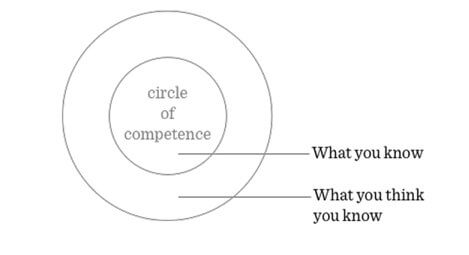
Circle of competence is one of the key concepts that value investors apply to make money from the stock market. Warren Buffett often talks about the circle of competence concept but not many understood it. In this article […]

I have made a lot of mistakes in my life. I have been conned, cheated and have lost money in business deals and investments. Today is my birthday so I thought it would be good to summarize the important lessons I have learned so far about […]

Return on Invested Capital is an important formula we should look at when analyzing stocks. ROIC, in short, focuses on analyzing the profitability of a company. What is the formula for ROIC?
Return on invested capital […]

My take on SIA Retail Bond 2019 where I discussed the pros, cons and overall, my thoughts on it. And whether I would invest in it or not. A few good things to say about it, and some things I thought that people should at least be informed on. Instead of using […]
Want new articles before they get published? Subscribe to our Awesome Community.