
The concept of “Antifragile” is popularized by Nassim Nicholas Taleb in his book that is aptly named “Antifragile”. What is Antifragile? …

Conquering the Inner Market: Psychology for Investing Success
read more
Guest Post: Investing Lessons [Advanced]
Kelvin Seetoh, a full-time investor with a portfolio of listed businesses in the Asia-Pacific and USA region. His preference for businesses is founder-led, low working capital needs, large addressable market and competent management with integrity. He runs a blog at www.Kelvestor.com.
1 June 2018
Editor note: I would like to warmly welcome Kelvin for his first blog post at Re-ThinkWealth blog. He mostly invests in US and HK based stocks but of course, his technique would be applicable to most stocks in any stock market in the world. I like his writing style and our thinking and methodology are similar in many ways, so I am definitely looking forward to more blog posts from him.
With our banks interest rate and Singapore Government bonds yielding less than 3%, there are investors sought out for higher returns in listed businesses offering a higher yield. Using InvestmentMoats’ Dividend Screener tool, you will see a whole lot of companies offering reasonable amount of yield (4-9%). For example, Starhub (telco) has a yield of approx. 7-8%%, while VICOM (car inspection centre) has a yield of approx. 6%. For most retirees, they would love to park their assets into such dividend paying company to yield them a sustainable income stream to support their expenditures. It would be important to know whether the dividends are sustainable. Any retiree who projected their dividend yield to 6% do not want to wake up to a rude shock of a company cutting its dividends, thereby reducing the effective dividend yield to a much lower percentage. Even for my group of investors, most of them would not enjoy seeing a dividend cut or discontinuation of dividends.
A high dividend yield company may have seemed attractive, but we will explore the sustainability of it together. Here are some ways to determine sustainability:
I use this website called Dividends.sg as a quick gauge. Looking at Starhub’s dividends, it had been consistent from 2010 to 2016. However, in 2017, the quarterly dividends were cut from 5 cents to 4 cents – a 20% reduction. We will find out why later.

(screen grab from Dividends.sg on 26 May 2018)
Even for a seeming stable business such as Singpost, the dividends are not stable. You can see its quarterly dividends had been reduced over the years.

(screen grab from Dividends.sg on 26 May 2018)
So, what can we rely on?
First, we must understand that business conditions are dynamic. Occasionally, different cycles will cause earnings to fluctuate up or down and it affects the business’ ability to pay out dividends. As investor, we must never have the expectations for dividends to remain the same forever.
Second, create a buffer for your dividends expectations. If an investor needs 4% dividend yield for his lifestyle, then perhaps, it would be conservative to find companies with at least 6% dividend yield and a reasonable pay-out ratio (below 80%). In tough times, companies may cut their dividends, but you are still fine.
For simplicity, we will use the pay-out ratio to determine the sustainability of it. The pay-out ratio formula is dividends per share divided by earnings per share. We are trying to understand how much portion of the company’s earnings are used to pay dividends.
Using VICOM as an example:
| Year | 2013 | 2014 | 2015 | 2016 | 2017 |
| Dividends Per Share (cents) | 22.5 | 27 | 28.5 | 26.5 | 36 |
| Earnings Per Share (cents) | 32.17 | 34.04 | 35.45 | 31.77 | 29.90 |
| Pay-out Ratio | 69.9% | 79.4% | 80.4% | 83.4% | 120.4% |
You will notice the dividend declared for FY2017 was 120.4% of its earnings per share which may not be sustainable. A historical pay-out ratio of 80% seems more reasonable.
If I am seeking for 5% yield from VICOM, here is how I would compute it. Taking the FY2017 earnings per share of $0.299, multiply it by 80%, the estimated dividends per share is $0.2392. If the required yield is 5%, so we will take $0.2392 dividend by 0.05 or 5%, which gives us the share price of $4.78. But if I am seeking for 4% yield, I will take $0.2392 divide by 0.04 or 4%, which gives us a target share price of $5.98.
An extra note is as of FY2017, VICOM’s balance sheet has a cash per share of $1.21 which allows VICOM continue paying 3 to 4 years of dividends even when there are no revenues. This is a very strong sign of balance sheet strength and dividend paying abilities.
Using Starhub as another example:
| Year | 2013 | 2014 | 2015 | 2016 | 2017 |
| Dividends Per Share (cents) | 20 | 20 | 20 | 20 | 17 |
| Earnings Per Share (cents) | 22.0 | 21.4 | 21.4 | 19.7 | 14.1 |
| Pay-out Ratio | 90.9% | 93.5% | 93.5% | 101.5% | 120.6% |
Since 2013, You could see that Starhub is very close to paying 100% of its earnings out as dividends. It is increasingly being stretched to beyond 100% in both FY2016 and FY2017. In fact, you will see that Starhub has a net debt per share of $0.36 which is not a good sign for a dividend paying company.
Let us assume that $0.16 is the new norm for Starhub’s yearly dividend yield. Taking $0.16 dividend by $2.08 (26 May 2018 price), an investor would get a yield of 7.7%. It is way more than VICOM’s. However, we must be conservative where we question ourselves: is $0.16 dividends sustainable at all? Just imagine if it is being cut down further to $0.12 per year? The new yield would be 5.7% instead.
Let us look at the recent results of both companies:

For Starhub, the net profit after tax dropped by 13%. It will weaken the company’s ability to pay dividends.

For VICOM, nothing fanciful but the profit grew by 2.5%.
Given a choice, I would stick to VICOM business because the business is more stable and cash rich. I assure myself of the likelihood that the dividends are sustainable.
The net profit after tax earnings are known as accounting earnings. Under a transaction where I sell 100kg of Apple to Wal-Mart, it is unlikely that I will receive cash-on-delivery as they would likely take some days to pay me. In my income statement, I could book in my accounting profits. However, under cash flow, there is no cash flow for the month. Therefore, we must focus on the cash flow. Likewise, we must know that dividends are paid out of free cash flow (FCF). FCF allows a company to (1) pay down debt (2) buy-back shares (3) reinvest in operations or (4) perform strategic M&A activities.
Free cash flow (FCF) is simply “cash flow from operations MINUS capex”

For FY2017 ended, Starhub generated S$ 517.2mil of cash flows. Deducting S$295.9mil of capex, S$221.3m of free cash flow is available. However, as we look lower, we realised that the dividends paid was 293.9mil. There was a shortfall of S$72.9mil. How did Starhub managed to pay the extra dividend? They took issued perpetual capital securities of S$199.6mil to meet the shortfall.
It tells me that the dividends are not sustainable because it is funded by debt. If a business borrows debt to pay dividends, it is not a good sign. The ideal scenario is where a business pays dividends out of organic cash flows.
When an investor chase for the yield without consideration about the sustainability of dividends, he/she might suffer from capital losses. Despite receiving the yield, the capital losses will cause net losses for the shareholder. While providing a good yield of 5-7%, Starhub’s share price corrected almost 25% since the start of 2018. Focus on sustainable pay-out ratio, stable businesses, and availability of free cash flow.
References:
VICOM’s EPS and DPS historical record: http://infopub.sgx.com/FileOpen/VICOM%20-%20Annual%20Report%202017.ashx?App=Announcement&FileID=494908
Starhub’s EPS historical record: http://ir.starhub.com/investors/?page=Financial-Highlights
Starhub’s FY2017 diluted EPS: http://infopub.sgx.com/FileOpen/StarHubLtdAnnualReport2017.ashx?App=Announcement&FileID=495895
Starhub’s dividend record: https://www.dividends.sg/view/CC3
Starhub 1Q results: http://infopub.sgx.com/FileOpen/PS1Q2018.ashx?App=Announcement&FileID=502951
VICOM 1Q results: http://infopub.sgx.com/FileOpen/VICOM_1Q2018.ashx?App=Announcement&FileID=504648
Disclaimer: The information provided is for general information purposes only and is not intended to be a personalized investment or financial advice.
Important: Please read our full disclaimer.
Thank you for your time reading.
Call to Action – value investing mentorship.
The concept of “Antifragile” is popularized by Nassim Nicholas Taleb in his book that is aptly named “Antifragile”. What is Antifragile? …

The concept of “Antifragile” is popularized by Nassim Nicholas Taleb in his book that is aptly named “Antifragile”. What is Antifragile? …
Have you ever heard of the S&P 500? This mysterious abbreviation often pops up in financial news, leaving many wondering what is it […]
For a lot of people, budgeting their finances feels like a chore. In this article, I will share my thought process on how we view budgeting …
Charlie Munger was not just an investment icon and the partner of Warren Buffett. He was also a master of navigating life’s complexities…
WeWork looming bankruptcy. But would an investment in WeWork have worked out, ever? In this article, we look into the story and …

Value investing is an investment strategy that seeks to buy stocks that are trading below their intrinsic value. This means that the stock is …

Tony Robbins says that the quality of your life is directly proportional to the amount of uncertainty you can comfortably live with. The key is …
The world of behavioral economics and psychology lost a giant with the passing of Daniel Kahneman in March …
Ray Dalio is a global macro investor for more than 50 years, who founded Bridgewater Associates out of …
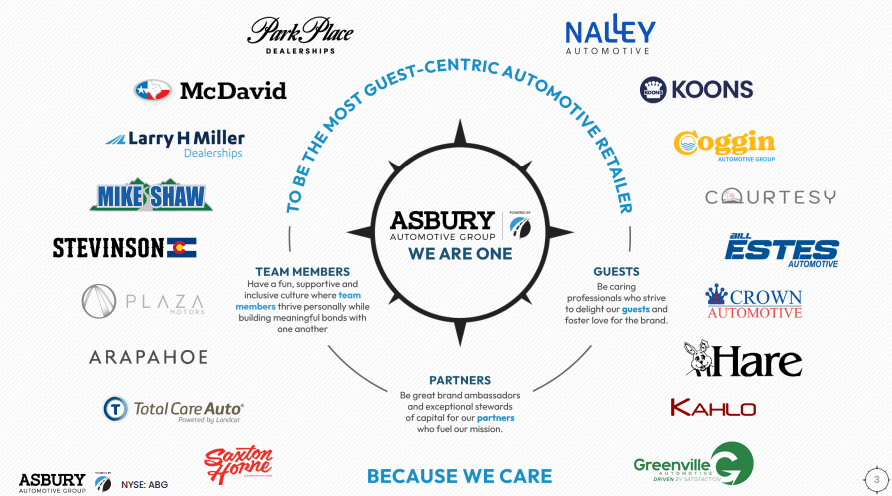
I have owned shares in Asbury Automotive Group, Inc., for about 18 months. Asbury is essentially a collection of …
In the past year, the world has been grappling with a looming recession and high inflation. There is a question of whether we […]