
Here Are 4 Reasons Why Intel Stock Plunged 16% Last Friday
Last Friday on 24 July 2020, Intel closed 16.24% down.
Although I do not own any Intel stock, I was curious why it fell after releasing their Q2 2020 results.
Just a while ago, I saw the news that after 15 years of partnership, Apple decided to break up with Intel and stop using its chips for Macs.
Here are four reasons why I think Intel fell by more than 16%:
1. Delay of Their 7 Nanometer Chips by About Six Months
Their rival AMD (Advanced Micro Devices) has already started selling their 7 nm chips.
This means that technologically, Intel is lagging behind AMD.
In the fast-paced technological environment, this delay is big news. After all, Intel’s competitive advantage will depend a lot on its technological advances.
See also: Our free investing telegram channel. We post daily.
2. Expects Total Revenue in 3rd Quarter To Drop
Intel is a huge company.
One downside to being a huge company is that it is hard to maintain a high growth rate.
For Intel, they expect total revenues in the 3rd quarter of 2020 to reduce 5.16% year on year to $18.2 billion.
3. Gross Margin Dropped From 59.8% to 53.3%
Intel gross margin was 59.8% in 2Q 2019, now it has dropped to 53.3%. That is a sharp drop.
A drop in gross margin can be a sign of a drop in terms of its pricing power and potential competitive advantage.
Definitely not a good sign if it persists.
Also read: “Patience Produce Uncommon Profits” – Why Patience in Investing is Vital.
4. Exposure to China
Intel has exposure to China.
Recently US-China tensions are on the rise again. And that is not good news to add to Intel’s recent woes.
China is in fact Intel’s largest market. In fiscal 2019, they generated 28% of its revenue or about $20 billion from China.
Intel’s largest facilities are also located in Chengdu and Dalian.
In Conclusion
I think that Intel might be losing its long-term competitiveness in the market. In their industry, technological advantages are also an important source of competitive advantage. Being big and having economies of scale is no longer enough.
As to whether the company is currently undervalued or not, we will need to do our own valuation assumptions on that and decide.
See also: My 5 Key Takeaway From Temasek Portfolio Value in 2020.
Disclaimer:
The information provided is for educational and general information purposes only and is not intended to be personalized investment or financial advice. We make no promises as to the accuracy or usefulness of the information we present.
Important: Please read our full disclaimer.

Chris Lee Susanto
Founder of the value investing blog Re-ThinkWealth.com (if you type “value investing blog” in Google, his blog is likely the first one). Being a full-time investor himself, Chris knows that he did not beat the S&P 500 return so far (as of the time of this writing) by listening to stock tips. So, when he teaches, he also doesn’t believe in giving stock tips as it is not sustainable for you in the long run. He will teach you how to make your own intelligent decisions with his 4M1S framework. Feel free to also join his free investment telegram channel here.
Last Friday on 24 July 2020, Intel closed 16.24% down.
Although I do not own any Intel stock, I was curious why it fell after releasing their Q2 2020 results.
Just a while ago, I saw the news that after 15 years of partnership, Apple decided to break up with Intel and stop using its chips for Macs.
Here are four reasons why I think Intel fell by more than 16%:
1. Delay of Their 7 Nanometer Chips by About Six Months
Their rival AMD (Advanced Micro Devices) has already started selling their 7 nm chips.
This means that technologically, Intel is lagging behind AMD.
In the fast-paced technological environment, this delay is big news. After all, Intel’s competitive advantage will depend a lot on its technological advances.
See also: Our free investing telegram channel. We post daily.
2. Expects Total Revenue in 3rd Quarter To Drop
Intel is a huge company.
One downside to being a huge company is that it is hard to maintain a high growth rate.
For Intel, they expect total revenues in the 3rd quarter of 2020 to reduce 5.16% year on year to $18.2 billion.
3. Gross Margin Dropped From 59.8% to 53.3%
Intel gross margin was 59.8% in 2Q 2019, now it has dropped to 53.3%. That is a sharp drop.
A drop in gross margin can be a sign of a drop in terms of its pricing power and potential competitive advantage.
Definitely not a good sign if it persists.
Also read: “Patience Produce Uncommon Profits” – Why Patience in Investing is Vital.
4. Exposure to China
Intel has exposure to China.
Recently US-China tensions are on the rise again. And that is not good news to add to Intel’s recent woes.
China is in fact Intel’s largest market. In fiscal 2019, they generated 28% of its revenue or about $20 billion from China.
Intel’s largest facilities are also located in Chengdu and Dalian.
In Conclusion
I think that Intel might be losing its long-term competitiveness in the market. In their industry, technological advantages are also an important source of competitive advantage. Being big and having economies of scale is no longer enough.
As to whether the company is currently undervalued or not, we will need to do our own valuation assumptions on that and decide.
See also: My 5 Key Takeaway From Temasek Portfolio Value in 2020.
Disclaimer:
The information provided is for educational and general information purposes only and is not intended to be personalized investment or financial advice. We make no promises as to the accuracy or usefulness of the information we present.
Important: Please read our full disclaimer.
Especially For Ambitious Professionals and Business Owners
- Our Telegram Channel – If you’d like to hear from us daily on stocks, business, economy, and value investing knowledge, please join our free telegram channel here.
- Our Value Investing Mentorship Program – We specialize in coaching (1-on-1) ambitious professionals and business owners looking to learn how to invest in stocks safely and sustainably. Learn more about mentorship with Chris here.
Read also now:

My Week 1 Summary of Yale University Financial Markets Course: Introduction and Principles of Finance
Recently I embarked on 8 weeks online course from Coursera.org that covers the basics of financial markets. It is taught by Professor Robert J. Shiller, an American Nobel Laureate and also a sterling professor of Economics Yale University. The course will run from the...

2 Key to be SUCCESSFUL in VALUE INVESTING
As the saying goes, "Many roads lead to Rome." The same with value investing, there are many key aspects you can focus on in choosing to buy an undervalued stock. Here is two key to be successful in value investing: Company’s earnings power and whether the stock is...
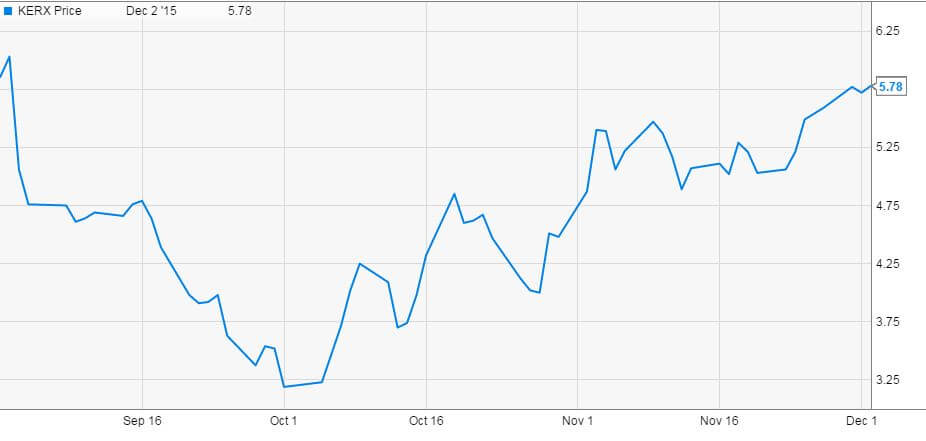
Sold January 2016 put for KERYX
Today i sold January 2016 Put option for Keryx Bio-pharmaceuticals Current Implied Volatility= 98% Margin of safety for stock to fall before being exercised= 30% Strike price=4 USD Premium per contract= 13 USD Commission= 1.4 USD Return in 44 days time=...