
Is Snowflake (NYSE: SNOW) Worth Investing? Here Are My 5 Takeaways
17 September 2020
Snowflake does cloud computing that implements a variable pricing model, which can be at times more attractive than fixed packages offered by more prominent competitors.
The market for cloud computing is enormous and expanding.
It is roughly a $55 billion market right now.
Join our free telegram channel here
But is it worth investing? Here Are My 5 Takeaways
1. Warren Buffett (or Berkshire Hathaway) Backs It
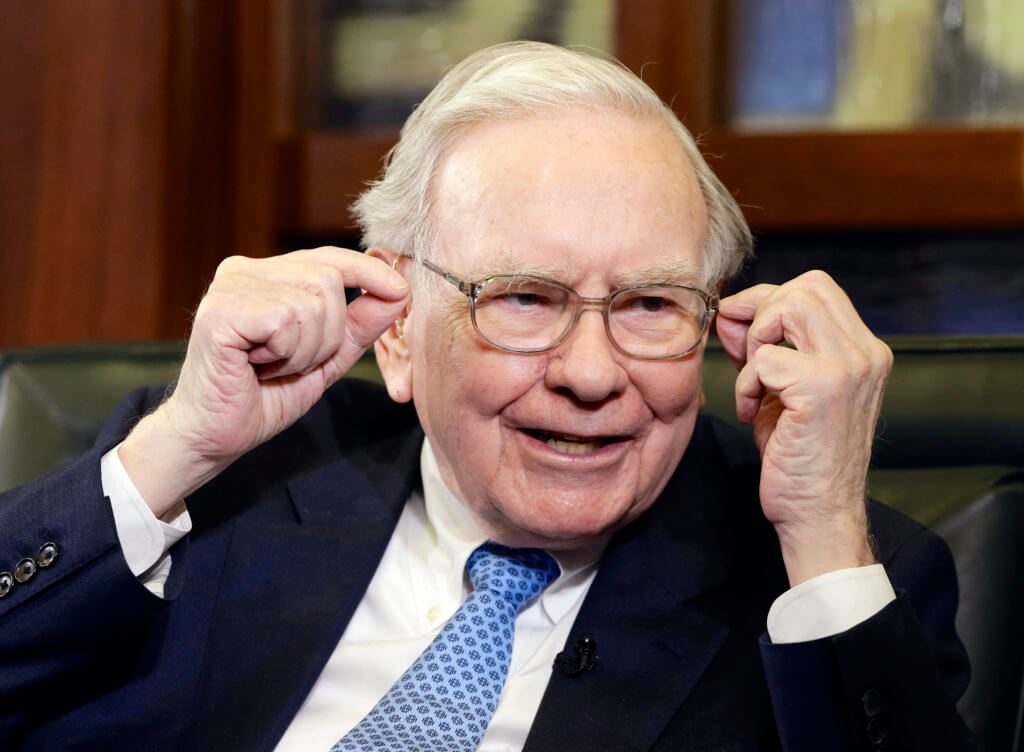
Image source: Flickr
Warren Buffett has a piece in Snowflake IPO, dubbed the biggest software offering in history.
Berkshire Hathaway bought $250 million in Snowflake stock in a private placement at an IPO price of $120 per share. They also purchased a further 4 m shares at the IPO price from Snowflake’s previous CEO Robert Muglia.
In total, Berkshire Hathway has a $735 m stake in Snowflake at IPO price.
However, we will not know until a later date if this decision is by Warren Buffett himself or one of his lieutenants, Ted Weschler or Todd Combs – which have discretionary portfolio management of around $14 b each.
It is also interesting to note that Snowflake CEO pursued Berkshire Hathaway as an investor to “raise the stature of Snowflake as a brand” He also said “You could see today that we made a good dent in that. A lot more people know who Snowflake is today.”
Also read: Will The Stock Market Crash One More Time in 2020?
2. Snowflake Share Price More Than Doubled in Their NYSE Debut

Source: Snowflake
Snowflake is also now worth five times it was then in it’s February valuation.
The company originally proposed a price for the IPO in the range of between $75-$85 per share before bumping it up to $120. As of today, it has more than doubled to $253.93 as of the close.
3. They Have 3000+ Customer With 56 $1M+ Customers
Based on Snowflake’s investor relations website, Snowflake currently has over 3000 customers.
56 of them give them greater than $1 million in trailing 12-month product revenue contribution as of July 31, 2020.
Of course, as of today’s data, that is not much revenue and not many customers relative to its valuations.
4. Snowflake Revenues Grew 175% in 2019
In 2019, Snowflake revenue grew from $96.7 m to $264.7 m.
The growth trajectory of their revenue also seems to still be continuing in 2020.
It is evident that the cloud computing market is booming – especially during the COVID-19 pandemic where the whole digitalization process just sped up.
5. Snowflake CEO Has Great Track Record

Source: CNBC
Snowflake’s current CEO is Frank Slootman.
He is a famous veteran in the tech industry known for his successes in selling Data Domain as CEO to EMC for $2.4 b.
And he was also the CEO of Service Now where he increased the revenue from less than $100 m to $1.5 b annually under his helm.
Based on his past track record, he is a wonderful CEO with great foresight and capabilities.
He seems to also be someone with a long-term time horizon too when he mentioned that he wants Snowflake to attract major institutional investors as shareholders—funds or individuals that could buy billion-dollar positions and would likely hold their shares for a long time.
Also read: The Eight Accounting Fraud or Red Flag Signs To Look Out In Stocks
In Conclusion
I believe that Snowflake is run by a great CEO with solid business prospects.
However, even Slootman, an experienced CEO of a public company, says about the stock doubling as “the difference between the frothy, opportunistic retail side of the market place and the long-term shareholders.” and he also said that we should not get too distracted by what we see on CNBC.
Personally, I will only look at Snowflake more in detail when the retail investors are no longer so excited about Snowflake.
Because when everyone is way too excited about something, I think it is a sign that I should not be.
Even if it goes further up, it is okay.
Also read: Is SIA Shares Worth Buying? Here Are My Thoughts (August 2020)
Was this article useful for you?
If it is, would really appreciate it if you could take one minute to share it on Facebook.
Disclaimer:
The information provided is for educational and general information purposes only and is not intended to be personalized investment or financial advice. We make no promises as to the accuracy or usefulness of the information we present.
Important: Please read our full disclaimer.

Chris Lee Susanto
Founder of the value investing blog Re-ThinkWealth.com (if you type “value investing blog” in Google, his blog is likely the first one). Being a full-time investor himself, Chris knows that he did not beat the S&P 500 return so far (as of the time of this writing) by listening to stock tips. So, when he teaches, he also doesn’t believe in giving stock tips as it is not sustainable for you in the long run. He will teach you how to make your own intelligent decisions with his 4M1S framework. Feel free to also join his free investment telegram channel here.
More from Chris

My Week 5 Summary of Yale University Financial Markets Course: Derivatives, Futures, Forwards and Options Market
Introduction to Derivatives, Futures, Forwards, and Options market from Professor Robert Shiller The derivatives market is a market for securities with a price that is dependent upon or derived from one or more underlying assets. Examples of Derivates market are...
My Week 4 Summary of Yale University Financial Markets Course part 2: Regulations of Companies
Introduction to Regulation and Enterprise from Professor Robert Shiller Regulatory bodies US government set up Picture source: Google In 1968, the US government set up Federal National Mortgage Association (Fannie May) and in 1970, the US government set up Federal...
My Week 4 Summary of Yale University Financial Markets Course part 1: Real Estate
Introduction to Real Estate from Professor Robert Shiller Picture source: Google Real Estate is one of the most important classes of asset in the world and it is generally privately held in most countries. With the exception of China, whereby the government...

Keryx Biopharmaceuticals could be an Interesting Biotech Stock Play
Keryx Biopharmaceuticals Inc (NASDAQ: KERX) is essentially a bio-pharmaceutical company focused on the research, development and commercialization of pharmaceutical products geared towards patients with kidney disease and their healthcare providers. High volatility c...
Do You Know What Is Private Equity?
Differences Between Public Firm And Private Firm In Terms Of Buying Of Their Equity Stake "Equity" is another word that means the same as "stock"- which means that when you own it, you are owning a percentage of the company (the percentage of how much of the company...

4 Secrets For Thinking Positively
Humans are emotional creatures and most of the time, we cannot control our emotions when we feel sad or happy. However, we can train our mind to think good thoughts. When we control what we think, we can control what we feel. Think with the end in mind - Amidst the...
My Week 3 Summary of Yale University Financial Markets Course: Theory of Debt
In this module, Professor Shiller discusses the theory of debt and its proper role. He also covers corporate stocks. A naïve view of what stocks are is that it is some certificate that people buy so that the price can go up. That is not what stocks are. Stocks...
The Federal Reserve Raises Interest Rate: What Does It Mean For Us?
After almost a decade, The Federal Reserve raises a higher interest rate for the first time. The Federal Open Market Committee unanimously voted to set the new target range for the federal funds rate at 0.25 percent to 0.5 percent, up from zero to 0.25 percent. Policy...

Will The Fed Finally Raise Interest Rate on 16 Dec 2015?
The expectation was based on Chair Janet Yellen's oft-repeated stance that she'd like to see rate rises before the end of 2015. The last time the United States Federal Reserve raised their interest rates was back in 2006, a decade ago. With shares and commodity...

Here Is Everything You Need To Know About The Singapore Savings Bonds
What Are Bonds Bonds are one of the methods for corporations and governments to raise funds. It is a form of borrowing whereby we lend money to the government or corporations and we earn interest on it. We are able to redeem the principal amount but normally there is...

Seven Steps For Starting A Conversation
The seven steps for starting a conversation at a party Give a sincere smile and say Hello Provide a short introduction of who you are and give a firm handshake Listen closely to the person's name - Ask them to repeat it if you did not hear it clearly the first time...
My Week 2 Summary of Yale University Financial Markets Course: The History and Real Impact of Behavioral Finance
The History and The Real Impact of Behavioural Finance People are complex and our financial institutions are designed for real people. This study of behavioural finance started because of the revolution of neuroscience and the fact that the human brain is a...
