Investing, Reflections
Kodak Stock is Up Over 1,400% in Two Days. Does It Make Sense?
30 July 2020
Eastman Kodak Company (NYSE: KODK) opened at $2.15 (Monday) on July 27, 2020, and closed at $33.20 (Wednesday) by 29 July 2020. That is a 1,444.19% increase over a two day period.
In this article, I am going to give you some background on the Kodak company, the reason for the rally as well as my thoughts on whether it made sense or not. I will conclude with some lessons that I think we can apply to this kind of situation.
See also: Our free investing telegram channel. We post daily.
Background on The Eastman Kodak Company
Kodak is a United States based company that is well known for its photography business.
They operate several business segments which include Print Systems, Enterprise Inkjet Systems, Kodak Software, Brand, Film and Imaging, Advanced Materials and 3D Printing Technology, and Eastman Business Park.
Kodak print systems segment consists of the majority of their revenue and it offers services such as commercial printing and publishing for books.
Most of its revenue comes from overseas markets.
The Reason for Kodak’s Recent Rally
The reason for Kodak’s recent rally has got nothing to do with it’s printing or it’s film business segment.
Kodak basically won a loan of $765 million by the US government (under the Defense Production Act) to make ingredients for generic coronavirus medicines.
Read also: “Patience Produce Uncommon Profits” – Why Patience in Investing is Vital.
My Thoughts on Whether Kodak Rally Made Sense
The US government’s intention is to engage Kodak for the production of these critical ingredients that are short in supply. This is also a part of the American government’s effort to reduce reliance on overseas suppliers and instead, make these ingredients in the US itself.
The volume of stocks traded on the company went up over twenty times its normal range.
Does the rally make sense, fundamental wise?
Think about it. Kodak market capitalization is about $100 million before the two-day surge. It is now about $1.5 billion. That is an increase of about $1.4 billion plus-minus.
Remember that the $765 million given under the Defence Production Act is a loan. Kodak has to pay it back.
Even if the $765 million is a pure cash gift given by the US government, the $1.4 billion increase in the market capitalization is twice that value.
So to me, logically speaking, it does not make sense.
Kodak loan terms must be repaid over 25 years period and its terms are similar to a commercial loan.
Did you know that Kodak has filed for bankruptcy before in 2012? Despite inventing the digital camera back in 1975, the company has failed to innovate and grow in the face of competition.
Peter Navarro, the White House trade adviser’s office is currently also considering around 30 firms for funding to fight the virus and protect the public health. Kodak will not be the only one.
The recent rally of over 1,400% made zero fundamental sense. In terms of margin and growth-wise, I also do not think that they are going to make above average return because it is a generic ingredient after all.
If you like psychology, read: Thinking, Fast and Slow Book Summary (What I Learnt As An Investor).
In Conclusion
The market is acting as if the value of the Kodak company has increased by about $1.4 billion. As of the information now, I think that it is overhyped.
And this reminds me of the recent run-up of companies like Hertz.
Kodak’s debt position is still manageable.
But history tells us that when a company stock price runs up too much away from its fundamentals, that stock price will likely not be sustainable.
Disclaimer:
The information provided is for educational and general information purposes only and is not intended to be personalized investment or financial advice. We make no promises as to the accuracy or usefulness of the information we present.
Important: Please read our full disclaimer.

Chris Lee Susanto
Founder of the value investing blog Re-ThinkWealth.com (if you type “value investing blog” in Google, his blog is likely the first one). Being a full-time investor himself, Chris knows that he did not beat the S&P 500 return so far (as of the time of this writing) by listening to stock tips. So, when he teaches, he also doesn’t believe in giving stock tips as it is not sustainable for you in the long run. He will teach you how to make your own intelligent decisions with his 4M1S framework. Feel free to also join his free investment telegram channel here.
Read also now:
My Week 5 Summary of Yale University Financial Markets Course: Derivatives, Futures, Forwards and Options Market
Introduction to Derivatives, Futures, Forwards, and Options market from Professor Robert Shiller The derivatives market is a market for securities with a price that is dependent upon or derived from one or more underlying assets. Examples of Derivates market are...
My Week 4 Summary of Yale University Financial Markets Course part 2: Regulations of Companies
Introduction to Regulation and Enterprise from Professor Robert Shiller Regulatory bodies US government set up Picture source: Google In 1968, the US government set up Federal National Mortgage Association (Fannie May) and in 1970, the US government set up Federal...
My Week 4 Summary of Yale University Financial Markets Course part 1: Real Estate
Introduction to Real Estate from Professor Robert Shiller Picture source: Google Real Estate is one of the most important classes of asset in the world and it is generally privately held in most countries. With the exception of China, whereby the government...

Keryx Biopharmaceuticals could be an Interesting Biotech Stock Play
Keryx Biopharmaceuticals Inc (NASDAQ: KERX) is essentially a bio-pharmaceutical company focused on the research, development and commercialization of pharmaceutical products geared towards patients with kidney disease and their healthcare providers. High volatility c...
Do You Know What Is Private Equity?
Differences Between Public Firm And Private Firm In Terms Of Buying Of Their Equity Stake "Equity" is another word that means the same as "stock"- which means that when you own it, you are owning a percentage of the company (the percentage of how much of the company...

4 Secrets For Thinking Positively
Humans are emotional creatures and most of the time, we cannot control our emotions when we feel sad or happy. However, we can train our mind to think good thoughts. When we control what we think, we can control what we feel. Think with the end in mind - Amidst the...
My Week 3 Summary of Yale University Financial Markets Course: Theory of Debt
In this module, Professor Shiller discusses the theory of debt and its proper role. He also covers corporate stocks. A naïve view of what stocks are is that it is some certificate that people buy so that the price can go up. That is not what stocks are. Stocks...
The Federal Reserve Raises Interest Rate: What Does It Mean For Us?
After almost a decade, The Federal Reserve raises a higher interest rate for the first time. The Federal Open Market Committee unanimously voted to set the new target range for the federal funds rate at 0.25 percent to 0.5 percent, up from zero to 0.25 percent. Policy...
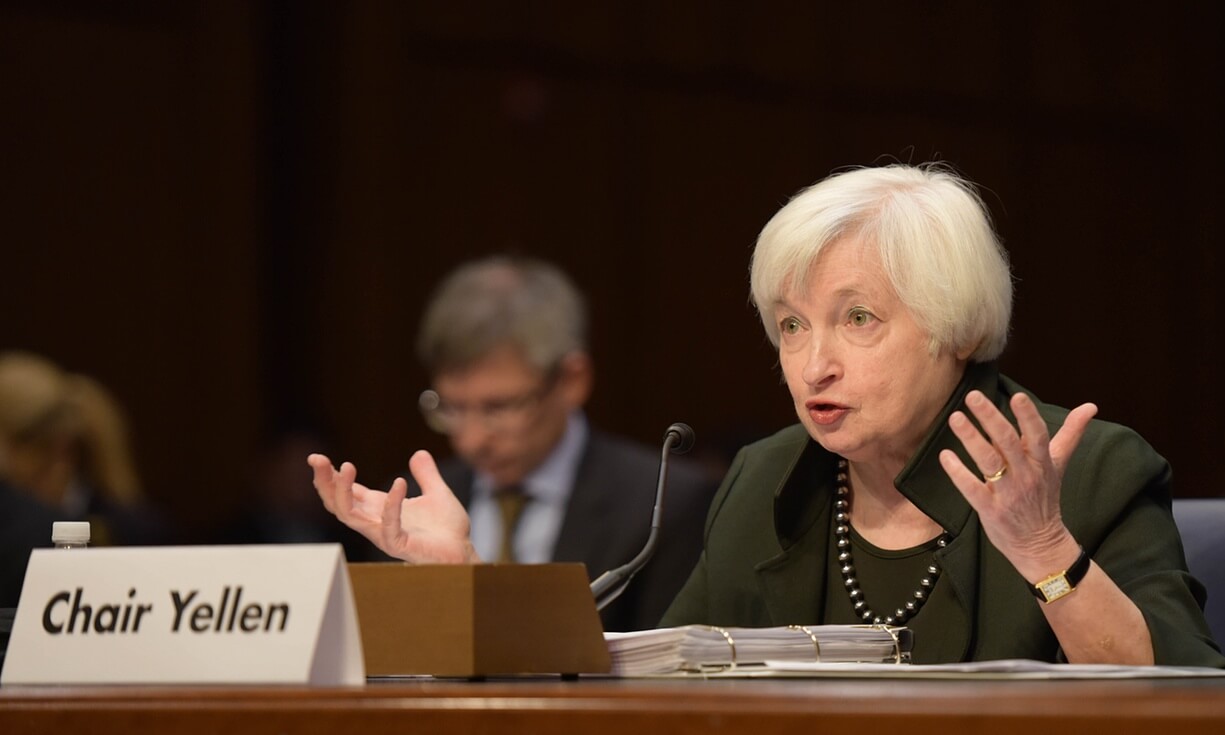
Will The Fed Finally Raise Interest Rate on 16 Dec 2015?
The expectation was based on Chair Janet Yellen's oft-repeated stance that she'd like to see rate rises before the end of 2015. The last time the United States Federal Reserve raised their interest rates was back in 2006, a decade ago. With shares and commodity...
Here Is Everything You Need To Know About The Singapore Savings Bonds
What Are Bonds Bonds are one of the methods for corporations and governments to raise funds. It is a form of borrowing whereby we lend money to the government or corporations and we earn interest on it. We are able to redeem the principal amount but normally there is...

Seven Steps For Starting A Conversation
The seven steps for starting a conversation at a party Give a sincere smile and say Hello Provide a short introduction of who you are and give a firm handshake Listen closely to the person's name - Ask them to repeat it if you did not hear it clearly the first time...
My Week 2 Summary of Yale University Financial Markets Course: The History and Real Impact of Behavioral Finance
The History and The Real Impact of Behavioural Finance People are complex and our financial institutions are designed for real people. This study of behavioural finance started because of the revolution of neuroscience and the fact that the human brain is a...