
Is Oculus Owned by Facebook? Yes And Here’s Why It’s Great
13 November 2020
I have been wanting to buy the Oculus Quest for the longest time.
A few years ago, when Oculus first came out with The Oculus Quest, I wanted to buy it but did not get a chance to do so.
This year, Oculus Quest 2 is out and the reviews online are amazing. See CNET review, Toms Guide review, and The Verge review.
So just a few days ago, I found a reliable online seller of Oculus Quest 2 in Singapore and decided to purchase it.
Having tried Oculus product first hand, I have to say that the reviews are correct – Oculus Quest 2 is a remarkable VR product.
Oculus has a winner in their hand with Oculus Quest.
And yes, Oculus is Owned by Facebook
On March 25, 2014, Facebook spent $2 billion to acquire Oculus.
“Acquisition positions Facebook to accelerate Oculus’ growth in gaming, communications, and new social experiences.” – Facebook
Fast forward six years later, it is safe to say that Oculus VR headsets have not reached the mass audience that Facebook wants yet.
However, they have been getting some decent traction = especially with their first release of Oculus Quest – the first VR headset without having to have cable to operate.
In the past, Oculus Quest users do not have to use Facebook to log in. With Oculus Quest 2, they have to. And of course, I am biased, being a shareholder of Facebook, I do not mind logging in with Facebook.
After all, I have logged in with Facebook for many other apps before too.
My Conclusion is Oculus Will Be Great for Facebook’s Future
Let’s get it out of the way.
Facebook growth will likely be still from its ad business for many years to come.
I am supportive of that because the ad business is such a high margin and durable business – as long as Facebook continues to provide the best in class experience for users to continue to engage with Facebook platforms.
Although some people hate the fact that now Oculus requires them to login using Facebook to use the product, for Facebook, on the other hand, having Oculus as their exposure in VR, is a step in the right direction.
I predict it will still be many years before VR can even go truly mainstream, but the Oculus Quest 2 is a solid contender to bring VR to mainstream because it is priced lower than most other VR headsets in the market now – and it is a great quality product.
Mashable even has an article titled “Oculus Quest 2 review: VR finally goes mainstream.”
Facebook Other Revenues is Growing, Thanks to Oculus Quest 2
Oculus Quest 2 is without a doubt a new source of revenue for Facebook.
It is a big part of Facebook’s non-advertising revenue – which will only likely grow in the future.
In Facebook’s latest Q3 2020 earnings call, Dave Wehner, CFO of Facebook said that Oculus Quest 2 orders have been strong and it should benefit their other revenue.
Facebook is also going all-in on Quest 2 as they have recently discontinued the sales of the Oculus Go and Oculus Rift S headset – because the Quest 2 can also use a USB-C cable to support PC VR games. Which will make the Oculus Go and Rift, in my view, not that useful anymore.
VR and AR Can Go Mainstream
Mark Zuckerberg said that they have a big milestone to get to 10 million active users in their VR systems.
The reason for that is because he said that that is when the ecosystem will be self-sustaining and so that independent developers can prioritize the Oculus platform above alternative VR platforms due to a sufficiently large installed base for them to make good returns.
And in recent times, Facebook has also been going on a game studio acquisition spree – having bought the company that made Beat Sabre as well as recently, Lone Echo.
I have played both Beat Sabre and Lone Echo in Quest 2 and I have to say that it is very easy for me to play with other players online, and it is very fun.
Strong Balance Sheet
As of the end of Q3 2020, Facebook cash and cash equivalents and marketable securities were $55.62 billion.
They currently have a strong balance sheet with zero long-term debt.
This means that Facebook will have the flexibility to continue investing in Oculus – for Oculus to continue making great VR products – without worrying to run out of money.
So, Oculus being under Facebook is great not only for Facebook for its VR exposure but also for Oculus, to focus on making great VR products without having to worry about money.
Continuous Innovation
Personally, what I like about Facebook is that they have had a good innovation culture going on that does not afraid to try new things.
They do not mind trying.
And they do not mind failing. Case in point: Calibra and the Libra currency that did not gain traction.
They are also always trying to improve on whatever asset they currently have. For example, the next leg of improvement for WhatsApp will be WhatsApp Pay that will allow WhatsApp users to make payment with one another as easy as one sends a message.
This is an article I wrote about Facebook back on 3 November 2018 – yes I have been long on Facebook since 2018.
In Conclusion
As of Facebook’s latest Q3 2020 report, its advertising business increased 22% year on year.
What’s important is also the fact that their family daily active people has also increased 15% year over year while family monthly active people increased 14% year on year.
This means that people are using Facebook’s platforms on a regular basis and the engagement continues to be high.
With this high amount of engagement, they can do many things – which includes payments (as we talked about above) and e-commerce – 2 things they are working on at the moment to potentially expand their other revenue sources even more in the future.
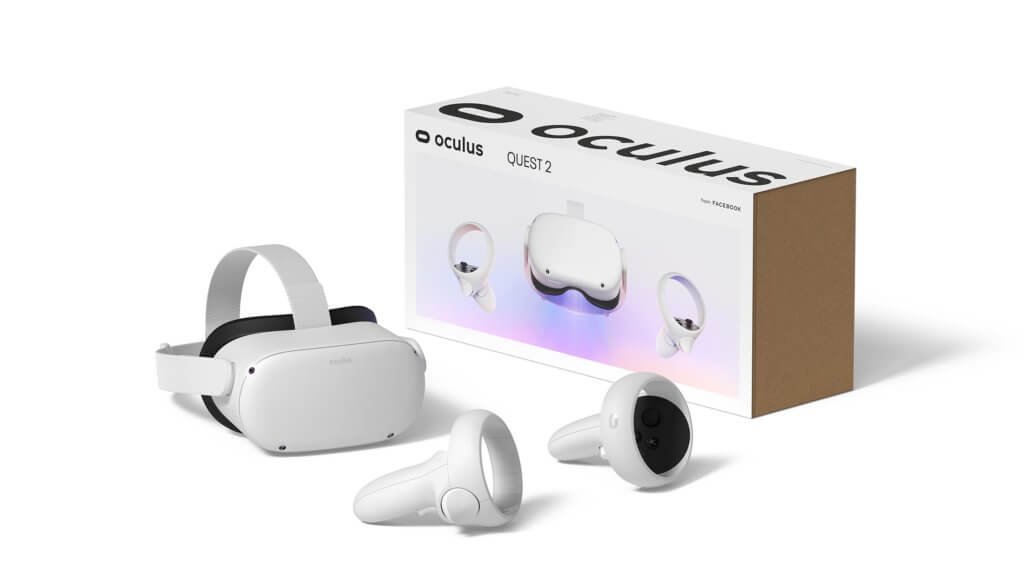
Image source: Bloomberg
And another avenue that they can translate their success to in the future is in VR – and from what I see so far, Facebook definitely has made the right decision in buying Oculus.
Enjoyed the article?
Appreciate it if you could take one minute to share it on Facebook by clicking here.
Disclaimer:
The information provided is for educational and general information purposes only and is not intended to be personalized investment or financial advice. We make no promises as to the accuracy or usefulness of the information we present.
Important: Please read our full disclaimer.

Chris Lee Susanto
Founder of the value investing blog Re-ThinkWealth.com (if you type “value investing blog” in Google, his blog is likely the first one).
Chris is a big proponent of business-like stock investing. He invests in companies where there is value to be found, be it a turnaround, depressed, value, or quality growth company (compounders). He either buys the stock outright or he profits through selling put or selling call options – or buying call options (buying and selling options are especially dangerous for those who do not know how to properly execute it).
Some of the places where Chris has been invited to speak or have added value as a mentor or writer includes Singapore Polytechnic, SMU Institute of Innovation and Entrepreneurship (IIE), Dollars and Sense, The New Savvy, Value Walk Blog, Investment Moats, NUS Tembusu College, NUS Investment Society, CGS-CIMB Singapore and Internationally in Myanmar.
Being a full-time investor himself, Chris knows that he did not beat the S&P 500 return so far (as of the time of this writing) by listening to stock tips. So, when he teaches, he also doesn’t believe in giving stock tips as it is not sustainable for you in the long run. As of the time of this writing, he is still open to coaching others in his Value Investing Mentorship™ Club. Feel free to also join his free investment telegram channel here.
More from Chris

My Week 5 Summary of Yale University Financial Markets Course: Derivatives, Futures, Forwards and Options Market
Introduction to Derivatives, Futures, Forwards, and Options market from Professor Robert Shiller The derivatives market is a market for securities with a price that is dependent upon or derived from one or more underlying assets. Examples of Derivates market are...
My Week 4 Summary of Yale University Financial Markets Course part 2: Regulations of Companies
Introduction to Regulation and Enterprise from Professor Robert Shiller Regulatory bodies US government set up Picture source: Google In 1968, the US government set up Federal National Mortgage Association (Fannie May) and in 1970, the US government set up Federal...
My Week 4 Summary of Yale University Financial Markets Course part 1: Real Estate
Introduction to Real Estate from Professor Robert Shiller Picture source: Google Real Estate is one of the most important classes of asset in the world and it is generally privately held in most countries. With the exception of China, whereby the government...

Keryx Biopharmaceuticals could be an Interesting Biotech Stock Play
Keryx Biopharmaceuticals Inc (NASDAQ: KERX) is essentially a bio-pharmaceutical company focused on the research, development and commercialization of pharmaceutical products geared towards patients with kidney disease and their healthcare providers. High volatility c...
Do You Know What Is Private Equity?
Differences Between Public Firm And Private Firm In Terms Of Buying Of Their Equity Stake "Equity" is another word that means the same as "stock"- which means that when you own it, you are owning a percentage of the company (the percentage of how much of the company...

4 Secrets For Thinking Positively
Humans are emotional creatures and most of the time, we cannot control our emotions when we feel sad or happy. However, we can train our mind to think good thoughts. When we control what we think, we can control what we feel. Think with the end in mind - Amidst the...
My Week 3 Summary of Yale University Financial Markets Course: Theory of Debt
In this module, Professor Shiller discusses the theory of debt and its proper role. He also covers corporate stocks. A naïve view of what stocks are is that it is some certificate that people buy so that the price can go up. That is not what stocks are. Stocks...

The Federal Reserve Raises Interest Rate: What Does It Mean For Us?
After almost a decade, The Federal Reserve raises a higher interest rate for the first time. The Federal Open Market Committee unanimously voted to set the new target range for the federal funds rate at 0.25 percent to 0.5 percent, up from zero to 0.25 percent. Policy...

Will The Fed Finally Raise Interest Rate on 16 Dec 2015?
The expectation was based on Chair Janet Yellen's oft-repeated stance that she'd like to see rate rises before the end of 2015. The last time the United States Federal Reserve raised their interest rates was back in 2006, a decade ago. With shares and commodity...

Here Is Everything You Need To Know About The Singapore Savings Bonds
What Are Bonds Bonds are one of the methods for corporations and governments to raise funds. It is a form of borrowing whereby we lend money to the government or corporations and we earn interest on it. We are able to redeem the principal amount but normally there is...

Seven Steps For Starting A Conversation
The seven steps for starting a conversation at a party Give a sincere smile and say Hello Provide a short introduction of who you are and give a firm handshake Listen closely to the person's name - Ask them to repeat it if you did not hear it clearly the first time...
My Week 2 Summary of Yale University Financial Markets Course: The History and Real Impact of Behavioral Finance
The History and The Real Impact of Behavioural Finance People are complex and our financial institutions are designed for real people. This study of behavioural finance started because of the revolution of neuroscience and the fact that the human brain is a...
