
Investing Lessons [Beginners]
10 Mistakes an Investor should Avoid
Benjamin Tan, Content Expert, Re-ThinkWealth
1 September 2017
Every investor has their own investment philosophy and discipline.
Each philosophy has its own merit and what is important is that investor constantly improves themselves.
What is critical is that investor stays rooted in their fundamentals & valuation epically in times of high volatility.
With such great diversity of methods, one could invest, what then are the common pitfalls that a Value Investor could look for? I would humbly share 10 points here.
1. Confusing speculation with investing
The line between speculation and investing has become blurred as tons of financial product and services have been introduced to the financial community.
In the hype of the cryptocurrency fever, it is not uncommon for one to claim that they have invested in Bitcoin or the rest of the cryptocurrency.
Although the line between speculation & investing could be vague even for the professionals, there are certain common understandings that are prevalent.
One of the key differences between speculation & investing is the inherent risk you will be exposed to. Generally, trades that involve tremendous risk & volatility have the tendency to be associated with speculation while the contrary is true for investing.
Another key difference between speculation & investing is the general duration that the asset will be held for.
The average holding duration of a speculator could be a matter of hours while the average holding duration of investors is substantially longer.
2. Not researching the investment
 Quoting Benjamin Graham: “An investment operation is one which, upon thorough analysis promises safety of principal and an adequate return.”
Graham added that Operations are not meeting these requirements are speculative.
Indeed, understanding & research is the key to sound investing.
As an investor purchases the issues (shares) of any given company, the investor essentially purchase a portion of the company, making him the owner of the company regardless of how small it might be.
Thereby, as an owner of any company, one should diligently understand the business model, and the outlook for the company as those are critical for the growth of the company. The conduct of the management should also be observed.
Ultimately, an investor should understand the nature of the business and to a certain degree assume the role of the owner of the business and evaluate the prospect of the company before investing.
3. Investing without a time horizon in mind
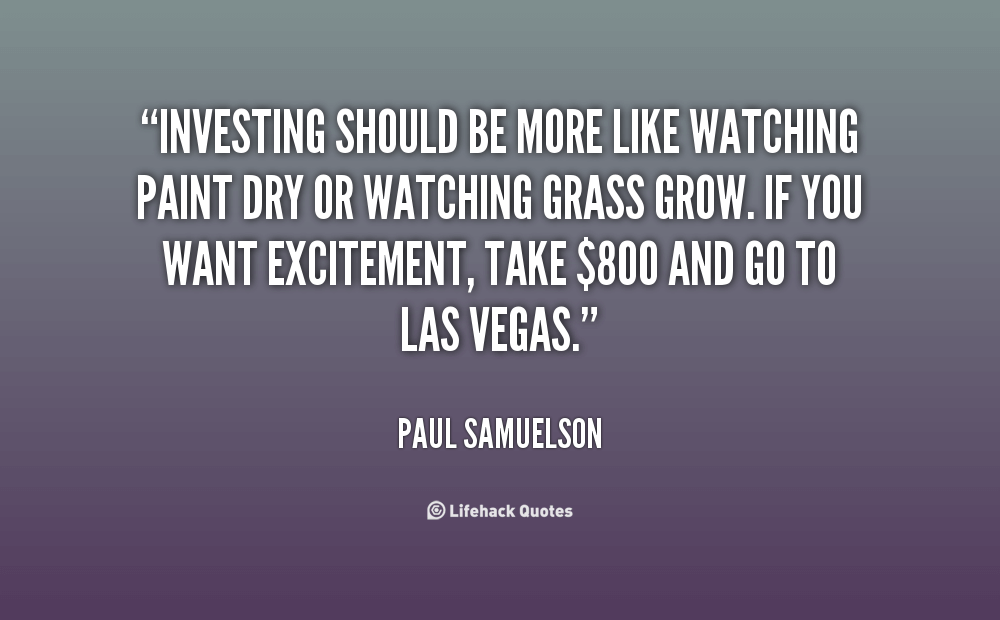 One should know the purpose of investing and has a realistic time horizon for their investment.
If one desire quick cash and excitement, it is better for them to drop by Las Vegas than to put it in common stocks or bonds.
For unless excessive leverage is being used, Las Vegas should provide a higher return on their investment, that is of course with higher risk. 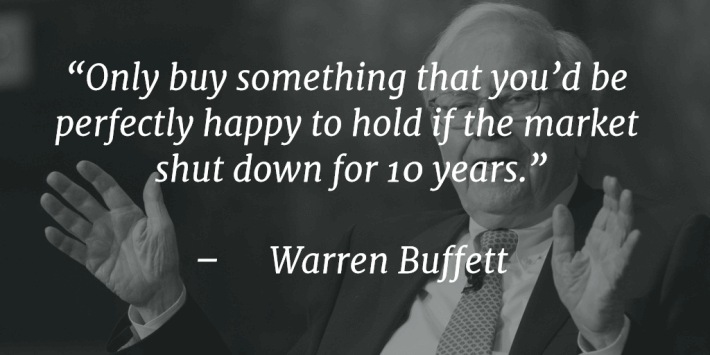 Image source: Google
Like what Warren Buffet says, an investor should be confident enough to hold its investment for 10 years when darks days come.
The most effective investment strategy is usually far-sighted and has long-time horizons.
However, it is not wrong for the sales of equity in shorter timeframes of 1 to 2 years if such sales are justifiable. What is important is the mentality and confidence the investors have in the securities that matter.
4. Forgetting that returns come with risk
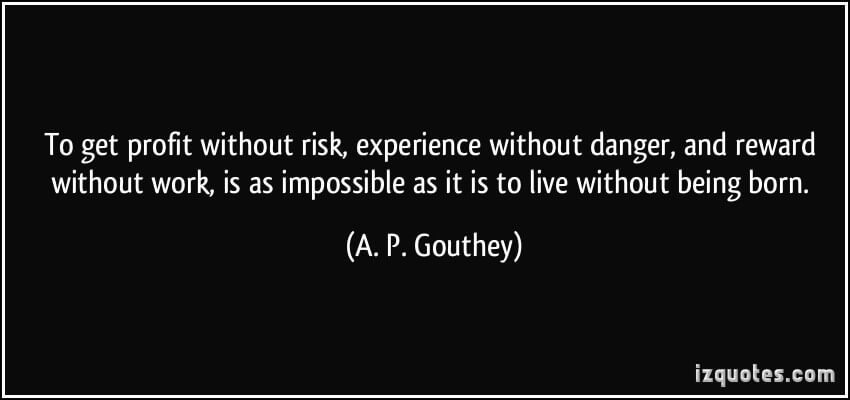 There are rarely free lunches in the world.
Often, the promised of enormous returns comes attached with risks that are greater than the norm.
Although risk management & strategy could reduce or mitigate the risk, it is undeniable that the correlation between risk and returns exists.
As such, an informed & intelligent investor would question and evaluate the risk that he would be exposed to when he has been promised extraordinary returns.
5. Not knowing your risk tolerance
 Everyone has their unique and specific financial liabilities and cash-flow needs.
To prevent your investment journey from being an additional liability, one should know their own risk tolerance and the ability to sustain investment losses, if such unfortunate event were to occur.
Ultimately, an intelligent investor would not let investment losses compromises his ability to hold the securities that he had purchased with deep research and a strong conviction.
The intelligent investor would also know the risk involved with any type of investment and invest in risk-free or asset with lesser risk if he could only afford to sustain no / minimal investment losses.
6. Putting all of your eggs in one basket
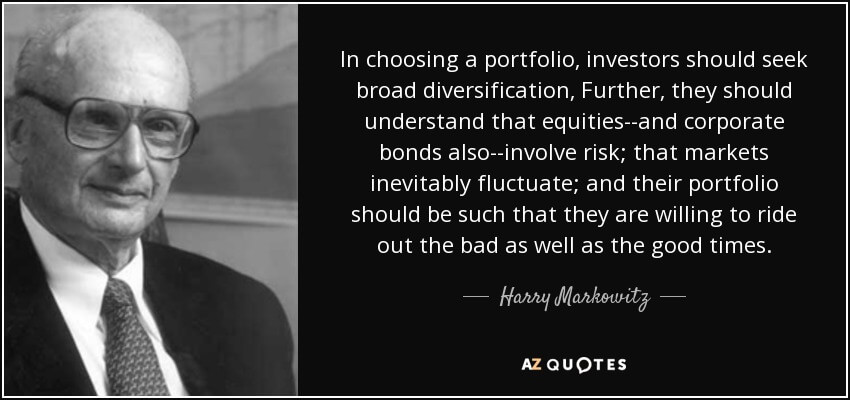 A wise investor will never put all his egg in one basket.
A diversified portfolio across the various sector and asset classes lower the nonsystematic risk that investor will be exposed to if he does otherwise.
With an efficiently allocated and well-diversified portfolio, an investor could obtain greater reward and lower risk when compared to a portfolio that does not.
7. Thinking a high-cost investment is always a good investment
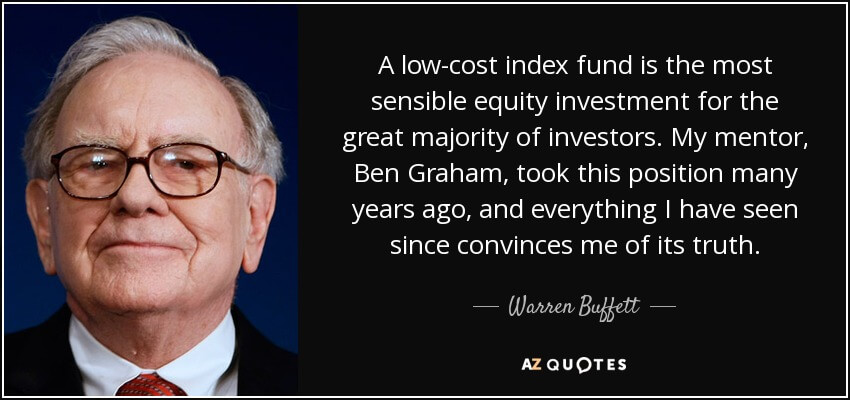 Wall Street constantly attempt to project the image that high investment fee would give higher returns back to the investors.
However, research has shown that the contrary is actually true. Indeed, just like Warren Buffett said, low-cost index fund had outperformed high-cost mutual fund for the past decade.
This would burst the myth that high investment fee would always deliver superior returns.
8. Overlooking tax consequences
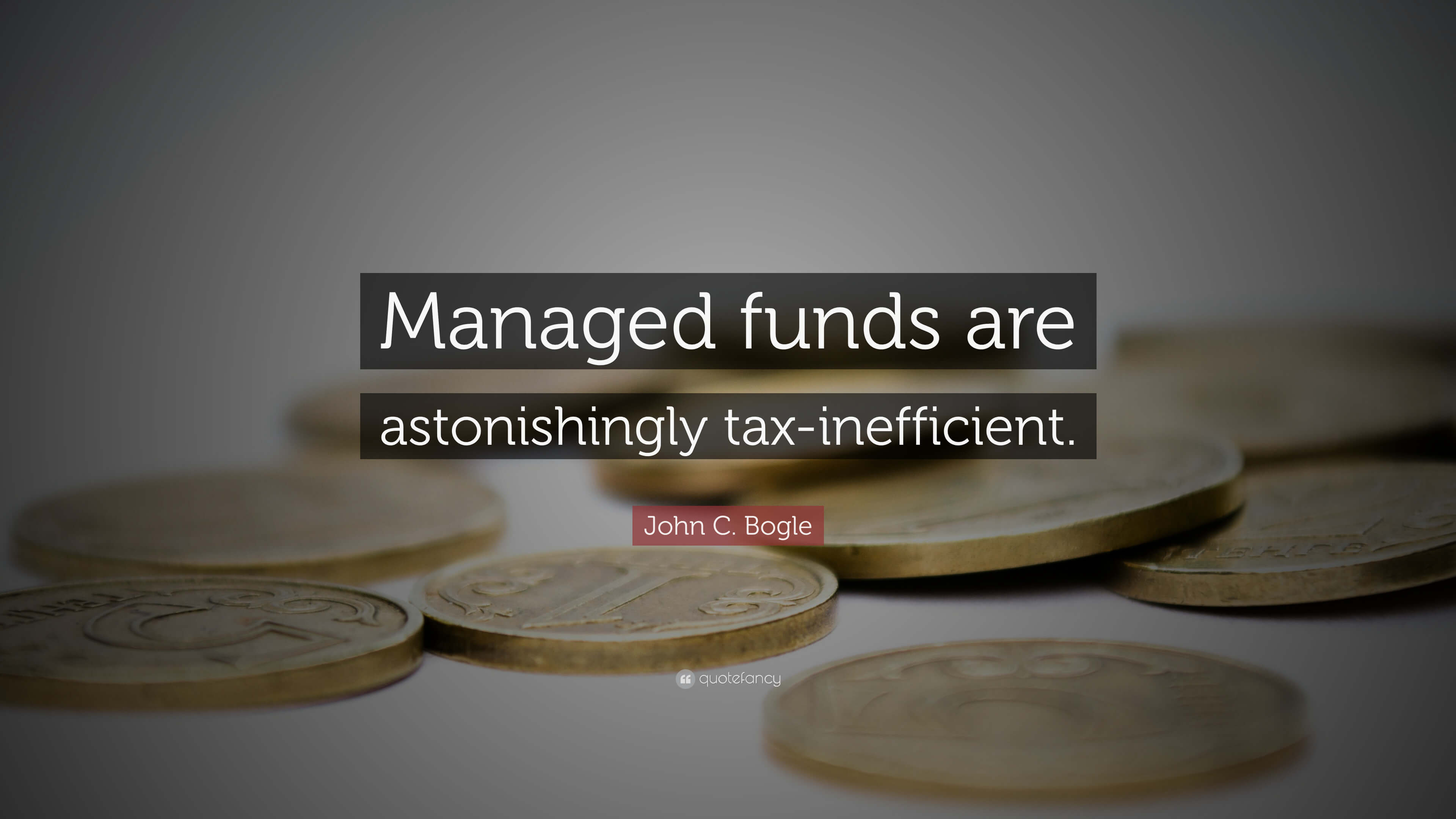 Image source: Google
Greater tax efficiency, all other things being equal, will almost defiantly deliver greater returns to their investors.
John C Bogle, the founder of The Vanguard Group, stresses the importance of tax effectiveness in manage funds and goes further claims that tax-inefficiency could have a substantial impact on your investment return in some cases.
Although the capital gain tax may not be applicable for non-US resident, other taxes like Withholding Tax might still be applicable. As such, knowing the prevailing taxes that have to be paid allowed a well-informed investor to make better decisions.
9. Paying more than what’s necessary for trading and brokerage fees
An intelligent investor should know be aware of the trading & brokerages fees that are prevalent in his trades.
By researching and comparing, an investor could make a transaction at the most optimal cost structure and should be able to maximise his investment returns.
One could always attempt to negotiate with their brokers for better rates and consider the additional options that might be made available to them.
10. Diving too deep into dividends yield thinking they will sustain it
Dividends yield could deliver substantial returns on the investment.
However, a search for high yielding investment and ignore all other fundamental might not be wise. They are usually a reason behind the high yielding investment, and deeper research should reveal some form of risk.
Although the type of risk and the method to hedge those risks are out of the scope of this discussion, an investor should be aware that such risks most often exist.
As such, investors should factor the element of risk into account when considering investing in high-yielding securities.
Disclaimer: The information provided is for general information purposes only and is not intended to be a personalized investment or financial advice.
Important: Please read our full disclaimer.

Here’s What Sun Tzu Art of War Quotes Can Teach Us About Investing
Sun Tzu Art of War Quotes “He will win who knows when to fight and when not to fight” – We should only invest when there is clear benefit to do so, do not do something just for the sake of doing something. “If you know the enemy and know yourself, you need not fear […]

Thinking, Fast and Slow Book Summary (What I Learnt As An Investor)
In this thinking fast and slow book summary, I will explain to you the various human biases that we have and why it is important for us as investors to understand it. It all begins with a simple premise that we all have two systems in our brain, system 1 and system 2 […]

7 Key Investing Lessons from Charlie Munger & Li Lu Interview
I chanced upon an edited transcripts from Guru Focus of an interview of Munger and Li Lu in one of China’s top finance magazines. Here are the 7 investing lessons I learned from Charlie Munger and Li Lu’s interview: 1. In investing, patience is very […]

Lessons from Ron Baron, The Long-Term Investor Billionaire
As value investors, a lot of us talk about investing for the long run. But what does investing in the long run really mean? As a value investor, I have had companies that I made over 50% in less than 6 months because that company I owned got acquired. I have also had companies […]

5 Investing Lessons from The Three Kingdom
Just finished rewatching all 95 episodes of The Romance of The Three Kingdoms – Although this is a classic Chinese historical war movie that is likely dramatized, there are a lot of lessons to be learned from it – for value investing purposes. [1] No matter how good we are or how much […]

How I Made 50% in 6 Months with Care.com
Today I want to share with you my thought processes when I first initiated a position in Care.com (NYSE: CRCM) on 28 May 2019 – and less than 6 months later on 20 December 2019 – overall at an average cost of $10.07, I sold off all of it at $15.05. My valuation for care was higher than […]
3 Actions to Make Best Use of Compound Interest
Compound interest is very powerful. It is the interest you get on top of the previous principal + interest you already got. Here are 3 actions you can take to make the best use of compound interest: Invest early – the earlier we invest, the more powerful the compounding effect […]
Peter Lynch One Up on Wall Street Summary | Ultimate Guide
Peter Lynch’s one up on wall street book was one of the first investing books that I read. I probably first read the book when I was about the age of 20 or 21, and now, after about five years in the market, I can tell you that the lessons hold. Who is Peter Lynch? Peter Lynch is a legendary […]

How To Start Investing in Stocks in Singapore For Beginners
This is a guide to help stock investing beginners to start their journey investing in stocks in Singapore or anywhere around the world. The purpose of this guide is to share with you some of the general mindsets, philosophies, guides – information that I […]

How Warren Buffett Use Put Options to Increase Berkshire’s Returns
You might know Warren Buffett from Berkshire Hathaway as a stock picker. But not many people know he has made a lot of money by selling put options. In this article, you will learn […]
Want new articles before they get published? Subscribe to our Awesome Community.