
Stock Analysis [Simple]
Here’s My Quick Thought on Starbucks Stock
Chris Lee Susanto, Founder at Re-ThinkWealth.com
19 September 2018
Starbucks is a company that needs not much introduction. I am sure that most of us have drunk Starbucks coffee before. And many of us have studied or did some work or caught up with a friend there. Starbucks is a familiar company that is in almost every airport around the world. Their story though started back in Seattle, which was also where Microsoft started.
Starbucks company was formed back in 1985 and it became what it is today under the leadership of its ex-CEO, Howard Schultz who bought Starbucks back in August 1987 for only $3.8 million and turned it into a great brand it is today.
In April 2018, Howard stepped down as CEO to become executive chairman of Starbucks. Kevin Johnson, who has been with Starbucks for over a decade is now CEO.
China is currently Starbucks second largest and fastest-growing market. And Starbucks firmly believe that China and U.S. will be the two most powerful drivers for their future growth.
For the fiscal year 2017, Starbucks revenue grew 5% year on year to $22.4 billion. The revenue growth was due to a 3% rise in global comparable store sales, opening of more than 2,250 net new stores to bring their total store count to 27,000 and share gains in at-home coffee.
Moving ahead, Starbucks have a couple of key priorities that would form their business drivers (based on their 2017 letter to shareholders), they are:
1. Positioning for long-term growth in China
Starbucks firmly believes that the U.S. and China will be two major growth engines for Starbucks. China is where an increasing portion of the overall profit will be coming from. Every 15 hours, Starbucks opens a new store in China.
They have been in China for almost 20 years. And they just opened the world’s largest Starbucks location in Shanghai recently called the Shanghai Starbucks Reserve Roastery.
Starbucks’ partnerships with leading Chinese companies such as Alibaba and Tencent will also help them to perform well in Chinese market.
Recently in August 2018, Alibaba and Starbucks officially partner up to deliver coffee – starting with Beijing and Shanghai and will roll out to other parts of China in the future.
“We’re going to integrate a Starbucks virtual store into all of the Alibaba Group properties,” Johnson told “Mad Money” host Jim Cramer in an interview.
“This means that a customer that uses Alipay or Taobao or Tmall or Hema has an integrated Starbucks virtual store similar to the mobile app embedded right into that experience,” the CEO, Johnson said. “That opens up 500 million or more active users of those apps that will have access to Starbucks.”
The partnership results are something for us to look forward to in the future.
2. Amplifying their core, high-growth businesses
In some region, they have partially licensed model and other regions they have a fully company-owned model. Starbucks aims to fine tune these business models better according to the geography to ensure that they will be more effective. What do Starbucks define as effective remains vague based on their annual reports and letter to shareholders.
Their Teavana’s online store and retail stores have closed. They plan to shift their focus to sell Teavana through their channel partners e-commerce platforms instead of doing it on their own.
Starbucks’ business drivers would be from their China expansion because that is where they are investing at and where they believe the growth will be.
So overall, Starbucks said that their main business drivers moving forward is number 1, growth via China and number 2, amplifying their core, high-growth business via a combination of fine tuning their combination of licensed to company-owned stores and making more money from their Teavana brand.
With regards to Starbucks’s fundamentals as a company, here are the facts:
1. Its EPS grew from 0.93 to 2.16 in a span of 5 years, CAGR of 18.36%. This is a high rate of annual growth for their earnings and if their expansion into China succeeds, this CAGR can be maintained at least or even grow further.
2. It has an industry-leading return on equity of 88.39% and a return on invested capital of 43.85%. This shows that they are very good at generating returns using both equity and debt.
3. Their debt repayment ability is marvelous with a long-term debt to net income ratio of 0.87. This means that in a span of one year, they are able to pay off all their long-term debt with their net income.
And a quick discounted cash flow valuation will show that:
Starbucks free cash flow grew from $919.10 m in June 2011 to $2.618 b in June 2018. A CAGR of 16.13%. If we assume that Starbucks will grow its free cash flow at a higher than average rate of 20% over the next 4 years (due to a potential success in expanding in China and the growth of their Teavana brand) and down to 10% due to saturation for another 5 years and using a 4% perpetual growth rate with 10% cost of equity, we get a value of $67.38 per share and utilizing 15% margin of safety, we get $57.27 as the value for Starbucks’s stock. This scenario is assuming that Starbucks will continue growing at a higher rate for the next 4 years as compared to the last 5 years. If we are to be more conservative, we can instead use a higher margin of safety of 20% instead of 15%. Or you can adjust it based on your own expectations, analysis and assumptions.
Actionable steps for you:
1. Do your own research on Starbucks’s stocks by reading into their annual report to see their plans moving forward.
2. If you like Starbucks, reflect why. What about their brand that you like? or dislike?
3. If you need more help, I can teach you privately. Indicate your interest at valueinvestingmentorship.com.
Disclosure: I own shares of and is long on Starbucks (NASDAQ: SBUX).
Disclaimer: The information provided is for general information purposes only and is not intended to be a personalized investment or financial advice.
Important: Please read our full disclaimer.
I hope you have enjoyed reading the article.
![[Part 2 of 2] Do You Know How To Find The Discount Rates For Stocks’ Valuation?](https://www.re-thinkwealth.com/wp-content/uploads/2016/04/Do-You-Know-How-To-Find-The-Discount-Rates-For-Stocks-Valuation.jpg)
[Part 2 of 2] Do You Know How To Find The Discount Rates For Stocks’ Valuation?
The Discount Rates Are The Combination of The Asset’s Cost of Debt and Cost of Equity. If you have not read the first part of this article, please read it first here. The combination of the cost of debt and equity is known to most as the Weighted Average Cost of...
[Part 1 of 2] Do You Know How To Find The Discount Rates For Stocks’ Valuation?
Discount rates are used to value stocks and businesses. There are many types of valuation methods that we can use. For this article, information on "How To Find The Discount Rates" is used for valuation using the Discounted Cash Flow (DCF). Understanding The Sources...
Keppel Corporation (SGX: BN4): My Key Takeaways From Attending Their Annual General Meeting On 19 April 2016
As a shareholder, I attended Keppel Corporation's Annual General Meeting (AGM). It was held at Raffles City Convention Centre. I was excited to attend it because it would be interesting to see the facial expressions and the management's ways of handling the questions...
Mobile Telesystems (NYSE:MBT) New Dividend Policy Sends The Stock Soaring!
I extracted the excerpt below from the newly released Form 6K for Mobile Telesystems (NYSE: MBT). Which happens to be my top stock holdings- Check it out! "Moscow, Russian Federation — Mobile TeleSystems PJSC (“MTS”, the “Company” or “the Group” — NYSE: MBT; MOEX:...

Do You Know How To Value Dividend Stocks?
About Valuation of Stocks There are many ways to value stocks- such as the use of discounted cash flows, relative valuation as well as contingent claim valuation. Did you also know that there is a simple way to value dividend stocks? And all you need is 3 steps? The...

8 Financial Terms That Everyone Should Know
1) Income Statement This is where you can find out how well the company is doing on how much money they earned or lost. Official definition from Investopedia: An income statement is a financial statement that measures a company's financial performance over a specific...

Here Is How I Earned $613.75 in 46 Days Using Only 15 Minutes of My Time
My Thought Process Nearing the end of March, one of my top stock holdings, Keryx Biopharmaceuticals (NASDAQ: KERX) announced that they had a positive result from their phase 3 study of ferric citrate for the treatment of iron deficiency anemia in adults with...
Here Is How I Earned 17% Profit in 3 Months
Stock Name Designer Shoe Warehouse Inc (NYSE: DSW) has two reportable segments: the DSW segment, which includes DSW stores and dsw.com, and the Affiliated Business Group (“ABG”) segment. DSW offers a wide assortment of brand name dress, casual and athletic footwear...

7 Key Investing Lessons from Charlie Munger & Li Lu Interview
I chanced upon an edited transcripts from Guru Focus of an interview of Munger and Li Lu in one of China’s top finance magazines. Here are the 7 investing lessons I learned from Charlie Munger and Li Lu’s interview: 1. In investing, patience is very […]
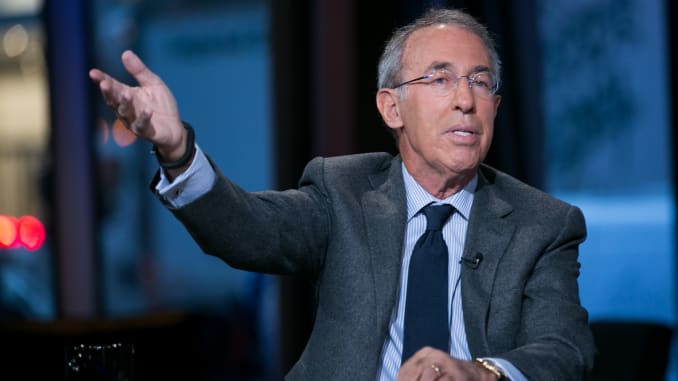
Lessons from Ron Baron, The Long-Term Investor Billionaire
As value investors, a lot of us talk about investing for the long run. But what does investing in the long run really mean? As a value investor, I have had companies that I made over 50% in less than 6 months because that company I owned got acquired. I have also had companies […]

5 Investing Lessons from The Three Kingdom
Just finished rewatching all 95 episodes of The Romance of The Three Kingdoms – Although this is a classic Chinese historical war movie that is likely dramatized, there are a lot of lessons to be learned from it – for value investing purposes. [1] No matter how good we are or how much […]

How I Made 50% in 6 Months with Care.com
Today I want to share with you my thought processes when I first initiated a position in Care.com (NYSE: CRCM) on 28 May 2019 – and less than 6 months later on 20 December 2019 – overall at an average cost of $10.07, I sold off all of it at $15.05. My valuation for care was higher than […]