
Stock Analysis [Simple]
Here’s My Quick Thought on Starbucks Stock
Chris Lee Susanto, Founder at Re-ThinkWealth.com
19 September 2018
Starbucks is a company that needs not much introduction. I am sure that most of us have drunk Starbucks coffee before. And many of us have studied or did some work or caught up with a friend there. Starbucks is a familiar company that is in almost every airport around the world. Their story though started back in Seattle, which was also where Microsoft started.
Starbucks company was formed back in 1985 and it became what it is today under the leadership of its ex-CEO, Howard Schultz who bought Starbucks back in August 1987 for only $3.8 million and turned it into a great brand it is today.
In April 2018, Howard stepped down as CEO to become executive chairman of Starbucks. Kevin Johnson, who has been with Starbucks for over a decade is now CEO.
China is currently Starbucks second largest and fastest-growing market. And Starbucks firmly believe that China and U.S. will be the two most powerful drivers for their future growth.
For the fiscal year 2017, Starbucks revenue grew 5% year on year to $22.4 billion. The revenue growth was due to a 3% rise in global comparable store sales, opening of more than 2,250 net new stores to bring their total store count to 27,000 and share gains in at-home coffee.
Moving ahead, Starbucks have a couple of key priorities that would form their business drivers (based on their 2017 letter to shareholders), they are:
1. Positioning for long-term growth in China
Starbucks firmly believes that the U.S. and China will be two major growth engines for Starbucks. China is where an increasing portion of the overall profit will be coming from. Every 15 hours, Starbucks opens a new store in China.
They have been in China for almost 20 years. And they just opened the world’s largest Starbucks location in Shanghai recently called the Shanghai Starbucks Reserve Roastery.
Starbucks’ partnerships with leading Chinese companies such as Alibaba and Tencent will also help them to perform well in Chinese market.
Recently in August 2018, Alibaba and Starbucks officially partner up to deliver coffee – starting with Beijing and Shanghai and will roll out to other parts of China in the future.
“We’re going to integrate a Starbucks virtual store into all of the Alibaba Group properties,” Johnson told “Mad Money” host Jim Cramer in an interview.
“This means that a customer that uses Alipay or Taobao or Tmall or Hema has an integrated Starbucks virtual store similar to the mobile app embedded right into that experience,” the CEO, Johnson said. “That opens up 500 million or more active users of those apps that will have access to Starbucks.”
The partnership results are something for us to look forward to in the future.
2. Amplifying their core, high-growth businesses
In some region, they have partially licensed model and other regions they have a fully company-owned model. Starbucks aims to fine tune these business models better according to the geography to ensure that they will be more effective. What do Starbucks define as effective remains vague based on their annual reports and letter to shareholders.
Their Teavana’s online store and retail stores have closed. They plan to shift their focus to sell Teavana through their channel partners e-commerce platforms instead of doing it on their own.
Starbucks’ business drivers would be from their China expansion because that is where they are investing at and where they believe the growth will be.
So overall, Starbucks said that their main business drivers moving forward is number 1, growth via China and number 2, amplifying their core, high-growth business via a combination of fine tuning their combination of licensed to company-owned stores and making more money from their Teavana brand.
With regards to Starbucks’s fundamentals as a company, here are the facts:
1. Its EPS grew from 0.93 to 2.16 in a span of 5 years, CAGR of 18.36%. This is a high rate of annual growth for their earnings and if their expansion into China succeeds, this CAGR can be maintained at least or even grow further.
2. It has an industry-leading return on equity of 88.39% and a return on invested capital of 43.85%. This shows that they are very good at generating returns using both equity and debt.
3. Their debt repayment ability is marvelous with a long-term debt to net income ratio of 0.87. This means that in a span of one year, they are able to pay off all their long-term debt with their net income.
And a quick discounted cash flow valuation will show that:
Starbucks free cash flow grew from $919.10 m in June 2011 to $2.618 b in June 2018. A CAGR of 16.13%. If we assume that Starbucks will grow its free cash flow at a higher than average rate of 20% over the next 4 years (due to a potential success in expanding in China and the growth of their Teavana brand) and down to 10% due to saturation for another 5 years and using a 4% perpetual growth rate with 10% cost of equity, we get a value of $67.38 per share and utilizing 15% margin of safety, we get $57.27 as the value for Starbucks’s stock. This scenario is assuming that Starbucks will continue growing at a higher rate for the next 4 years as compared to the last 5 years. If we are to be more conservative, we can instead use a higher margin of safety of 20% instead of 15%. Or you can adjust it based on your own expectations, analysis and assumptions.
Actionable steps for you:
1. Do your own research on Starbucks’s stocks by reading into their annual report to see their plans moving forward.
2. If you like Starbucks, reflect why. What about their brand that you like? or dislike?
3. If you need more help, I can teach you privately. Indicate your interest at valueinvestingmentorship.com.
Disclosure: I own shares of and is long on Starbucks (NASDAQ: SBUX).
Disclaimer: The information provided is for general information purposes only and is not intended to be a personalized investment or financial advice.
Important: Please read our full disclaimer.
I hope you have enjoyed reading the article.
Will The Fed Finally Raise Interest Rate on 16 Dec 2015?
The expectation was based on Chair Janet Yellen's oft-repeated stance that she'd like to see rate rises before the end of 2015. The last time the United States Federal Reserve raised their interest rates was back in 2006, a decade ago. With shares and commodity...

Here Is Everything You Need To Know About The Singapore Savings Bonds
What Are Bonds Bonds are one of the methods for corporations and governments to raise funds. It is a form of borrowing whereby we lend money to the government or corporations and we earn interest on it. We are able to redeem the principal amount but normally there is...

Seven Steps For Starting A Conversation
The seven steps for starting a conversation at a party Give a sincere smile and say Hello Provide a short introduction of who you are and give a firm handshake Listen closely to the person's name - Ask them to repeat it if you did not hear it clearly the first time...

My Week 2 Summary of Yale University Financial Markets Course: The History and Real Impact of Behavioral Finance
The History and The Real Impact of Behavioural Finance People are complex and our financial institutions are designed for real people. This study of behavioural finance started because of the revolution of neuroscience and the fact that the human brain is a...
My Week 1 Summary of Yale University Financial Markets Course: Introduction and Principles of Finance
Recently I embarked on 8 weeks online course from Coursera.org that covers the basics of financial markets. It is taught by Professor Robert J. Shiller, an American Nobel Laureate and also a sterling professor of Economics Yale University. The course will run from the...

2 Key to be SUCCESSFUL in VALUE INVESTING
As the saying goes, "Many roads lead to Rome." The same with value investing, there are many key aspects you can focus on in choosing to buy an undervalued stock. Here is two key to be successful in value investing: Company’s earnings power and whether the stock is...
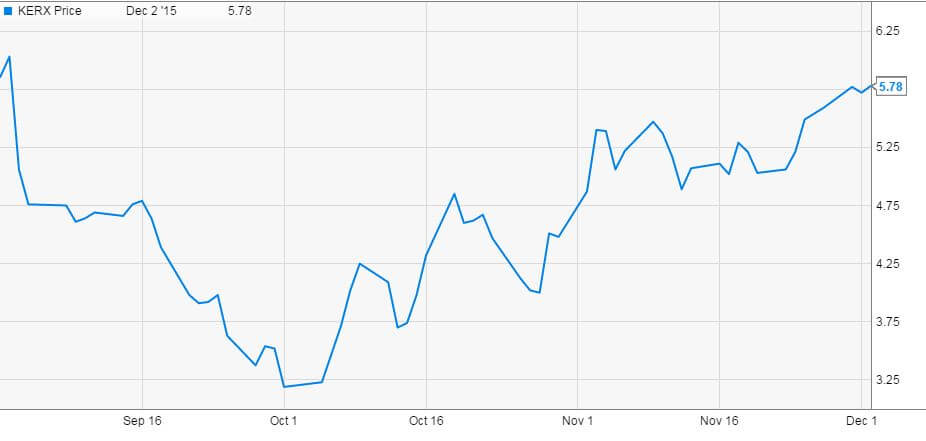
Sold January 2016 put for KERYX
Today i sold January 2016 Put option for Keryx Bio-pharmaceuticals Current Implied Volatility= 98% Margin of safety for stock to fall before being exercised= 30% Strike price=4 USD Premium per contract= 13 USD Commission= 1.4 USD Return in 44 days time=...

The Return on Invested Capital/ROIC Formula | RW Education Series
Return on Invested Capital is an important formula we should look at when analyzing stocks. ROIC, in short, focuses on analyzing the profitability of a company. What is the formula for ROIC?
Return on invested capital […]

Singapore Airlines SIA Retail Bond 2019 – My Thoughts
My take on SIA Retail Bond 2019 where I discussed the pros, cons and overall, my thoughts on it. And whether I would invest in it or not. A few good things to say about it, and some things I thought that people should at least be informed on. Instead of using […]
The Best Value Investing Course in Singapore – VIM Mentorship?
Value Investing Mentorship is created with the goal to be the most effective and exclusive value investing online program. The approach is using twelve exclusive one to one educational lessons that come with assignments to do after each session. With the benefits of […]
Like Investing, Selling Options is Equally Hard. Here’s Why.
Having multiple streams of income is important in my life. In stock investments, most investors I know get their streams of passive income from capital gains and dividends. Getting premiums/cash flow through selling options is another strategy I often use. But all the serious investors will tell you […]