
Value investing
Here’s The Value Investing Strategy Warren Buffett Uses In Bear Market
25 May 2022
Value Investing in Bear Market

In this article, I will be sharing the value investing strategy and philosophies that Warren Buffett uses in the bear market.
The information that I will be sharing is curated from many articles and information that I read around.
First and foremost, bear market is a part of life as an investor.
A bear market is a period of falling stock prices of more than 20% from its peak.
During this time, there is usually more fear than greed in the stock market. There are a lot of uncertainties.
In the stock market, like life itself, it contains ups and downs.
So we should not panic.
In fact, we should think long-term.
Let me share further.
Are We In A Bear Market?
Wall Street has recently suffered the longest losing streak since the Great Depression.
The Dow is on its longest weekly losing streak since almost 100 years ago, since 1923.
The Nasdaq has already been in a bear market since March, and the S&P 500 has recently reached the bear market territory.
In these volatile times, what should we do as an investor?
I think it will be wise to pay heed to advise from Warren Buffett.
Value Investing Philosophies in Bear Market
In 2016, during a period of market volatility, Warren Buffett shared, “I would tell [investors], don’t watch the market closely.”
Warren shared that investors who buy good companies over time will see the results 10, 20, and 30 years down the road.
If we buy and sell stocks, we are likely not to have a very good result.
“The money is made in investing by owning good companies for long periods of time. That’s what people should do with stocks.” – Warren Buffett
The legendary investor Jack Bogle also said that our emotions will defeat us totally if we try to sell our holdings to avoid losses and get back in afterward.
“Don’t let these changes in the market, even the big ones [like the financial crisis] … change your mind and never, never, never be in or out of the market. Always be in at a certain level.” – Jack Bogle
Walking away, and not watching the market closely during a bear market is one of the skills of a value investor.
Being a part business owner, not a stock trader, in the grand scheme of 30 or 40 years of investing career, the bear market today could end up being just a blip in our investing journey or a non-event.
In a bear market, or any market, when there is nothing to do, simply don’t do anything, or just walk away.
One of the worst things we can do is to react emotionally and shrink our time horizon to days or weeks.
Because when stock prices fall, we feel that they will fall forever and we should cut loss and sell.
But stocks, historically speaking, has been proven to recover over time.
And selling too early might prevent us from participating in the recovery phase, whenever that may be.
I saw a quote somewhere that says “market don’t settle down, it settles up.”
Having liquid cash is key to use during a bear market, so we will not sell our long-term investments during a bear market.
How Long Will A Bear Market Last?
Historically, most bear markets do not last more than two years.
But if we follow Warren Buffett’s teaching, I think he will say it is a fool’s errand to try to predict how the market will move.
Instead, we should focus on paying for the stock at a price that makes our money’s worth.
Looking at the reason for the current bear market, it’s pretty similar to the bear market in the late 1980s when the Fed raise interest rates to fight inflation. It lasted 622 days, ending in August 1982.
Currently, our Fed Chairman, Jerome Powell also made a similar commitment to continue raising interest rates until inflation subsides.
A Catalyst for A Recovery From Bear Market?
Inflation will not go up forever and interest rates will also not go up forever.
In my view, if inflation eases downward this year, the Fed will not likely keep on raising interest rates.
While currently, Russia is keen to restart peace talks, Ukraine is not – as Ukraine is currently not keen to cede any territories to Moscow.
Currently, the end of war is nowhere in sight. But any positive development may be a potential catalyst for a recovery from the current bear market.
But again, it is hard to predict the stock market movement, and the best thing we can do is focus on the long-term and invest at a price where we think the business should be worth much more.
Ultimately, The Warren Buffett’s Value Investing Philosophy That We Can Count on In A Bear Market is…
“This is the cornerstone of our investment philosophy: Never count on making a good sale. Have the purchase price be so attractive that even a mediocre sale gives good results.” – Warren Buffett
Ultimately, a bear market will likely not last forever.
And what we need to focus on is investing in a company that we understand a lot about, at a price given a conservative estimate of its future value, there is a high probability of us making money.
Because ultimately, behind every stock, is a business.
And bear market offers value investors the opportunity to acquire shares of these businesses that we believe to have a good future ahead of them, at a discounted price.
Because historically speaking, the best days in the stock market are usually preceded by the worst ones.
So let us all have the right perspective in a bear market, and do not react emotionally, but respond wisely.
Disclaimer:
The information provided is for educational and general information purposes only and is not intended to be personalized investment or financial advice. We make no promises as to the accuracy or usefulness of the information we present.
Important: Please read our full disclaimer.
Benefited from the content?
I will be very thankful if you can share it around on your social media or with your friends ?

Chris Lee Susanto
Co-Founder of Evergrow Fund, Founder of Re-ThinkWealth.com, and Founder of Value Investing Mentorship Club®.
Chris started investing in stocks early at age 21 and is a big proponent of business-like stock investing – a mixture of both value and growth investing. He invests in companies where there is value to be found (as long as it is still within his circle of competence), be it a turnaround, depressed, value, or quality growth company (compounders). He either buys the stock outright or he profits through selling put or selling call options – or buying call options (buying and selling options are especially dangerous for those who do not know how to properly execute them).
Some of the places where Chris has been invited to speak or has added value as a mentor or writer include Singapore Polytechnic, SMU Institute of Innovation and Entrepreneurship (IIE), Seedly TV, Dollars and Sense, The New Savvy, Value Walk Blog, Investment Moats, NUS Tembusu College, NUS Investment Society, CGS-CIMB Singapore, Singapore Financial Conference by NTU IIC, The Financial Coconut Podcast, Money FM 89.3 and Internationally in Myanmar.
He is also a practitioner of Transcendental Meditation and Mindfulness practice. He also advocates regular exercise, enough sleep, and nutritious food as part of our lifestyle as an investor so that we can see things with a clearer lens and not be “caught” due to ignorance.
To find out more about VIM, click here.
Don’t Leave First, Read Also:

My Week 5 Summary of Yale University Financial Markets Course: Derivatives, Futures, Forwards and Options Market
Introduction to Derivatives, Futures, Forwards, and Options market from Professor Robert Shiller The derivatives market is a market for securities with a price that is dependent upon or derived from one or more underlying assets. Examples of Derivates market are...
My Week 4 Summary of Yale University Financial Markets Course part 2: Regulations of Companies
Introduction to Regulation and Enterprise from Professor Robert Shiller Regulatory bodies US government set up Picture source: Google In 1968, the US government set up Federal National Mortgage Association (Fannie May) and in 1970, the US government set up Federal...
My Week 4 Summary of Yale University Financial Markets Course part 1: Real Estate
Introduction to Real Estate from Professor Robert Shiller Picture source: Google Real Estate is one of the most important classes of asset in the world and it is generally privately held in most countries. With the exception of China, whereby the government...

Keryx Biopharmaceuticals could be an Interesting Biotech Stock Play
Keryx Biopharmaceuticals Inc (NASDAQ: KERX) is essentially a bio-pharmaceutical company focused on the research, development and commercialization of pharmaceutical products geared towards patients with kidney disease and their healthcare providers. High volatility c...
Do You Know What Is Private Equity?
Differences Between Public Firm And Private Firm In Terms Of Buying Of Their Equity Stake "Equity" is another word that means the same as "stock"- which means that when you own it, you are owning a percentage of the company (the percentage of how much of the company...

4 Secrets For Thinking Positively
Humans are emotional creatures and most of the time, we cannot control our emotions when we feel sad or happy. However, we can train our mind to think good thoughts. When we control what we think, we can control what we feel. Think with the end in mind - Amidst the...
My Week 3 Summary of Yale University Financial Markets Course: Theory of Debt
In this module, Professor Shiller discusses the theory of debt and its proper role. He also covers corporate stocks. A naïve view of what stocks are is that it is some certificate that people buy so that the price can go up. That is not what stocks are. Stocks...
The Federal Reserve Raises Interest Rate: What Does It Mean For Us?
After almost a decade, The Federal Reserve raises a higher interest rate for the first time. The Federal Open Market Committee unanimously voted to set the new target range for the federal funds rate at 0.25 percent to 0.5 percent, up from zero to 0.25 percent. Policy...
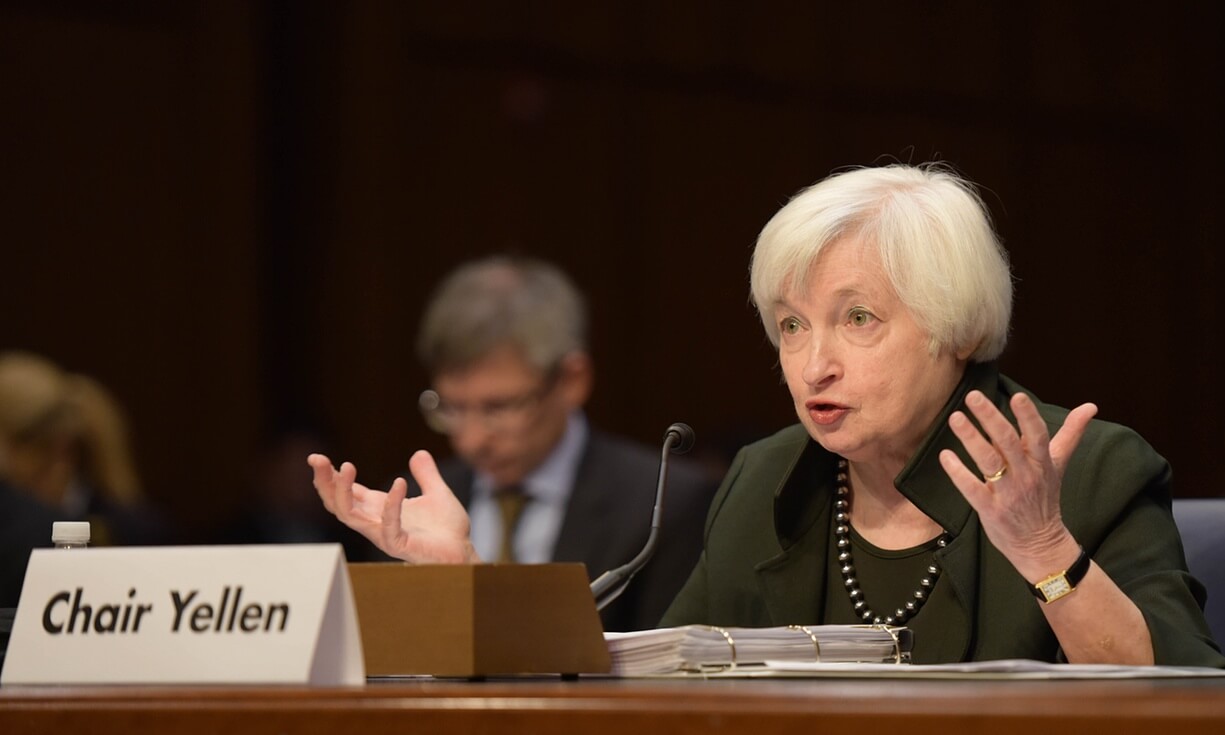
Will The Fed Finally Raise Interest Rate on 16 Dec 2015?
The expectation was based on Chair Janet Yellen's oft-repeated stance that she'd like to see rate rises before the end of 2015. The last time the United States Federal Reserve raised their interest rates was back in 2006, a decade ago. With shares and commodity...
Here Is Everything You Need To Know About The Singapore Savings Bonds
What Are Bonds Bonds are one of the methods for corporations and governments to raise funds. It is a form of borrowing whereby we lend money to the government or corporations and we earn interest on it. We are able to redeem the principal amount but normally there is...

Seven Steps For Starting A Conversation
The seven steps for starting a conversation at a party Give a sincere smile and say Hello Provide a short introduction of who you are and give a firm handshake Listen closely to the person's name - Ask them to repeat it if you did not hear it clearly the first time...
My Week 2 Summary of Yale University Financial Markets Course: The History and Real Impact of Behavioral Finance
The History and The Real Impact of Behavioural Finance People are complex and our financial institutions are designed for real people. This study of behavioural finance started because of the revolution of neuroscience and the fact that the human brain is a...