
Investing
Intrinsic Value of Stock: Here’s What It Means Based on Warren Buffett
Chris Lee Susanto, Founder at Re-ThinkWealth.com
6 July 2019

Image source: Flickr
Here’s the thing:
1. Different people may have a different definition of intrinsic value.
2. Even if two people have the same definition of a stock’s intrinsic value, they would most likely not get the same precise value of a company during valuation.
Lets tackle [1] first, then I will go on to [2] later.
What is Warren Buffett’s definition of intrinsic value?
Warren Buffett’s definition of intrinsic value is “the discounted value of the cash that can be taken out of a business during its remaining life”.
Now take a moment to pause and think about the above definition.
Isn’t it logical?
I think that it is easy enough to understand.
Basically, the intrinsic value of any stock is the estimate of future cash flows that a business can produce out of its remaining lifetime.
Now that is where [2] comes about. Remember above I said that even if two people have the same definition of a stock’s intrinsic value, they would most likely not get the same precise value of a company during the valuation?
This is where investing in stocks get interesting and fun.
If we break down the definition properly, there are 3 assumptions or inputs or estimates that an investor needs to make based on this definition of intrinsic value:
1. The future cash flows of the business
2. The number of remaining years the business can last
3. The rate as to which we discount the cash flows to the present value
So first, it means that to be able to get a business’s intrinsic value, we need to be able to predict with quite a high certainty of the business’s future cash flows.
This requires the investor’s understanding of the target business.
The estimated number of years and the rate of return to present value the cash flows need to also have a range.
That is where we can do a sensitivity analysis.
But the key is this: the next time you want to analyze any business to come out with its intrinsic value, you must first ask yourself: Can you get a reliable estimate of the future cash flows of the target business? Can you estimate its future well enough to understand the estimated length of life it can have?
If the answer is no, it is likely that this business is not within your circle of competence and it is best to skip it.
Disclaimer:
The information provided is for general information purposes only and is not intended to be a personalized investment or financial advice.
Important: Please read our full disclaimer.
Read also now:
No Results Found
The page you requested could not be found. Try refining your search, or use the navigation above to locate the post.
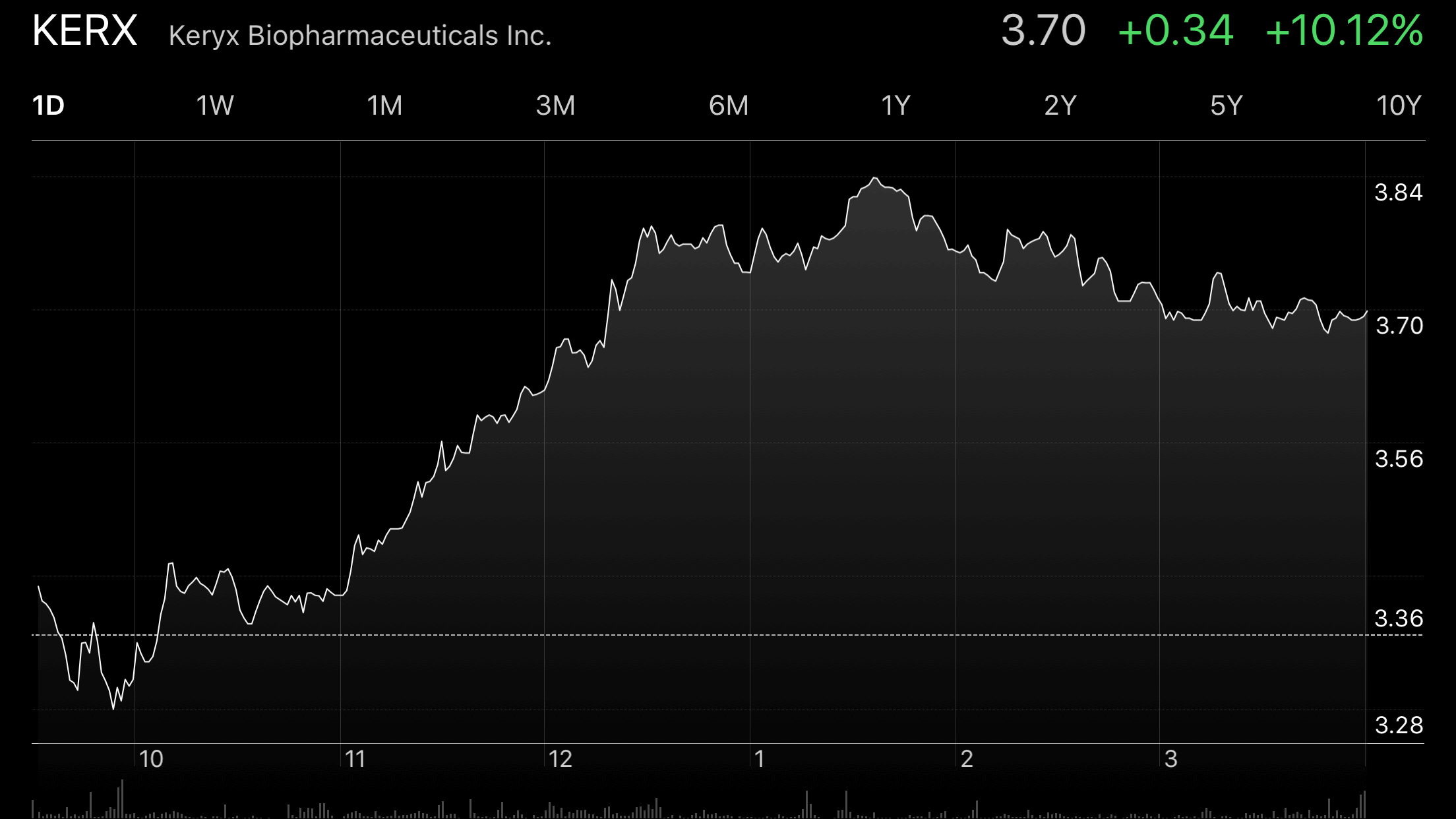
Reasons Why One Of My Top Holdings Keryx Biopharmaceuticals (NASDAQ: KERX) Went Up 10.12% in One day
KERX is one the top holdings of my portfolio to which I categorized it as a growth stock - which means there is a potential for it to grow multi-fold in terms of the stock price. I first talked about KERX in my earlier article and it gives a good summary of the stock....

Key Take Aways From AIESEC SIM Youth Dialogue 2016
"You don't have to be great to start but you have to start to be great"- Zig Ziglar 1) Develop a growth mindset instead of a fixed mindset Do not let the voices inside your head dictates what you can or you cannot do. You feed the beliefs in your head, so if you feel...

My Week 8 Summary of Yale University Financial Markets Course: Conclusion to the 8 Weeks Course
Non- Profit Finance The idea of finance for a long time has always been to make a lot of money. However, in fact, non-profit finance is a pretty big thing in the United States - it is around 4% of their gross domestic product (GDP). Many people such as Professor Dean...

3 Reasons Why I Bought Keppel DC REIT (SGX: AJBU)
Keppel DC REIT (AGX: AJBU) is a Singapore-based real estate investment trust (REIT), established with the main investment strategy of investing in a portfolio of income-producing real estate assets which are used primarily for data centre purposes, with an initial...

Want To Be Rich? Get The Right Habits and This Is How You Can Start…
I have never been a believer of getting rich quick schemes, success to me is nothing but 1% inspiration and 99% perspiration - with an element of luck that will only come along to those who are prepared. Ultimately, no matter who you are, I believe that becoming rich...
My Week 7 Summary of Yale University Financial Markets Course: Critical Elements of the Financial Infrastructure
The Financial Infrastructure Includes: 1) Buy side People who are in the business of buying securities like stocks and bonds. They do it as professionals. Professional Investment Managers and Their Influence The law prescribes that Investment Managers who manage other...
#FAQ: What Is Value Investing?
As Investing is both an art and also a science, similarly different people can have a different definition of value investing - I can share with you mine in a few short paragraphs: It is essentially buying the stock of a cheap and good business with a large enough...
My Week 6 Summary of Yale University Financial Markets Course: Key Role of Banks and Monetary Policies
Disclaimer: This will be one of the more "difficult to understand" chapter as compared to the past 5 weeks (although I tried my best to make it as easy as possible to understand) - so feel free to ask me any questions! Guide: Bank Runs = A situation that occurs when...