
Investing
Intrinsic Value of Stock: Here’s What It Means Based on Warren Buffett
Chris Lee Susanto, Founder at Re-ThinkWealth.com
6 July 2019

Image source: Flickr
Here’s the thing:
1. Different people may have a different definition of intrinsic value.
2. Even if two people have the same definition of a stock’s intrinsic value, they would most likely not get the same precise value of a company during valuation.
Lets tackle [1] first, then I will go on to [2] later.
What is Warren Buffett’s definition of intrinsic value?
Warren Buffett’s definition of intrinsic value is “the discounted value of the cash that can be taken out of a business during its remaining life”.
Now take a moment to pause and think about the above definition.
Isn’t it logical?
I think that it is easy enough to understand.
Basically, the intrinsic value of any stock is the estimate of future cash flows that a business can produce out of its remaining lifetime.
Now that is where [2] comes about. Remember above I said that even if two people have the same definition of a stock’s intrinsic value, they would most likely not get the same precise value of a company during the valuation?
This is where investing in stocks get interesting and fun.
If we break down the definition properly, there are 3 assumptions or inputs or estimates that an investor needs to make based on this definition of intrinsic value:
1. The future cash flows of the business
2. The number of remaining years the business can last
3. The rate as to which we discount the cash flows to the present value
So first, it means that to be able to get a business’s intrinsic value, we need to be able to predict with quite a high certainty of the business’s future cash flows.
This requires the investor’s understanding of the target business.
The estimated number of years and the rate of return to present value the cash flows need to also have a range.
That is where we can do a sensitivity analysis.
But the key is this: the next time you want to analyze any business to come out with its intrinsic value, you must first ask yourself: Can you get a reliable estimate of the future cash flows of the target business? Can you estimate its future well enough to understand the estimated length of life it can have?
If the answer is no, it is likely that this business is not within your circle of competence and it is best to skip it.
Disclaimer:
The information provided is for general information purposes only and is not intended to be a personalized investment or financial advice.
Important: Please read our full disclaimer.
Read also now:
No Results Found
The page you requested could not be found. Try refining your search, or use the navigation above to locate the post.

Will The Fed Finally Raise Interest Rate on 16 Dec 2015?
The expectation was based on Chair Janet Yellen's oft-repeated stance that she'd like to see rate rises before the end of 2015. The last time the United States Federal Reserve raised their interest rates was back in 2006, a decade ago. With shares and commodity...

Here Is Everything You Need To Know About The Singapore Savings Bonds
What Are Bonds Bonds are one of the methods for corporations and governments to raise funds. It is a form of borrowing whereby we lend money to the government or corporations and we earn interest on it. We are able to redeem the principal amount but normally there is...

Seven Steps For Starting A Conversation
The seven steps for starting a conversation at a party Give a sincere smile and say Hello Provide a short introduction of who you are and give a firm handshake Listen closely to the person's name - Ask them to repeat it if you did not hear it clearly the first time...

My Week 2 Summary of Yale University Financial Markets Course: The History and Real Impact of Behavioral Finance
The History and The Real Impact of Behavioural Finance People are complex and our financial institutions are designed for real people. This study of behavioural finance started because of the revolution of neuroscience and the fact that the human brain is a...
My Week 1 Summary of Yale University Financial Markets Course: Introduction and Principles of Finance
Recently I embarked on 8 weeks online course from Coursera.org that covers the basics of financial markets. It is taught by Professor Robert J. Shiller, an American Nobel Laureate and also a sterling professor of Economics Yale University. The course will run from the...

2 Key to be SUCCESSFUL in VALUE INVESTING
As the saying goes, "Many roads lead to Rome." The same with value investing, there are many key aspects you can focus on in choosing to buy an undervalued stock. Here is two key to be successful in value investing: Company’s earnings power and whether the stock is...
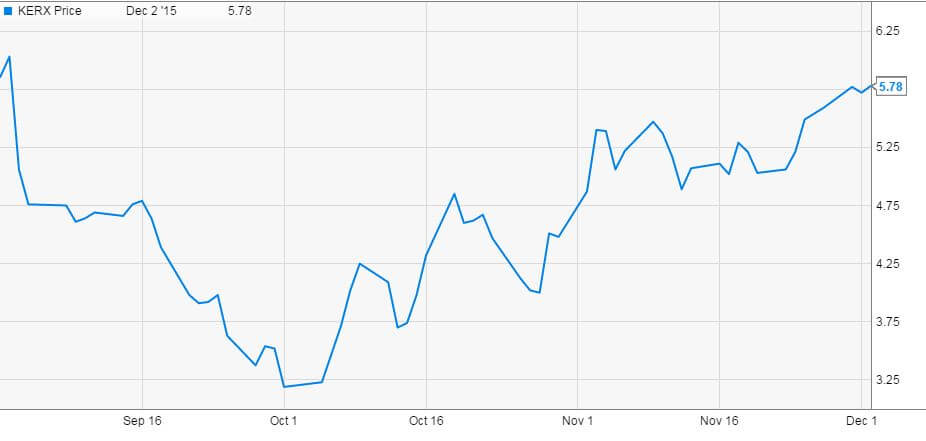
Sold January 2016 put for KERYX
Today i sold January 2016 Put option for Keryx Bio-pharmaceuticals Current Implied Volatility= 98% Margin of safety for stock to fall before being exercised= 30% Strike price=4 USD Premium per contract= 13 USD Commission= 1.4 USD Return in 44 days time=...