Investing
What I Learnt From Adam Smith About Investment and Money
Chris Susanto
18 July 2020
Who is Adam Smith?
Adam Smith (1723-1790) was a philosopher and economist who was best known for authoring the book An Inquiry into the Nature and Causes of the Wealth of Nations. Wealth of Nations also happens to be one of Warren Buffett’s favourite books.
See also: Our free investing telegram channel. We post daily.
What I Learnt From Adam Smith About Investment and Money
1. Professional investors are deemed to be smarter because they can churn out ratios at the touch of a button compared to the small investor. They are in fact, not smarter, they merely have more information
It is true that the pros have more resources at hand to subscribe to Bloomberg Terminal for example which cost a bomb. And they are deemed to be smarter.
But the truth is having more resources and information may not always result in better investment performance. Because investment performance is also a lot about managing our emotions.
2. To be a good investor, you have to be a good brain picker and brain pickers are usually good for a dinner conversation
Hence the saying too, it is not just what you know, but who you know.
This does not mean that we should ask for stock tips.
I think that what Adam might be saying here is that we should leverage on people’s views on some stocks he or she might be looking at.
It is ultimately left to our judgment, analysis, and valuation on whether the stock is worth investing or not.
3. The safest way to preserve capital is to double it
I believe in this insight of him. It is indeed the safest way because if we manage to double our money, we can withstand more draw-down and still preserve our capital.
4. The stock does not know that you own it
This is one of my favorite ones. Recently I talked to a friend, an ex MD of UBS. Even a man of his experience would agree with me that people (including myself) anchor the stock to the price we bought it at. But hey, the stock does not even know that we own it. And at what price. But humans are often very emotional about stocks and anchor them to the price we bought it at.
In the end, what matters is the value of the business, not the daily stock price movement. So in a sense, the price is meaningless, our value of it – and whether we are right or wrong is.
5. 80% of the market game is psychology
I agree. That is why I named my blog re-thinkwealth. It is to remind us to rethink our assumptions and logic. And to remind me as well that ultimately the name of the game is having good emotional control as well as a rational mind.
6. If you do not know who you are, the market is a terribly expensive place to find out
I agree. The stock market often rattles people because [1] they follow people blindly and do not understand what they are doing [2] they forgot that investing in the stock market is a combination of good emotional control as well as having a rational mind.
Disclaimer:
The information provided is for general information purposes only and is not intended to be a personalized investment or financial advice.
Important: Please read our full disclaimer.

Chris Lee Susanto
Founder of the value investing blog Re-ThinkWealth.com (if you type “value investing blog” in Google, his blog is likely the first one). Being a full-time investor himself, Chris knows that he did not beat the S&P 500 return so far (as of the time of this writing) by listening to stock tips. So, when he teaches, he also doesn’t believe in giving stock tips as it is not sustainable for you in the long run. He will teach you how to make your own intelligent decisions with his 4M1S framework. Feel free to also join his free investment telegram channel here.
Read also now:
My Week 5 Summary of Yale University Financial Markets Course: Derivatives, Futures, Forwards and Options Market
Introduction to Derivatives, Futures, Forwards, and Options market from Professor Robert Shiller The derivatives market is a market for securities with a price that is dependent upon or derived from one or more underlying assets. Examples of Derivates market are...
My Week 4 Summary of Yale University Financial Markets Course part 2: Regulations of Companies
Introduction to Regulation and Enterprise from Professor Robert Shiller Regulatory bodies US government set up Picture source: Google In 1968, the US government set up Federal National Mortgage Association (Fannie May) and in 1970, the US government set up Federal...
My Week 4 Summary of Yale University Financial Markets Course part 1: Real Estate
Introduction to Real Estate from Professor Robert Shiller Picture source: Google Real Estate is one of the most important classes of asset in the world and it is generally privately held in most countries. With the exception of China, whereby the government...

Keryx Biopharmaceuticals could be an Interesting Biotech Stock Play
Keryx Biopharmaceuticals Inc (NASDAQ: KERX) is essentially a bio-pharmaceutical company focused on the research, development and commercialization of pharmaceutical products geared towards patients with kidney disease and their healthcare providers. High volatility c...
Do You Know What Is Private Equity?
Differences Between Public Firm And Private Firm In Terms Of Buying Of Their Equity Stake "Equity" is another word that means the same as "stock"- which means that when you own it, you are owning a percentage of the company (the percentage of how much of the company...

4 Secrets For Thinking Positively
Humans are emotional creatures and most of the time, we cannot control our emotions when we feel sad or happy. However, we can train our mind to think good thoughts. When we control what we think, we can control what we feel. Think with the end in mind - Amidst the...
My Week 3 Summary of Yale University Financial Markets Course: Theory of Debt
In this module, Professor Shiller discusses the theory of debt and its proper role. He also covers corporate stocks. A naïve view of what stocks are is that it is some certificate that people buy so that the price can go up. That is not what stocks are. Stocks...
The Federal Reserve Raises Interest Rate: What Does It Mean For Us?
After almost a decade, The Federal Reserve raises a higher interest rate for the first time. The Federal Open Market Committee unanimously voted to set the new target range for the federal funds rate at 0.25 percent to 0.5 percent, up from zero to 0.25 percent. Policy...
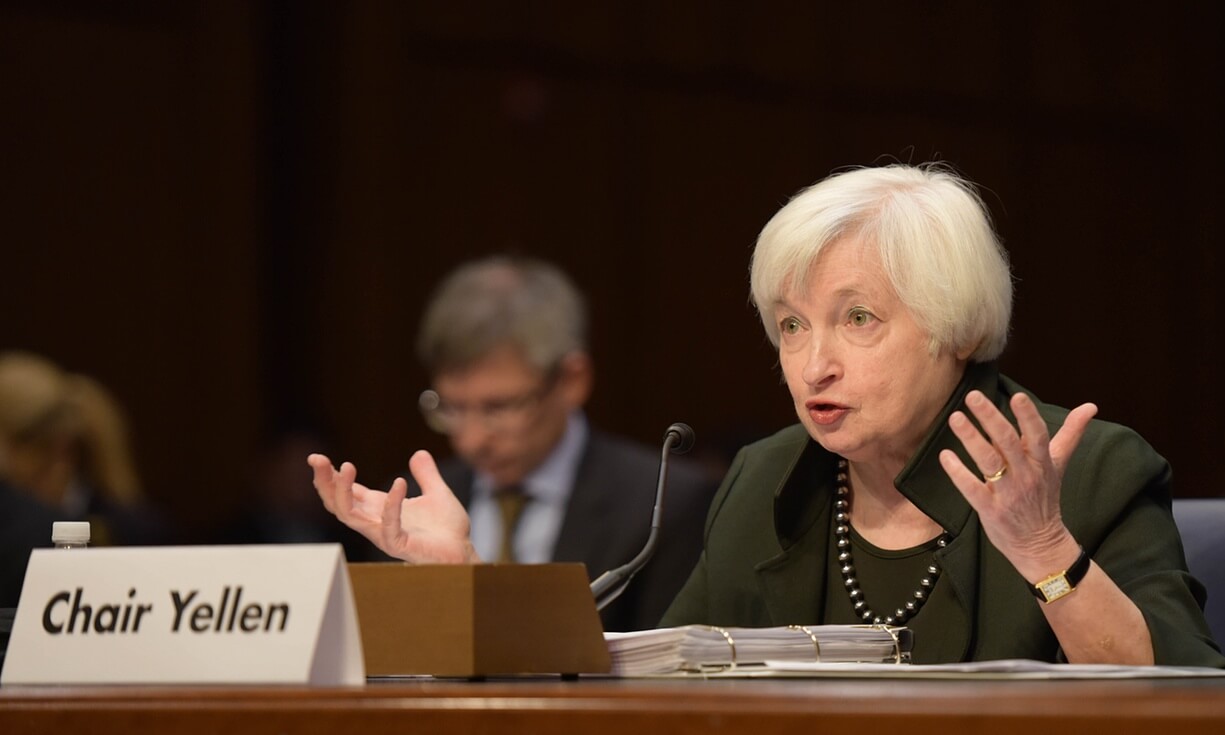
Will The Fed Finally Raise Interest Rate on 16 Dec 2015?
The expectation was based on Chair Janet Yellen's oft-repeated stance that she'd like to see rate rises before the end of 2015. The last time the United States Federal Reserve raised their interest rates was back in 2006, a decade ago. With shares and commodity...
Here Is Everything You Need To Know About The Singapore Savings Bonds
What Are Bonds Bonds are one of the methods for corporations and governments to raise funds. It is a form of borrowing whereby we lend money to the government or corporations and we earn interest on it. We are able to redeem the principal amount but normally there is...

Seven Steps For Starting A Conversation
The seven steps for starting a conversation at a party Give a sincere smile and say Hello Provide a short introduction of who you are and give a firm handshake Listen closely to the person's name - Ask them to repeat it if you did not hear it clearly the first time...
My Week 2 Summary of Yale University Financial Markets Course: The History and Real Impact of Behavioral Finance
The History and The Real Impact of Behavioural Finance People are complex and our financial institutions are designed for real people. This study of behavioural finance started because of the revolution of neuroscience and the fact that the human brain is a...
My Week 1 Summary of Yale University Financial Markets Course: Introduction and Principles of Finance
Recently I embarked on 8 weeks online course from Coursera.org that covers the basics of financial markets. It is taught by Professor Robert J. Shiller, an American Nobel Laureate and also a sterling professor of Economics Yale University. The course will run from the...

2 Key to be SUCCESSFUL in VALUE INVESTING
As the saying goes, "Many roads lead to Rome." The same with value investing, there are many key aspects you can focus on in choosing to buy an undervalued stock. Here is two key to be successful in value investing: Company’s earnings power and whether the stock is...
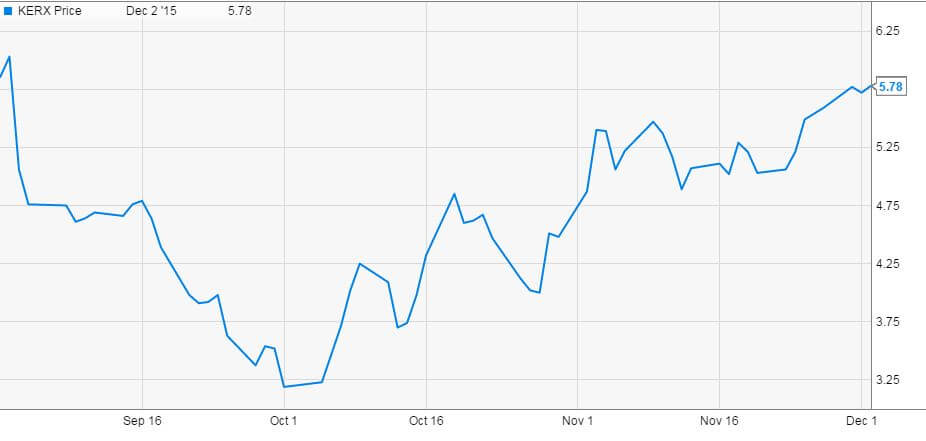
Sold January 2016 put for KERYX
Today i sold January 2016 Put option for Keryx Bio-pharmaceuticals Current Implied Volatility= 98% Margin of safety for stock to fall before being exercised= 30% Strike price=4 USD Premium per contract= 13 USD Commission= 1.4 USD Return in 44 days time=...