Investing
Lessons from Ron Baron, The Long-Term Investor Billionaire
Chris Lee Susanto, Founder at Re-ThinkWealth.com
15 May 2020
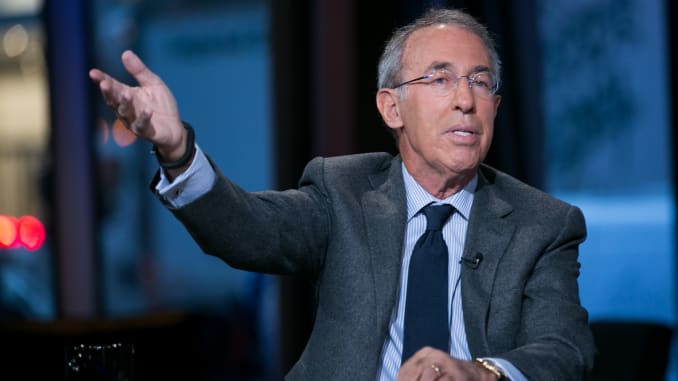
Image source: CNBC
As value investors, a lot of us talk about investing for the long run.
But what does investing in the long run really mean?
As a value investor, I have had companies that I made over 50% in less than 6 months because that company I owned got acquired. I have also had companies that I sold and it went up another 20-25% after I sold.
But have you held a company for 14 years before? I have not, but the Billionaire long-term/value investor Ron Baron has.
Ron Baron is the founder, CEO, and CIO of Baron Capital which he started in 1982.
The investment firm currently manages around $30 billion of AUM.
From my knowledge, since successfully founding and growing his money management firm since 1982 – Ron’s company had made more than $25 billion in profit for his clients.
So what can we learn from Ron Baron, value investing wise?
Based on a CNBC article dated on August 20, 2019, it says:
“With a net worth of $2.2 billion, according to Forbes, Baron has made a fortune by doing extensive research, buying the stocks of companies he feels are undervalued, and keeping them for an average of about 14 years.”
Based on the quote above, we know that Ron holds companies for an average of 14 years.
What I know as an investor is:
[1] To hold a company for an average of 14 years would require us to also decide for 14 years to not sell the company. That would require us to really understand the company well enough in terms of its business value.
[2] It can be really hard in today’s modern times because patience, to be honest, is generally short in supply. In the older days, it is harder to get information.
Today, we are bombarded by information all in the palm of our hands. We have stock prices, minute by minute, and headlines that could easily influence us emotion wise and might result in us making the wrong decision.
[3] But I know that to really outperform and hold a company for so long, we have to invest in companies that have a long-term bright future that we can hold for the long-run. And in the long-run, it means more than 10 years.
It is important that it is a great company with a strong & durable competitive advantage because if it is not, they will only get worse over time (meaning, the longer we hold the company, the more money we are going to lose).
Consistency is also key. Ron Baron suggests that we should not buy and sell based on headlines.
Many people buy at the wrong time and sell at the wrong time because we are emotional.
For Ron Baron, he buys stocks monthly and buys more when the market is fearful.
In this Outlook Business article, Ron Baron shed a few more investing learning points:
“What’s going to happen if interest rates rise and what happens if oil prices go up? Everyone has a point of view about what they think is going to happen and, for the most part, invest in liquid securities. That’s macro investing. We don’t do that.”
“Baron explains that successful investing is not just about finding the right company but also holding on to it as it grows.”
“Baron believes the biggest mistake investors generally make is to avoid paying a small premium for a strong growing business.”
“We invest for the long term and, over time, become quite knowledgeable about the businesses that we invest in.”
“We focus on companies that are smaller. You need liquidity only if you are buying and selling all the time. For example, in the Baron Growth Fund, the average holding period is 13-14 years, while the average holding period for most mutual funds is nine months to a year. So, if you are buying and selling in a very rapid fashion, you need a lot of liquidity. But if you are making investments over an extended period of time, then you need less liquidity. If the business is going to flourish then you will end up making a lot of money. To give you an example, a chunk of our $25 billion profit has come from relatively small number of companies — 15 companies fetched us $11 billion.”
“We look at whether we’ve made a mistake — and it’s never about the price. If we’ve made a mistake in terms of a business plan not working out as expected, we sell. It’s all about the fundamentals of a business and not about the stock price.”
“And if we are wrong, we just sell as fast as we can. Just get out as fast as you can when you make a mistake and, hopefully, not too often. When you make a mistake, you just move on. “
“In short, we try to discover businesses that, first, can become much larger than they are at present. Second, there is something about the business that gives it a sustainable competitive advantage which others can’t duplicate. Third, it’s all about the management team — exceptional, honest, that work hard and are not going to cheat us; they are going to work for us as opposed to themselves”
“Hence, we are always talking with companies, studying the businesses and making sure that our assessment is going in the right direction. If your thesis is correct, you hold the stock regardless of what the price is doing.”
“When I invested in Vail, for the first 10 years we made just 60-70%. In 2006, the stock was still at $26-27 and now it’s $220-230. In the past 12 years we made 8-9x return. So, you have to be patient. You can’t expect when you buy a stock that it keeps going up 1.5% every single month, at the end of 10 years you would have made 4x. You have to be prepared at any point in time to lose 20% of your money, and make sure that you have enough time to make it back. “
See also: 5 Investing Lessons from The Three Kingdom
Again, we learn some of the investment thought processes that Ron Baron has from the above few quotes, they are:
[1] Ron is a bottom-up investor. That means that he does not think about macro, he does not think about the interest rates. He focuses on analyzing the business and buying a stake of it via the stock market.
[2] He mentions that the key to good investing is not only in finding the right company but holding it as it grows.
[3] Value investors have a common connotation that we only buy cheap undervalued companies. But it is not true, Warren Buffett said something along the line that value and growth are both parts of the value of the business. For Ron, he does not mind paying a small premium for a great business.
[4] When Ron makes a mistake, it is always about the fundamentals of the company and not about the stock price. He admits mistakes fast and moves on. And as we can see, he definitely let his winners make up for his mistakes. He said above that majority of his $25 billion profit comes from a relatively small number of companies – 15 companies fetched them $11 billion.
[5] His example with his Vail investment truly epitome the power of long-term investing. If a company is still good and worth holding, it is obvious that Ron will just hold them. That is how he outperforms.
I hope the above article is value-adding to you 🙂
Want Join my FREE Telegram Channel to Get FREE stocks, business, economy and investing knowledge at Your Fingertips?
Legal Disclaimer:
Re-ThinkWealth is a personal value investing & options selling blog. By using this Site, you specifically agree that all the information provided is for general information purposes only and is not intended to be a personalized investment or financial advice.
Important: Please read our full disclaimer.
Some of our most popular articles:
What is Value Investing? – An article I wrote for Value Walk describing in summary what exactly is value investing.
The 100+ Most Intelligent Investing Quotes of All Time – I love quotes. Especially quotes by value investors who had been wildly successful at managing their funds. The list is consistently updated.
The Intelligent Investor Summary (Ultimate Guide) – A very popular article from my site that summarizes concepts of value investing from the father of value investing, Benjamin Graham.
Chris’s latest articles:
My Week 5 Summary of Yale University Financial Markets Course: Derivatives, Futures, Forwards and Options Market
Introduction to Derivatives, Futures, Forwards, and Options market from Professor Robert Shiller The derivatives market is a market for securities with a price that is dependent upon or derived from one or more underlying assets. Examples of Derivates market are...
My Week 4 Summary of Yale University Financial Markets Course part 2: Regulations of Companies
Introduction to Regulation and Enterprise from Professor Robert Shiller Regulatory bodies US government set up Picture source: Google In 1968, the US government set up Federal National Mortgage Association (Fannie May) and in 1970, the US government set up Federal...
My Week 4 Summary of Yale University Financial Markets Course part 1: Real Estate
Introduction to Real Estate from Professor Robert Shiller Picture source: Google Real Estate is one of the most important classes of asset in the world and it is generally privately held in most countries. With the exception of China, whereby the government...
Keryx Biopharmaceuticals could be an Interesting Biotech Stock Play
Keryx Biopharmaceuticals Inc (NASDAQ: KERX) is essentially a bio-pharmaceutical company focused on the research, development and commercialization of pharmaceutical products geared towards patients with kidney disease and their healthcare providers. High volatility c...
Do You Know What Is Private Equity?
Differences Between Public Firm And Private Firm In Terms Of Buying Of Their Equity Stake "Equity" is another word that means the same as "stock"- which means that when you own it, you are owning a percentage of the company (the percentage of how much of the company...
4 Secrets For Thinking Positively
Humans are emotional creatures and most of the time, we cannot control our emotions when we feel sad or happy. However, we can train our mind to think good thoughts. When we control what we think, we can control what we feel. Think with the end in mind - Amidst the...
My Week 3 Summary of Yale University Financial Markets Course: Theory of Debt
In this module, Professor Shiller discusses the theory of debt and its proper role. He also covers corporate stocks. A naïve view of what stocks are is that it is some certificate that people buy so that the price can go up. That is not what stocks are. Stocks...
The Federal Reserve Raises Interest Rate: What Does It Mean For Us?
After almost a decade, The Federal Reserve raises a higher interest rate for the first time. The Federal Open Market Committee unanimously voted to set the new target range for the federal funds rate at 0.25 percent to 0.5 percent, up from zero to 0.25 percent. Policy...
Will The Fed Finally Raise Interest Rate on 16 Dec 2015?
The expectation was based on Chair Janet Yellen's oft-repeated stance that she'd like to see rate rises before the end of 2015. The last time the United States Federal Reserve raised their interest rates was back in 2006, a decade ago. With shares and commodity...
Here Is Everything You Need To Know About The Singapore Savings Bonds
What Are Bonds Bonds are one of the methods for corporations and governments to raise funds. It is a form of borrowing whereby we lend money to the government or corporations and we earn interest on it. We are able to redeem the principal amount but normally there is...
Seven Steps For Starting A Conversation
The seven steps for starting a conversation at a party Give a sincere smile and say Hello Provide a short introduction of who you are and give a firm handshake Listen closely to the person's name - Ask them to repeat it if you did not hear it clearly the first time...
My Week 2 Summary of Yale University Financial Markets Course: The History and Real Impact of Behavioral Finance
The History and The Real Impact of Behavioural Finance People are complex and our financial institutions are designed for real people. This study of behavioural finance started because of the revolution of neuroscience and the fact that the human brain is a...
My Week 5 Summary of Yale University Financial Markets Course: Derivatives, Futures, Forwards and Options Market
Introduction to Derivatives, Futures, Forwards, and Options market from Professor Robert Shiller The derivatives market is a market for securities with a price that is dependent upon or derived from one or more underlying assets. Examples of Derivates market are...
My Week 4 Summary of Yale University Financial Markets Course part 2: Regulations of Companies
Introduction to Regulation and Enterprise from Professor Robert Shiller Regulatory bodies US government set up Picture source: Google In 1968, the US government set up Federal National Mortgage Association (Fannie May) and in 1970, the US government set up Federal...
My Week 4 Summary of Yale University Financial Markets Course part 1: Real Estate
Introduction to Real Estate from Professor Robert Shiller Picture source: Google Real Estate is one of the most important classes of asset in the world and it is generally privately held in most countries. With the exception of China, whereby the government...
Keryx Biopharmaceuticals could be an Interesting Biotech Stock Play
Keryx Biopharmaceuticals Inc (NASDAQ: KERX) is essentially a bio-pharmaceutical company focused on the research, development and commercialization of pharmaceutical products geared towards patients with kidney disease and their healthcare providers. High volatility c...
Do You Know What Is Private Equity?
Differences Between Public Firm And Private Firm In Terms Of Buying Of Their Equity Stake "Equity" is another word that means the same as "stock"- which means that when you own it, you are owning a percentage of the company (the percentage of how much of the company...
4 Secrets For Thinking Positively
Humans are emotional creatures and most of the time, we cannot control our emotions when we feel sad or happy. However, we can train our mind to think good thoughts. When we control what we think, we can control what we feel. Think with the end in mind - Amidst the...
My Week 3 Summary of Yale University Financial Markets Course: Theory of Debt
In this module, Professor Shiller discusses the theory of debt and its proper role. He also covers corporate stocks. A naïve view of what stocks are is that it is some certificate that people buy so that the price can go up. That is not what stocks are. Stocks...
The Federal Reserve Raises Interest Rate: What Does It Mean For Us?
After almost a decade, The Federal Reserve raises a higher interest rate for the first time. The Federal Open Market Committee unanimously voted to set the new target range for the federal funds rate at 0.25 percent to 0.5 percent, up from zero to 0.25 percent. Policy...
Will The Fed Finally Raise Interest Rate on 16 Dec 2015?
The expectation was based on Chair Janet Yellen's oft-repeated stance that she'd like to see rate rises before the end of 2015. The last time the United States Federal Reserve raised their interest rates was back in 2006, a decade ago. With shares and commodity...
Here Is Everything You Need To Know About The Singapore Savings Bonds
What Are Bonds Bonds are one of the methods for corporations and governments to raise funds. It is a form of borrowing whereby we lend money to the government or corporations and we earn interest on it. We are able to redeem the principal amount but normally there is...
Seven Steps For Starting A Conversation
The seven steps for starting a conversation at a party Give a sincere smile and say Hello Provide a short introduction of who you are and give a firm handshake Listen closely to the person's name - Ask them to repeat it if you did not hear it clearly the first time...
My Week 2 Summary of Yale University Financial Markets Course: The History and Real Impact of Behavioral Finance
The History and The Real Impact of Behavioural Finance People are complex and our financial institutions are designed for real people. This study of behavioural finance started because of the revolution of neuroscience and the fact that the human brain is a...