Investing
The Return on Invested Capital/ROIC Formula | RW Education Series
Chris Lee Susanto, Founder at Re-ThinkWealth.com
11 April 2019
Return on Invested Capital is an important formula we should look at when analyzing stocks. ROIC, in short, focuses on analyzing the profitability of a company.
1. What is the formula for ROIC?
Return on invested capital = net income/ (total debt + equity used by the company).
2. Where can we find the data needed to calculate ROIC?
We can find the data needed in a company’s annual reports.
If you’d like to find the trailing twelve months data, you can look at it’s past 4 quarterly earnings.
3. Why is ROIC important?
ROIC takes into account both the debt and equity used by the company to generate net income. It is important because it allows us to see a company’s ability to generate a return from employing not only its equity (which is what people normally sees) but also its debt.

For example, the above image shows both Apple and Samsung’s ROIC over the past 10 years. Based on the above ROIC, we can see that:
- Apple’s ROIC has been consistently higher than Samsung’s – And evidently, Apple has been the more successful company over the past decade as compared to Samsung
- Both their ROIC is fluctuating quite widely over the years – this shows that technology companies earnings can fluctuate very widely, even for a well-established and market leading companies like Samsung and Apple
- Apple’s ROIC started dropping since 2012 – the most glorious days of Apple might be over since the iPhone craze days
- Samsung’s ROIC has been increasing in recent times and is near Apple’s now – Samsung might have a higher ROIC than Apple for the first time in over a decade soon
Hence, ROIC can be used as a proxy of the success of a company. After all, most companies’ goal is to generate a return for shareholders.
4. How is ROIC used?
We can compare companies in the same industry and compare their ROIC with one another to see which company has better management of capital to generate returns for the company – and see how consistent they are over the years.
So I normally compare the ROIC of the target company with its competitors (in the same industry and of similar size) against one another.
The company with a higher ROIC tends to be a better company in terms of its ability to generate returns not only for the debt holders (to pay their interest) but also for the equity holders/stockholders.
5. In Summary
ROIC gives a good overall picture of the profitability of any company.
Because ultimately, most companies are made up of a combination of debt and equity. The return on invested capital metric takes into account both capital raised from debt and equity.
Looking at ROIC will allow the investor to analyze the company’s ability in % terms of how well it generates a return for using both debt and equity.
Corrections & Amplifications:
Return on invested capital = net income/ (total debt + equity used by the company) is a simplified version of ROIC for the purpose of this article.
To elaborate further, the total debt and equity used BY the company (as I indicated in the article above) means that it is the total debt and equity actually used and invested for the company.
I did not mean the total debt and equity OF the company which then will be equal to the assets of a company. Which will be more similar to return on assets or “ROA”.
There are many versions and definitions of how we could calculate the “invested capital” part in getting the ROIC of a company. One way is through formula like below:
| Current portion of long-term debt and other borrowings | 270 | 1,718 |
| + Noncurrent portion of long-term debt | 11,317 | 11,031 |
| + Shareholders’ equity | 11,709 | 10,953 |
| + Capitalized operating lease obligations * | 1,339 | 1,187 |
| – Cash and cash equivalents | 2,643 | 2,512 |
| – Net assets of discontinued operations | 2 | 62 |
| Invested capital | 21,990 | 22,315 |
| Average invested capital | 22,152 | 22,608 |
Source: Investopedia
If you’d like to read further on how to calculate the company’s ROIC, you can look at both the operating and financing approach in a Credit Suisse paper here.
Otherwise, calculate what makes sense for you for the definition of “invested capital”.
Disclaimer:
The information provided is for general information purposes only and is not intended to be a personalized investment or financial advice.
Important: Please read our full disclaimer.
Read also now:
No Results Found
The page you requested could not be found. Try refining your search, or use the navigation above to locate the post.

Will The Fed Finally Raise Interest Rate on 16 Dec 2015?
The expectation was based on Chair Janet Yellen's oft-repeated stance that she'd like to see rate rises before the end of 2015. The last time the United States Federal Reserve raised their interest rates was back in 2006, a decade ago. With shares and commodity...

Here Is Everything You Need To Know About The Singapore Savings Bonds
What Are Bonds Bonds are one of the methods for corporations and governments to raise funds. It is a form of borrowing whereby we lend money to the government or corporations and we earn interest on it. We are able to redeem the principal amount but normally there is...

Seven Steps For Starting A Conversation
The seven steps for starting a conversation at a party Give a sincere smile and say Hello Provide a short introduction of who you are and give a firm handshake Listen closely to the person's name - Ask them to repeat it if you did not hear it clearly the first time...

My Week 2 Summary of Yale University Financial Markets Course: The History and Real Impact of Behavioral Finance
The History and The Real Impact of Behavioural Finance People are complex and our financial institutions are designed for real people. This study of behavioural finance started because of the revolution of neuroscience and the fact that the human brain is a...
My Week 1 Summary of Yale University Financial Markets Course: Introduction and Principles of Finance
Recently I embarked on 8 weeks online course from Coursera.org that covers the basics of financial markets. It is taught by Professor Robert J. Shiller, an American Nobel Laureate and also a sterling professor of Economics Yale University. The course will run from the...

2 Key to be SUCCESSFUL in VALUE INVESTING
As the saying goes, "Many roads lead to Rome." The same with value investing, there are many key aspects you can focus on in choosing to buy an undervalued stock. Here is two key to be successful in value investing: Company’s earnings power and whether the stock is...
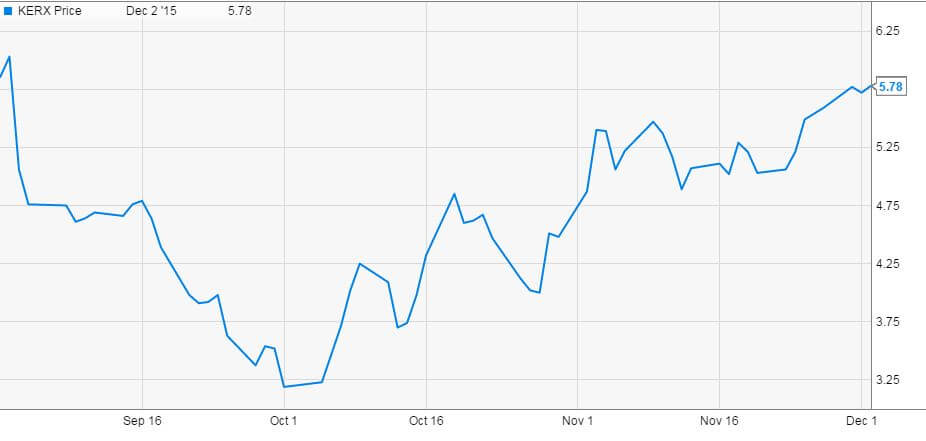
Sold January 2016 put for KERYX
Today i sold January 2016 Put option for Keryx Bio-pharmaceuticals Current Implied Volatility= 98% Margin of safety for stock to fall before being exercised= 30% Strike price=4 USD Premium per contract= 13 USD Commission= 1.4 USD Return in 44 days time=...