
Investing
Is Spotify Stock Invest-Worthy? Seeing it From A Value Perspective.
Chris Lee Susanto, Founder at Re-ThinkWealth.com
10 November 2018
Daniel Ek has built a great business with Spotify. Now that it has recently IPO-ed in 2018, is this digital music streaming service of his, invest-worthy?
—
Introduction
I am sure that by now you would most likely have heard of Spotify before. But I am sure that not many of you know that Spotify was founded and first developed back in 2006 – about 12 years go in Stockholm, Sweden. Yes, the same country as to where Ikea was founded. The Spotify service was first launched on 7 October 2008 – about 2 years after it was founded. It was first launched for users in Europe and after some time, they slowly moved to the U.S.
The founder of Spotify is Daniel Ek who was also the former CTO of Stardoll. Based on Time, Daniel started his first business at just 13 years old. He started by building websites for $100 to $200. A year later, he raised the price to $5,000 a site. By the age of 18, he already had 25 employees and was bringing in about $50,000 per month. Daniel clearly showed entrepreneurial traits from an early age even way before he built Spotify.
About 10 years after Spotify was first launched, they already went for Initial Public Offering (IPO) to list on NYSE under the ticker symbol SPOT in 2018. As of today, Spotify has about 150 million active users with over 50 million subscribers who pay a monthly subscription for an ad-free listening experience. Based on Digital Music News, Spotify is the world’s largest music streaming service – way more than Apple Music, Google Play Music and other companies such as Pandora. Based on Forbes, if we consider YouTube as a music streaming service, they are at the top of the streaming list with 1.5 billion users followed by NetEase at 400 million and SoundCloud at 175 million followed by Spotify at 170 million users. Spotify has come a long way since they first launched in 2008, but they still have big competitors all around. Today, a lot of people still uses YouTube to listen to songs and Apple Music is up and coming as well. So competition is stiff for Spotify.
The Business Model of Spotify
The official definition of Spotify on Spotify’s website is that they are a digital music, podcast, and video streaming service that gives us access to millions of songs and other content from artists all over the world. Through this definition, we know that there are a few key foci on the Spotify business model. The first is that they are fully digital. Second, they link artists from all over the world to users focusing on not just music – but podcast and video streaming as well.
Spotify embraces the freemium service model. That means that the basic functions of playing music in Spotify are totally free. The caveat is that the free version will have advertisements and there is a limit to how many songs we can skip. What are the advantages of Spotify Premium then? Based on their website, if we go premium, we will have no ads, be able to download music and listen to them anywhere. We also will have unlimited skips. So, for people who hate ads and like to skip songs, they will likely go for Premium.
Spotify business model is not complicated at all. Their basic service is free for anyone to use, this way anyone can try Spotify “risk-free”. I personally have been a user of their free service for a couple of years before I succumbed and switched my plan to the Premium.
I started the free plan a long time back. It is easy to join the free version because I was able to use my Facebook account to directly login to the Spotify free version. So I joined the free version and started listening to their music. The good thing about Spotify is that I am able to search for any songs – new or old – and they will most likely have it there. So that is good. But over time, I started to hear many good reviews from personal friends of mine that they like Spotify Premium. Over time, I got irritated by the ads and the inability for me to skip songs. So I explore Spotify Premium directly from the App. Surprisingly, I was unable to upgrade to Spotify Premium directly from the App then. So I had to go to Spotify’s website to upgrade to the Premium version. So I did just that.
Spotify has two kinds of Premium version of their service. The first one is individual premium version and it is upgradable for about $10 per month. The second one – the Premium Family version costs 50% more at $15 but it allows up to 5 family members to be able to have access to Spotify Premium. I upgraded to the second one because it is more value for money. Long story short, Spotify has successfully converted me from a user that pays $0 a month to pay $15 a month. And I have been using it for some time now, so far, so good, no regrets. This experience also shows me that Spotify has created a good freemium service model that is effective in my opinion of converting free users to premium ones.
Let’s dive deeper. The songs that we play inside Spotify does not come to Spotify for free. Spotify purchases the rights to stream songs from music labels, publishers, artists and other kinds of rights holders directly. This way, rights holders are able to stream their songs onto the Spotify platform digitally. It is reported by the Verge that Spotify uses a very complex algorithm to calculate the amount of royalty per stream to be paid to the rights holders. The Verge says that Spotify admitted the average payout “per stream” to rights holders land somewhere between $0.006 to $0.0084. This means that Spotify earns is the difference between the monthly subscribership that users pay to them and the payouts Spotify pay to these rights holders.
On top of making money through subscriptions, Spotify also makes money by using its algorithms to target listeners with audio ads. They have a couple of different kind of advertisements: display, sponsored sessions, audio, playlists, branded moments, video takeover and homepage takeovers. These ads are varied. More details about their revenue from advertisements can be found here under the heading “revenue from advertisements”. But of course, based on their latest Q3 2018 earnings result, it is evident that they still make almost 10 times more money from the premium members’ subscribership as compared to through ads. I believe showing ads is just a way for Spotify to also monetize the engagement from their free users. Spotify’s main focus is still converting these free users to paid ones – the Premium users.
Does Spotify Have a Competitive Advantage?

Source: Spotify
Often times, a technology company will have a network effect as a competitive advantage. But not with Spotify, I think that their network effect is limited.
Their competitive advantage here, in my opinion, is their economies of scale that comes from having a large user base. Spotify’s large user base (currently at 191 million users), gives them the ability to squeeze their “suppliers” which essentially are the right holders. By squeezing, I mean that Spotify is able to pay the right holders a relatively small sum of money. This allows them to charge their service low enough to the masses (because their cost is low) and propel Spotify to an even more mass adoption.
There is also a slight competitive advantage of stickiness. When a user uses Spotify, they would have created their many personal playlists over time. In the playlists, it contains their favorite songs based on their desires. And it is quite troublesome to search and create another playlist in another service – say Apple Music – if one has many playlists. This is important for the conversion of Spotify users from using the free version to premium one. The concept is that if the free users stick with Spotify long enough, eventually they might just upgrade to Premium. And they will stick with Spotify because they have their playlists with all their favorite songs already in there. An evidence of their stickiness is in the decline of their average monthly churn by 90 basis points based on their Q3 2018 results.
Rationally Assessing Spotify’s Stock Price
Although Spotify is already pretty established at the moment, their financials still looks like a high-growth company’s financials. Meaning that they are still pretty unstable. Based on their Q3 2018 earnings, their revenue is up 31% Y/Y to €1,352 million and premium revenue is up 31% Y/Y to €1,210 million. But their average revenue per user which is also known as “ARPU” is down 6% Y/Y. The decrease in ARPU is bad news because that means that they have a downward pressure in their selling price due to the expansion of the business.
Spotify is also a company that has just recently IPO-ed in 2018. And personally, I’d avoid IPO because they are usually overpriced and it will take many years for them to turn a profit consistently and reliably.

Source: YCharts
As you can see from the image above, Spotify started trading in the stock market somewhere in April 2018. And it went up for quite a bit until around August 2018 and as of now, it is trading lower than the price Spotify IPO-ed at. That’s why value investors rarely want to invest in IPO. They are mostly overpriced. The risk to reward ratio is not that good. And as you can see from the image above, I am right.
The reason is that when we assess Spotify stock price rationally, although there is a huge premium for a future potential growth of Spotify, established companies such as Facebook and Tencent still has more. The market capitalization of Spotify is currently $24.62bn – their price to sales ratio is about 4.21. Tencent’s price to sales is 8.09 while Facebook’s 8.18. About twice of Spotify. But there is a big reason for Facebook’s and Tencent’s price to sales ratio premium.

Source: YCharts
The main differentiation between Spotify and other more established companies such as Tencent and Facebook is that Spotify free cash flow generation ability is still sub-par. So as you can see, while Spotify price to sales ratio is half of Facebook’s and Tencent’s, their price to free cash flow ratio is more than 4 times of Facebook’s and more than 2 times of Tencent’s.
Conclusion
Spotify looks overpriced from the beginning. But they have a great service that has the ability to scale well. Their competitive advantage is both economies of scale and stickiness for existing users. The bigger the Spotify gets, the more bargaining power it will have over their rights holders and the more attractive they will be for users due to affordable subscription fees and variety of songs to pick from. But it is no easy feat to gain and scale to get more users in the future because there are other established competitors in the market that are also expanding such as Apple Music. But I think that generally, the churn for Spotify will be low because of their stickiness for existing users especially after they have customized playlists. So Spotify is a good business and I am a fan too. But to answer whether for me Spotify is currently invest-worthy? I’d have to wait further for more margin of safety.
Disclaimer:
The information provided is for general information purposes only and is not intended to be a personalized investment or financial advice.
Important: Please read our full disclaimer.
More from me:
Re-examining GameStop as a cigar butt stock investing opportunity
Clearly, GameStop management is aiming to reduce reliance on selling video games and pre-owned games by reducing the store counts for this two — while increasing the store counts (as you can see from the chart above) for Collectibles and Technology business (which is currently still at 5.7% and 9.5% of their overall revenue). I think that it is a step in the right direction as even though the collectibles and technology business only accounts for 15.2% of GameStop’s revenue for 2016, it accounted for 36.9% of GameStop’s total […]
Valuation Ratios – The Basics
[…] Not a true cash flow as it excludes CAPEX and working capital. D&A may be added back to net income when calculating cash flows, however, this implicitly assumes that no additional CAPEX is required. A more refined multiple is EV/(EBITDA – CAPEX), though no news source reports this […]
Determining Value: Why Price Is Meaningless, and Multiples are Informative
Investing Lessons [Advanced] Determining Value: Why Price Is Meaningless, and Multiples are Informative Bryan Wang, Re-ThinkWealth Content Expert 23 September 2017 One of the typical responses people give when talking about stocks is..."What's the price?" In the...
10 Mistakes an Investor should Avoid
Investing Lessons [Beginners] 10 Mistakes an Investor should Avoid Benjamin Tan, Content Expert, Re-ThinkWealth 1 September 2017 Every investor has their own investment philosophy and discipline. Each philosophy has its own merit and what is important...
Value Investing And Behavioral Finance
Investing Lessons [Advanced] Value Investing And Behavioral Finance Chris Lee Susanto, Founder and CEO of Re-ThinkWealth 15 July 2017 SUMMARY: Value Investing is inevitably linked to Behavioural Finance Value Investing is a stock methodology practised by many...
Options Selling Strategy – Wk 4 June 2017 [Keryx Pharmaceuticals (NASDAQ: KERX)]
Options Selling Options Selling Strategy – Wk 4 June 2017 [Keryx Pharmaceuticals (NASDAQ: KERX)] Chris Lee Susanto, Founder and CEO, Re-ThinkWealth 24 June 2017 SUMMARY: Options are a form of financial derivatives Options selling strategy have...
Options Selling Strategy – Wk 3 June 2017 (GameStop Inc (NYSE: GME)
Options Selling Options Selling Strategy – Wk 3 June 2017 (GameStop Inc (NYSE: GME) Chris Lee Susanto, Founder and CEO, Re-ThinkWealth 16 June 2017 SUMMARY: Options are a form of financial derivatives Options selling strategy have stocks as...
GameStop Corp (NYSE: GME)– A Cigar Butt Investing Play
Top Articles GameStop Corp (NYSE: GME)– A Cigar Butt Investing Play Chris Lee Susanto, Founder and CEO, Re-ThinkWealth 12 May 2017 SUMMARY: GameStop's valuation is at an all-time low Gross profit margins have been doing well Debt management is good I...
UPDATE: Sold Off All My Stocks In Mobile Telesystems (NYSE: MBT) And This Is What I Learnt From It
Summary Mobile Telesystems (NYSE: MBT) is the biggest stock holdings I had for over two years and it is also the first stock that I bought in my life My absolute gain for this stock is about 34.15% A review of the earnings and revenue growth of MBT indicated an...
[Edited] Importance Of Knowing When To Sell Your Stocks Cannot Be Understated
"Knowing when to sell your stocks is as important-- or even more important-- than knowing when to buy them."- Chris Lee Susanto My Experience I have had experiences in buying stocks of good companies that quickly went to two years high price after I bought it earning...
[Edited] Apple Sued Qualcomm. Here Is Why I Bought It.
In February 2017 I initiated a position on Qualcomm (NASDAQ: QCOM)-- a few days after it was sued by Apple-- when stock price plunged 12%-- for receiving unreasonable royalty fees via leveraging on their monopoly in the chip making industry. Apple sued Qualcomm and I...
My 10 Biggest Takeaways from Warren Buffett and Peter Lynch
Who is Warren Buffett? Born 1930, Omaha, Nebraska Started managing funds in 1956 with the formation of the Buffett Partnership (dissolved in 1969). Now chairman and major owner, Berkshire Hathaway Inc $1,000 invested with Buffett in 1956 would be worth $ 25,289,750 as...
Wait, Wait!
I often share insights that I do not share in this blog over at my Facebook page. Don’t forget to like it before you go!

Nasdaq & S&P 500 At A New High – Here’s What It Means
As of today, the Nasdaq & the S&P 500 has hit a new high. Recently, the US economy showed that GDP grew 2.1% annually in the second quarter of this year. It means that consumer is still […]

Get Wealthy Through Stocks (Value Investing Lessons from Pat Dorsey)
Warren Buffett’s definition of intrinsic value is “the discounted value of the cash that can be taken out of a business during its remaining life”. Now take a moment to pause and think about the above definition […]

Intrinsic Value of Stock: Here’s What It Means Based on Warren Buffett
Warren Buffett’s definition of intrinsic value is “the discounted value of the cash that can be taken out of a business during its remaining life”. Now take a moment to pause and think about the above definition […]

The Power of Compounding and Early Investing | RW Education Series
Albert Einstein says that compound interest is the eighth wonder of the world. He who understands it earns it and he doesn’t, pays it. Now, what exactly does Albert means by that? The power of compounding is amazing […]

What Are Treasury Bills/Bonds/Notes? | RW Education Series
Just like how companies take on debt from banks and pay interest to them in order to fund their operations, selling U.S. treasury bills/bonds/notes are one way the U.S. government raise funds to finance their […]

“The big money is not in the buying and selling, but in the waiting.”
Recently, I have come into the trap of being too focused on the short term price movements of stocks. A meaningful change that can occur in a company will not happen fast. It will take the fastest months and likely […]
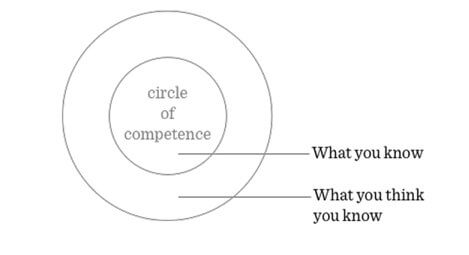
What is The Meaning of Circle of Competence? | RW Education Series
Circle of competence is one of the key concepts that value investors apply to make money from the stock market. Warren Buffett often talks about the circle of competence concept but not many understood it. In this article […]

Life, Relationship, Health, Business & Value Investing – My Thoughts at 26
I have made a lot of mistakes in my life. I have been conned, cheated and have lost money in business deals and investments. Today is my birthday so I thought it would be good to summarize the important lessons I have learned so far about […]
