Options
Does Warren Buffett Invest In Options? Yes, But It’s Not What You Think
16 December 2020
Options, Weapon of Mass Destruction?
Most people will not associate The Oracle of Omaha with options. Because after all, options are derivatives – which derive their value from the underlying securities such as stocks.
And from Berkshire Hathaway 2002 annual letter Warren Buffett said:
“In our view, however, derivatives are financial weapons of mass destruction, carrying dangers that, while now latent, are potentially lethal.”
So people do not often associate Warren with derivatives. However, in the same letter, Warren also said:
“Indeed, at Berkshire, I sometimes engage in large-scale derivatives transactions in order to facilitate certain investment strategies.”
This means that while he acknowledges the risk associated with derivatives such as options, there are situations where derivates can make sense, even for an astute and logical investor like The Oracle of Omaha.
See also: Our free telegram channel where we share investment insights we do not publish here
Options As An Investment Tool
First off, he approaches options as an investment, not as a gamble.
“I believe each contract we own was mispriced at inception, sometimes dramatically so.” – Warren Buffett
Options are priced using The Black-Scholes Model. They take into account the implied volatility – which is based on how much the stock price has moved in recent times.
Buffett said that the Black-Scholes Model might work for a short time horizon but the value of the model decreases as time passes by. That is because recent stock volatility is not a good predictor of the long-run outcome of the security or stock.
So, how does Buffett leverage the limitations of The Black-Scholes Model?
Also read: Part 1 of 2: Here’s How to Use The Black-Scholes Model to Price Options
Buffett Sells Put
“Our put contracts total $37.1 billion (at current exchange rates) and are spread among four major indexes: the S&P 500 in the U.S., the FTSE 100 in the U.K., the Euro Stoxx 50 in Europe, and the Nikkei 225 in Japan. Our first contract comes due on Sept. 9, 2019, and our last on Jan., 24, 2028. We have received premiums of $4.9 billion, money we have invested.” – Warren Buffett
While retail investors normally sell put options in the listed market, Berkshire generally trades in the over-the-counter (OTC) market. Dealers trade directly with each other.
The Oracle’s Put Strategy
Warren sells options with a very long term time horizon of usually more than 15 years, which is overpriced in his view due to the limitations of the Black-Scholes Model.
Using the premium he receives from selling puts, he uses it to invest.
His options are also “European”. This means that they are only exercisable at expiry. So he does not have to worry about paying out the notional value before the expiry date.
For selling put options, Buffett says that “It’s only the price on the final day that counts.” An elegant way to put it, and an elegant options investing method that is characteristic of The Oracle of Omaha.
Can We Also Sell Puts?
Although most of us will not have the platform to write 20-year put options backed by our huge portfolio, we can still invest in relatively long-dated (around 2 years) options in the listed market.
We also have some advantages by selling puts in listed markets. For one, there is more liquidity for us to sell puts on individual stocks. And usually, those options generate much higher premiums than index options because of the company-specific risks associated with them.
In the OTC market, there are counterparty risks, By transacting in the listed options market, there are generally no counterparty risks as we are transacting with the OCC (Options Clearing Corporation).
OCC is the buyer to every seller and the seller to every buyer in the U.S. listed-options market.
Also read: Is Bitcoin Worth Investing in 2020? Here’s My Quick Thoughts
In Conclusion
Selling put options can be a useful strategy for investors to get paid while waiting to buy a stock they want to own at a certain price.
As with any investments, there are also risks with selling put options. And most of the risks are internal, fear, greed, not understanding the company and its valuation well enough, and being greedy by selling put options using money we do not have or at stock we do not want to own at that price.
If you are interested in exploring options as a part of your investment strategy, I encourage you to learn with Value Investing Mentorship Coaching.
Disclaimer:
The information provided is for educational and general information purposes only and is not intended to be personalized investment or financial advice. We make no promises as to the accuracy or usefulness of the information we present.
Important: Please read our full disclaimer.
Like It? Share It!
Appreciate it if you’ll take one minute to share it on Facebook.
Pay it forward, so more people can benefit 🙂

Chris Lee Susanto
Founder of the value investing blog Re-ThinkWealth.com (if you type “value investing blog” in Google, his blog is likely the first one).
Chris is a big proponent of business-like stock investing. He invests in companies where there is value to be found, be it a turnaround, depressed, value, or quality growth company (compounders). He either buys the stock outright or he profits through selling put or selling call options – or buying call options (buying and selling options are especially dangerous for those who do not know how to properly execute it).
Some of the places where Chris has been invited to speak or have added value as a mentor or writer includes Singapore Polytechnic, SMU Institute of Innovation and Entrepreneurship (IIE), Dollars and Sense, The New Savvy, Value Walk Blog, Investment Moats, NUS Tembusu College, NUS Investment Society, CGS-CIMB Singapore and Internationally in Myanmar.
Being a full-time investor himself, Chris knows that he did not beat the S&P 500 return so far (as of the time of this writing) by listening to stock tips. So, when he teaches, he also doesn’t believe in giving stock tips as it is not sustainable for you in the long run. As of the time of this writing, he is still open to new application in his Value Investing Mentorship™ Club. Feel free to also join his free investment telegram channel here.
Don’t Leave First, Read Also:
My Week 5 Summary of Yale University Financial Markets Course: Derivatives, Futures, Forwards and Options Market
Introduction to Derivatives, Futures, Forwards, and Options market from Professor Robert Shiller The derivatives market is a market for securities with a price that is dependent upon or derived from one or more underlying assets. Examples of Derivates market are...
My Week 4 Summary of Yale University Financial Markets Course part 2: Regulations of Companies
Introduction to Regulation and Enterprise from Professor Robert Shiller Regulatory bodies US government set up Picture source: Google In 1968, the US government set up Federal National Mortgage Association (Fannie May) and in 1970, the US government set up Federal...
My Week 4 Summary of Yale University Financial Markets Course part 1: Real Estate
Introduction to Real Estate from Professor Robert Shiller Picture source: Google Real Estate is one of the most important classes of asset in the world and it is generally privately held in most countries. With the exception of China, whereby the government...

Keryx Biopharmaceuticals could be an Interesting Biotech Stock Play
Keryx Biopharmaceuticals Inc (NASDAQ: KERX) is essentially a bio-pharmaceutical company focused on the research, development and commercialization of pharmaceutical products geared towards patients with kidney disease and their healthcare providers. High volatility c...
Do You Know What Is Private Equity?
Differences Between Public Firm And Private Firm In Terms Of Buying Of Their Equity Stake "Equity" is another word that means the same as "stock"- which means that when you own it, you are owning a percentage of the company (the percentage of how much of the company...

4 Secrets For Thinking Positively
Humans are emotional creatures and most of the time, we cannot control our emotions when we feel sad or happy. However, we can train our mind to think good thoughts. When we control what we think, we can control what we feel. Think with the end in mind - Amidst the...
My Week 3 Summary of Yale University Financial Markets Course: Theory of Debt
In this module, Professor Shiller discusses the theory of debt and its proper role. He also covers corporate stocks. A naïve view of what stocks are is that it is some certificate that people buy so that the price can go up. That is not what stocks are. Stocks...
The Federal Reserve Raises Interest Rate: What Does It Mean For Us?
After almost a decade, The Federal Reserve raises a higher interest rate for the first time. The Federal Open Market Committee unanimously voted to set the new target range for the federal funds rate at 0.25 percent to 0.5 percent, up from zero to 0.25 percent. Policy...
Will The Fed Finally Raise Interest Rate on 16 Dec 2015?
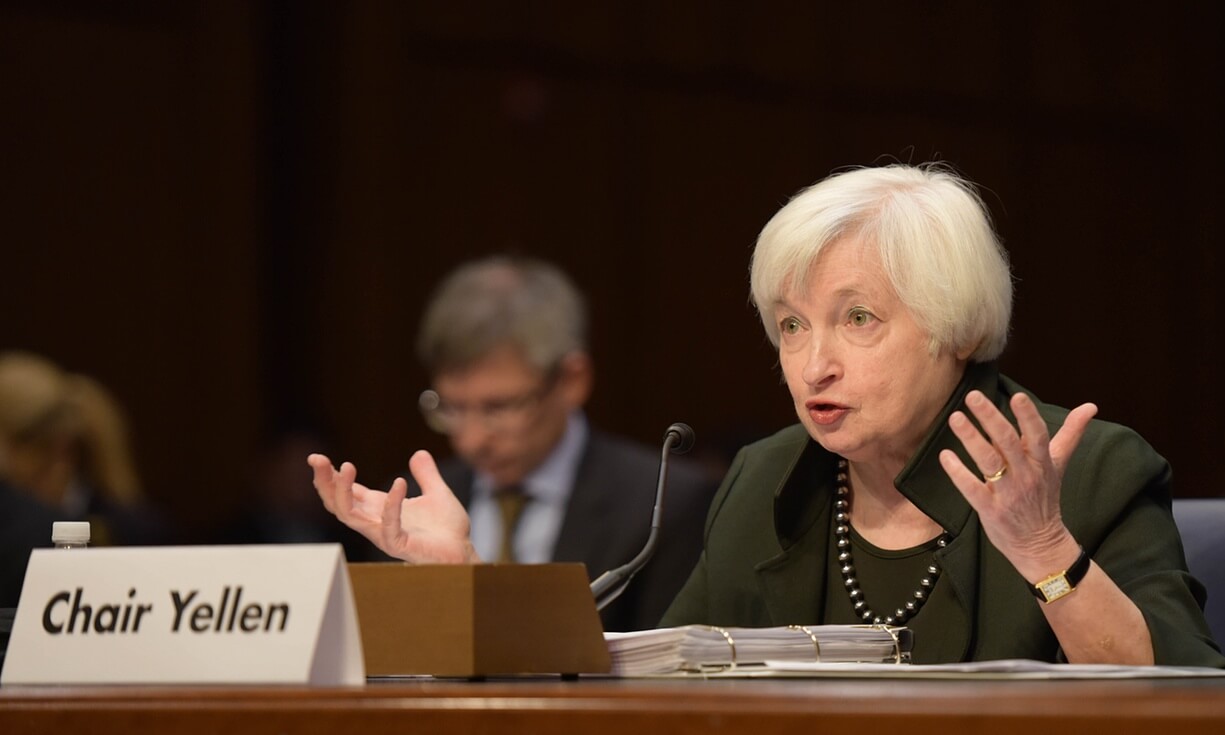
The expectation was based on Chair Janet Yellen's oft-repeated stance that she'd like to see rate rises before the end of 2015. The last time the United States Federal Reserve raised their interest rates was back in 2006, a decade ago. With shares and commodity...
Here Is Everything You Need To Know About The Singapore Savings Bonds
What Are Bonds Bonds are one of the methods for corporations and governments to raise funds. It is a form of borrowing whereby we lend money to the government or corporations and we earn interest on it. We are able to redeem the principal amount but normally there is...

Seven Steps For Starting A Conversation
The seven steps for starting a conversation at a party Give a sincere smile and say Hello Provide a short introduction of who you are and give a firm handshake Listen closely to the person's name - Ask them to repeat it if you did not hear it clearly the first time...
My Week 2 Summary of Yale University Financial Markets Course: The History and Real Impact of Behavioral Finance
The History and The Real Impact of Behavioural Finance People are complex and our financial institutions are designed for real people. This study of behavioural finance started because of the revolution of neuroscience and the fact that the human brain is a...