Stock analysis/investing
What is Sustainable Stock Investing and Does It Work?
17 September 2021
What is Sustainable Stock Investing?
ESG/ sustainable investing is a form of investing that is generally viewed as socially responsible. It should focus on the company’s financial return together with the impact of the company’s action on the environment and stakeholders.
ESG stands for Environmental, Social, and Governance. Which are the common three criteria to evaluate a company’s sustainability.
Environmental can means how a company’s action is related to say, Carbon footprint, renewable energy usage, or Greenhouse gas.
Social can means how a company’s action is related to say, how a company treats their employees, employees’ safety policies, and employee diversity and inclusion in hiring, promotions, and compensations.
Governance can mean how a company’s action is related to say, the diversity of the board and management team, separation of the Chairman and CEO roles, and also policies to enforce ethical business practices.
Companies that commit themselves to ESG usually will report their ESG initiatives plus the progress against their goals. It can be in a form of sustainability reports established by the Global Reporting Initiative.
Does Sustainable Stock Investing Works?
In September 2021, Prof Aswath Damodaran, a widely respected New York University finance professor said that ESG investing is “not just a mistake that will cost companies and investors money while making the world worse off, but that it create more harm than good for society.”
In Morningstar, their view is that Prof Damodaran raises some good points but he’s mostly wrong on his key assumption.
Morningstar’s view is that good ESG investing attempts to improve equity valuation and account for the risks posed to businesses from climate change and human resource regulations.
While Damodaran’s view is that sustainable investing is that measuring “Goodness” is not easy to measure. And in ESG/sustainable investing, we need to come up with some measures of “goodness” that can be targeted by corporate managers and used by investors.
My view is that investing sustainably is important and it requires us to have a holistic point of view of the ESG factor ultimately for the business longevity and the sustainability of society.
What’s your view?
Warren Buffett View on ESG Investing
Warren Buffett is not a big fan of ESG and he noted that most ESG requests he received came not from shareholders, but from third-party organizations.
In Berkshire, they do not like reporting just for the sake of it. And Buffett thinks ESG reporting falls under this umbrella.
Although Buffett has passed on tobacco investments in the past due to ethical concerns, they are comfortable investing in oil and gas companies.
In short, Warren Buffett does not seem to be a big fan of ESG reporting.
In Conclusion
For me, I am a firm believer in sustainable investing. And in investing with a purpose for the good of society.
But I am aware that that can only be done if the business also prospers and if the business prospers first.
So I think that while companies should not ignore the ESG part for sustainable investing, they have to ensure that they are focusing on ESG because they want the business to last a long time – and grow for a long time.
There is no point to focus on ESG but the business suffers over the long term.
Disclaimer:
The information provided is for educational and general information purposes only and is not intended to be personalized investment or financial advice. We make no promises as to the accuracy or usefulness of the information we present.
Important: Please read our full disclaimer.
Learned something from this article?
Share it 🙂

Chris Lee Susanto
Chris started investing in stocks early at age 21 and is a big proponent of business-like stock investing – a mixture of both value and growth investing. He invests in companies where there is value to be found (as long as it is still within his circle of competence), be it a turnaround, depressed, value, or quality growth company (compounders). He either buys the stock outright or he profits through selling put or selling call options – or buying call options (buying and selling options are especially dangerous for those who do not know how to properly execute it).
Some of the places where Chris has been invited to speak or have added value as a mentor or writer includes Singapore Polytechnic, SMU Institute of Innovation and Entrepreneurship (IIE), Dollars and Sense, The New Savvy, Value Walk Blog, Investment Moats, NUS Tembusu College, NUS Investment Society, CGS-CIMB Singapore, Singapore Financial Conference by NTU IIC, The Financial Coconut Podcast, Money FM 89.3 and Internationally in Myanmar.
He is also a practitioner of Transcendental Meditation and Mindfulness practice. He also advocates regular exercise, enough sleep, and nutritious food as part of our lifestyle as an investor.
As of the time of this writing, Chris is focusing on setting up his MAS Licensed Fund with the goal to beat the market over the long run.
Feel free to join his FREE investment telegram channel here to be one of the first to be updated on his new articles.
Don’t Leave First, Read Also:
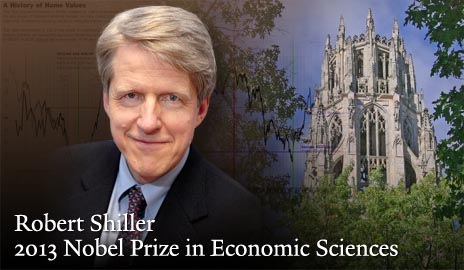
My Week 5 Summary of Yale University Financial Markets Course: Derivatives, Futures, Forwards and Options Market
Introduction to Derivatives, Futures, Forwards, and Options market from Professor Robert Shiller The derivatives market is a market for securities with a price that is dependent upon or derived from one or more underlying assets. Examples of Derivates market are...
My Week 4 Summary of Yale University Financial Markets Course part 2: Regulations of Companies
Introduction to Regulation and Enterprise from Professor Robert Shiller Regulatory bodies US government set up Picture source: Google In 1968, the US government set up Federal National Mortgage Association (Fannie May) and in 1970, the US government set up Federal...
My Week 4 Summary of Yale University Financial Markets Course part 1: Real Estate
Introduction to Real Estate from Professor Robert Shiller Picture source: Google Real Estate is one of the most important classes of asset in the world and it is generally privately held in most countries. With the exception of China, whereby the government...

Keryx Biopharmaceuticals could be an Interesting Biotech Stock Play
Keryx Biopharmaceuticals Inc (NASDAQ: KERX) is essentially a bio-pharmaceutical company focused on the research, development and commercialization of pharmaceutical products geared towards patients with kidney disease and their healthcare providers. High volatility c...
Do You Know What Is Private Equity?
Differences Between Public Firm And Private Firm In Terms Of Buying Of Their Equity Stake "Equity" is another word that means the same as "stock"- which means that when you own it, you are owning a percentage of the company (the percentage of how much of the company...

4 Secrets For Thinking Positively
Humans are emotional creatures and most of the time, we cannot control our emotions when we feel sad or happy. However, we can train our mind to think good thoughts. When we control what we think, we can control what we feel. Think with the end in mind - Amidst the...
My Week 3 Summary of Yale University Financial Markets Course: Theory of Debt
In this module, Professor Shiller discusses the theory of debt and its proper role. He also covers corporate stocks. A naïve view of what stocks are is that it is some certificate that people buy so that the price can go up. That is not what stocks are. Stocks...
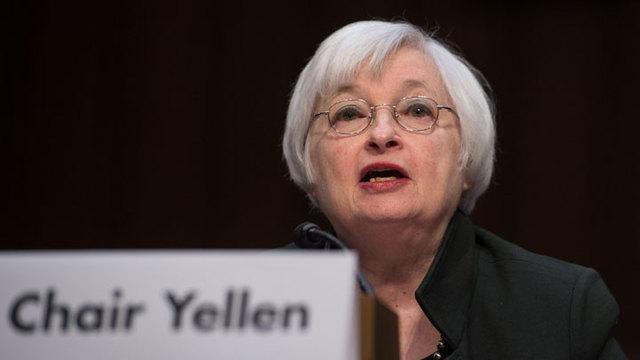
The Federal Reserve Raises Interest Rate: What Does It Mean For Us?
After almost a decade, The Federal Reserve raises a higher interest rate for the first time. The Federal Open Market Committee unanimously voted to set the new target range for the federal funds rate at 0.25 percent to 0.5 percent, up from zero to 0.25 percent. Policy...
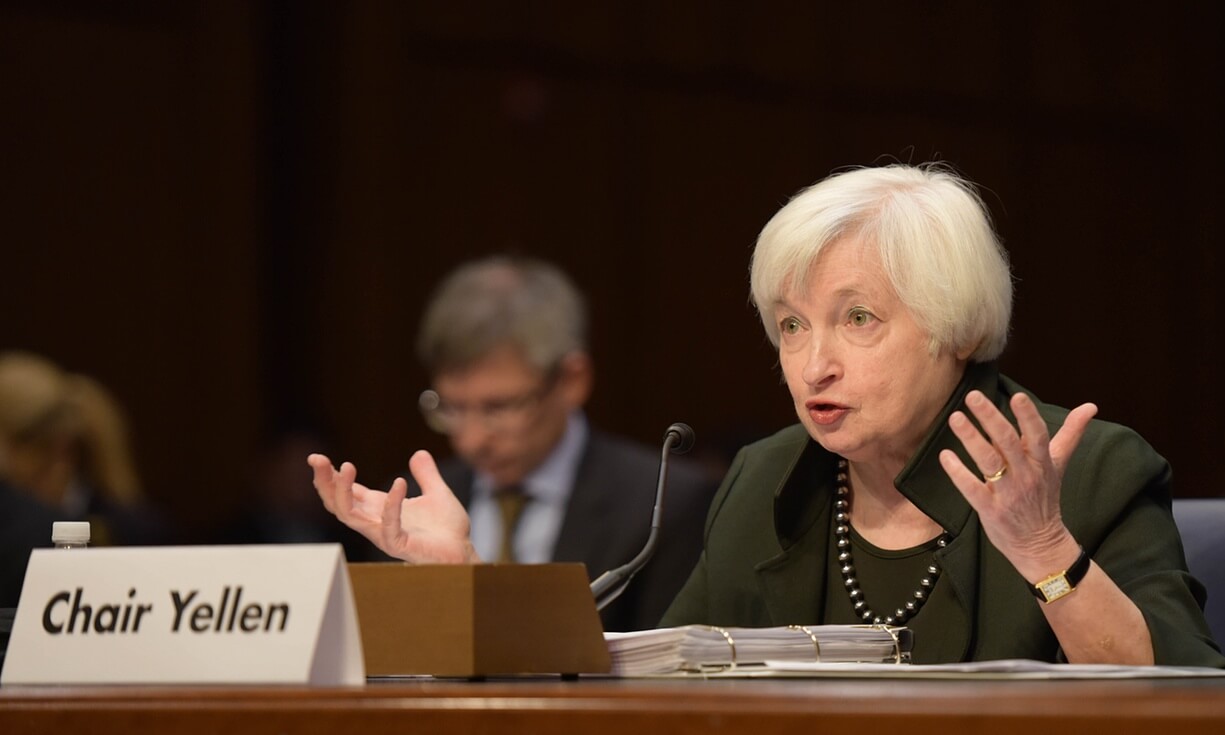
Will The Fed Finally Raise Interest Rate on 16 Dec 2015?
The expectation was based on Chair Janet Yellen's oft-repeated stance that she'd like to see rate rises before the end of 2015. The last time the United States Federal Reserve raised their interest rates was back in 2006, a decade ago. With shares and commodity...
Here Is Everything You Need To Know About The Singapore Savings Bonds
What Are Bonds Bonds are one of the methods for corporations and governments to raise funds. It is a form of borrowing whereby we lend money to the government or corporations and we earn interest on it. We are able to redeem the principal amount but normally there is...

Seven Steps For Starting A Conversation
The seven steps for starting a conversation at a party Give a sincere smile and say Hello Provide a short introduction of who you are and give a firm handshake Listen closely to the person's name - Ask them to repeat it if you did not hear it clearly the first time...
My Week 2 Summary of Yale University Financial Markets Course: The History and Real Impact of Behavioral Finance
The History and The Real Impact of Behavioural Finance People are complex and our financial institutions are designed for real people. This study of behavioural finance started because of the revolution of neuroscience and the fact that the human brain is a...