
Investing
How To Start Investing in Stocks in Singapore For Beginners
Chris Lee Susanto, Founder at Re-ThinkWealth.com
16 November 2019
This is a guide to help stock investing beginners to start their journey investing in stocks in Singapore or anywhere around the world.
The purpose of this guide is to share with you some of the general mindsets, philosophies, guides – information that I wished I had when I started investing in stocks back when I was 21.
This “How to Start Investing in Stocks” Guide will be updated regularly over time. Just like this guide on my favourite intelligent investing quotes of all time.
(Last updated: November 2019)
1. Who should invest in stocks & what can you expect?
My opinion is that everyone should at least be open to learning how to invest in stocks – either passively or actively.
Yes, not everyone should be an active investor (actively picking individual stocks). But everyone should consider to at least take advantage of the stock market – as one of the additional ways they can generate additional sources of cash flow on top of their regular income.
As a start, I think it is a myth that we need to have a lot of money to start investing in stocks. I feel that everyone who has at least $1,000 of spare cash (and does not need the cash for the next 5 to 10 years) can consider starting early and invest in stocks.
I can guarantee that it will be scary and you may lose money – in fact; you most probably will – because nobody invested in stocks will make money 100% of the time.
But remember that although stocks are generally viewed as a high-risk investment – relative to others – my view is that risk comes in not knowing what we are doing. So if you compare stocks in a relative term to other assets out there, it is one of the – if not, the most volatile one. But does volatility equal to risk? Academically it is, practically, it’s not.
If we know what we are doing, if we understand stock investing just like how we understand say, our hobbies that we very much like to do – it is no longer as risky an endeavor, is it?
Gambling is risky; taking a calculated risk is less so. Risk can never be eliminated 100% for those who invest in stocks, but it can be minimized with the proper education and mindset.
Having said that, if you are the type of person who does not have or is not willing to put in the time and effort in an active stock-picking endeavor (my opinion is on average at least 2 hours a week in stock picking related activities like reading etc.), then active stock investing is something you can consider staying out of entirely.
Passive stock investing can be something you can learn more about – for example, potentially by investing in a low-cost index funds. But even investing in a low-cost index funds have their risk – Michael Burry, the famed Big Short investor, has warned that it is a bubble.
My summary of The Intelligent Investor book is a good place for you to start to know the difference between active and passive investing.
2. Why invest in stocks using value investing?
I look at stocks in a way I look at businesses. And as time passes by, I see myself more like a business analyst as opposed to a stock analyst. Because to me, value investing makes sense – and value investing requires us to start from the premise of analyzing which is a good business and what is a reasonable price to buy the business at – via the stock market.
When the business does well, the stock will likely do well – that, to me, sums up value investing.
So the main goal here is to generate consistent passive income and multiple sources of cash flow.
This is how I’d like to think of it: In our early years, we work hard to make money. But over time, we would want to evolve to want to make money work hard for us. Instead of us always working hard for the money.
Investing in stocks means that we are participating in the future of the business.
Remember, behind every stock is a business. Again, if the business does well, the stock will likely do well.
You are able to profit (or loss) depending on the future of the business. Commonly via capital gains/losses or/and dividends.
If the business grows, the stock price will tend to grow too.
This is the fundamentals of value investing — a businesslike way of investing in stocks.
And plus, the process for anyone who wants to invest in stocks in Singapore is relatively easy. I will list out some of the essential pieces of information in this article for you.
3. But first a checklist of what should you expect out of stock investing
Before we go into the details on how to open a brokerage account in Singapore, it is vital to have the right expectations when investing in stocks.
Here are some of the general expectations that I think you should know before you embark on your investment journey:
- You will not get rich quick – if you start with the notion that investing in stocks is a way to get rich quick, I can assure you that you will most likely be disappointed. The way I invest, I always look for sustainability and not a quick-rich mindset.
- Copying stock tips from other people blindly is almost a sure way NOT to make money sustainably from the stock market – This applies even if the “guru” like Warren Buffett buys the stock. The reason is that we do not know the exact reason why they bought the stock in the first place – and without that, we will not know the thesis enough to know when and why to sell. When they sell, Warren Buffett will also not call us right before they sell. Plus, our circle of competence is different, so it is best to stick within what we know; after all, it is our hard-earned money, and nobody will care more about it than us. And the “gurus” will and can be wrong often too.
- There is no shortcut – you have to put in the work to learn, analyze, and decide on your own. After all, it is your hard-earned money
- Nobody will care more about your hard-earned money than yourself, so take the time to learn how to make the best use of it to compound your money
- It is extremely hard to time the market, so it is best to focus on our “time in the market” instead of timing the market. Meaning, staying invested but at the same time, be disciplined and consistent in buying companies only when they are undervalued and selling them when and if they get way overvalued is important.
- In investing, two of our greatest edge are a long term time horizon and our holding power (by not using margin and potentially be forced to sell our stocks due to margin calls)
- You will not get rich quick (It is important, so I thought I’d repeat it). It will take decades of a systematic way of making the right decisions, making mistakes, and learning from it plus a little bit of luck to do decently in the long run — so, start learning now.
4. Increase your investing knowledge to the point you are comfortable with making your own decisions
Know what kind of investing style you want to adopt.
While I believe that all kinds of investing are virtually value investing because investment act in itself is should always be about capturing value, there are indeed many angles to value investing.
Here are some of the subsets of value investing:
1. There are dividend investing. This means that you are primarily income focused. Some positive for this is if most of the companies’ income is given out as dividends — and it has stable earnings, you will continue receiving dividends that can act to cover your living expenses. The negative part is if you are focused too much simply on the yield, and do not look at a balanced view of the company, you can suffer huge capital losses and future dividend cuts.
2. REITs, which are also known as Real Estate investment trust, are also primarily income-focused stocks to consider. By law, they are mandated to give out at least 90% of their rental income as dividends. This is one type of stock investing to consider, as well.
3. Growth investing, to me, is primarily investing in stocks that are experiencing fast growth of above 25% earnings per share compounded annual growth rate. Investing in this kind of stocks requires us to see a balanced view of the company. Be careful of paying too high a price for the stocks as they tend to trade in a high multiple. The reward can be huge if we invest in the right company with a good future.
4. Cigar butt investing or deep value investing is pretty similar. It means that we invest in companies that are not doing too good but is selling at a ridiculously cheap price. Which makes it a potential candidate to make money from. The drawback for this kind of investment is that the timing of exit is as important as the entry price. Such companies may go down in price and never to come back up if we are not careful.
Personally, I owned before at least 1 of each type of company that I mentioned above. Because ultimately, I see “value” in each of them. There is more than one way to skin a cat. More than one way to make money from investing in the stock market.
5. “Before you invest in stocks for beginners” Checklist
1. Most Important: Make sure that you know enough so you can make your own decisions on what stocks to buy and sell and at what price you should buy and sell it at.
This requires education.
The Intelligent Investor Summary (Ultimate Guide) will be able to aid you in getting started.
There are also many other avenues of learning out there in Singapore, for paid courses, I have only tried one which is good in my opinion, Mind Kinesis Value Investing Academy by Cayden Chang. Other than that, there are many others that I have not tried like Dr. Wealth or Kelvin Seetoh. But there are also many free ones like Seedly and investment blogs like mine or Forever Financial Freedom by Brian Halim or Investment Moats or Budget Babe or The Smart Investor for you to get started.
2. Open a brokerage account. I use UOB Kayhian for Singapore stocks (If you need a referral to my broker who will guide you step by step, email me at chris@re-thinkwealth.sg).
Other than UOB Kayhian, there are many other local brokerage firms that you can consider opening an account with, such as DBS Vickers, Standard Chartered, CGS-CIMB, and OCBC.
For US stocks, many of my friends use Interactive Brokers. I use TD Ameritrade.
3. You need to have at least around $1,000 spare cash (considering that 1 lot to buy stocks in SGX is 100 stocks, a stock selling at $8-$9 per share [there are many], requires us to have about $1,000 to buy 1 lot including commissions)
6. FAQ & Myth by Beginners in Stock Investing
1. Do I need to wait until I have a lot of money before I think of doing stock investing?
No, you do not. You can start practicing now with as little as $1,000 to start. The idea is that when you are young, know how to be a good stock investor. When more money comes in the future, which will likely come if you are doing the right thing, you will already know how to deploy it.
2. Stock investing is the same as gambling.
It is gambling if you do not understand what you are doing. It is gambling if you are primarily looking to make a lot of money – and not focusing on other aspects such as margin of safety, a thorough analysis of the company and management, and others. It is also gambling if you do not understand the fact that stock investing is primarily about business analysis.
If we can identify a good business run by great management, trading at an attractive price – and we hold it for the long run so we can grow with it, that is not gambling, that is investing. The risk to reward is calculated.
3. Stock investing is super hard.
Stock investing is not easy. It is not for everyone. But it’s doable. The key is you have to stick within what we call your circle of competence, stay within what you think you know and understand – and make decisions within that circle.
And last but not least. Investing is a lifelong journey, so don’t ever stop learning.
Disclaimer:
Re-ThinkWealth is a personal value investing & options selling blog. By using this Site, you specifically agree that all the information provided is for general information purposes only and is not intended to be a personalized investment or financial advice.
Important: Please read our full disclaimer.
Further Learning or Doing
- Our Telegram Channel – You can get daily updates on stocks, business, economy, and value investing knowledge from us here.
- Our Value Investing Mentorship Program – Individuals looking to learn skills to become better investors can join our effective and exclusive course, taught via one-on-one mentorship, here.
Recommended Articles:
What is Value Investing? – An article I wrote for Value Walk describing in summary what exactly is value investing.
The 100+ Most Intelligent Investing Quotes of All Time – I love quotes. Especially quotes by value investors who had been wildly successful at managing their funds. The list is consistently updated.
The Intelligent Investor Summary (Ultimate Guide) – A very popular article from my site that summarizes concepts of value investing from the father of value investing, Benjamin Graham.
Read also our past articles now:
Re-examining GameStop as a cigar butt stock investing opportunity
Clearly, GameStop management is aiming to reduce reliance on selling video games and pre-owned games by reducing the store counts for this two — while increasing the store counts (as you can see from the chart above) for Collectibles and Technology business (which is currently still at 5.7% and 9.5% of their overall revenue). I think that it is a step in the right direction as even though the collectibles and technology business only accounts for 15.2% of GameStop’s revenue for 2016, it accounted for 36.9% of GameStop’s total […]
Valuation Ratios – The Basics
[…] Not a true cash flow as it excludes CAPEX and working capital. D&A may be added back to net income when calculating cash flows, however, this implicitly assumes that no additional CAPEX is required. A more refined multiple is EV/(EBITDA – CAPEX), though no news source reports this […]
Determining Value: Why Price Is Meaningless, and Multiples are Informative
Investing Lessons [Advanced] Determining Value: Why Price Is Meaningless, and Multiples are Informative Bryan Wang, Re-ThinkWealth Content Expert 23 September 2017 One of the typical responses people give when talking about stocks is..."What's the price?" In the...
10 Mistakes an Investor should Avoid
Investing Lessons [Beginners] 10 Mistakes an Investor should Avoid Benjamin Tan, Content Expert, Re-ThinkWealth 1 September 2017 Every investor has their own investment philosophy and discipline. Each philosophy has its own merit and what is important...
Value Investing And Behavioral Finance
Investing Lessons [Advanced] Value Investing And Behavioral Finance Chris Lee Susanto, Founder and CEO of Re-ThinkWealth 15 July 2017 SUMMARY: Value Investing is inevitably linked to Behavioural Finance Value Investing is a stock methodology practised by many...
Options Selling Strategy – Wk 4 June 2017 [Keryx Pharmaceuticals (NASDAQ: KERX)]
Options Selling Options Selling Strategy – Wk 4 June 2017 [Keryx Pharmaceuticals (NASDAQ: KERX)] Chris Lee Susanto, Founder and CEO, Re-ThinkWealth 24 June 2017 SUMMARY: Options are a form of financial derivatives Options selling strategy have...
Options Selling Strategy – Wk 3 June 2017 (GameStop Inc (NYSE: GME)
Options Selling Options Selling Strategy – Wk 3 June 2017 (GameStop Inc (NYSE: GME) Chris Lee Susanto, Founder and CEO, Re-ThinkWealth 16 June 2017 SUMMARY: Options are a form of financial derivatives Options selling strategy have stocks as...
GameStop Corp (NYSE: GME)– A Cigar Butt Investing Play
Top Articles GameStop Corp (NYSE: GME)– A Cigar Butt Investing Play Chris Lee Susanto, Founder and CEO, Re-ThinkWealth 12 May 2017 SUMMARY: GameStop's valuation is at an all-time low Gross profit margins have been doing well Debt management is good I...
UPDATE: Sold Off All My Stocks In Mobile Telesystems (NYSE: MBT) And This Is What I Learnt From It
Summary Mobile Telesystems (NYSE: MBT) is the biggest stock holdings I had for over two years and it is also the first stock that I bought in my life My absolute gain for this stock is about 34.15% A review of the earnings and revenue growth of MBT indicated an...
[Edited] Importance Of Knowing When To Sell Your Stocks Cannot Be Understated
"Knowing when to sell your stocks is as important-- or even more important-- than knowing when to buy them."- Chris Lee Susanto My Experience I have had experiences in buying stocks of good companies that quickly went to two years high price after I bought it earning...
[Edited] Apple Sued Qualcomm. Here Is Why I Bought It.
In February 2017 I initiated a position on Qualcomm (NASDAQ: QCOM)-- a few days after it was sued by Apple-- when stock price plunged 12%-- for receiving unreasonable royalty fees via leveraging on their monopoly in the chip making industry. Apple sued Qualcomm and I...
My 10 Biggest Takeaways from Warren Buffett and Peter Lynch
Who is Warren Buffett? Born 1930, Omaha, Nebraska Started managing funds in 1956 with the formation of the Buffett Partnership (dissolved in 1969). Now chairman and major owner, Berkshire Hathaway Inc $1,000 invested with Buffett in 1956 would be worth $ 25,289,750 as...

Get Wealthy Through Stocks (Value Investing Lessons from Pat Dorsey)
Warren Buffett’s definition of intrinsic value is “the discounted value of the cash that can be taken out of a business during its remaining life”. Now take a moment to pause and think about the above definition […]

Intrinsic Value of Stock: Here’s What It Means Based on Warren Buffett
Warren Buffett’s definition of intrinsic value is “the discounted value of the cash that can be taken out of a business during its remaining life”. Now take a moment to pause and think about the above definition […]

The Power of Compounding and Early Investing | RW Education Series
Albert Einstein says that compound interest is the eighth wonder of the world. He who understands it earns it and he doesn’t, pays it. Now, what exactly does Albert means by that? The power of compounding is amazing […]

What Are Treasury Bills/Bonds/Notes? | RW Education Series
Just like how companies take on debt from banks and pay interest to them in order to fund their operations, selling U.S. treasury bills/bonds/notes are one way the U.S. government raise funds to finance their […]

“The big money is not in the buying and selling, but in the waiting.”
Recently, I have come into the trap of being too focused on the short term price movements of stocks. A meaningful change that can occur in a company will not happen fast. It will take the fastest months and likely […]
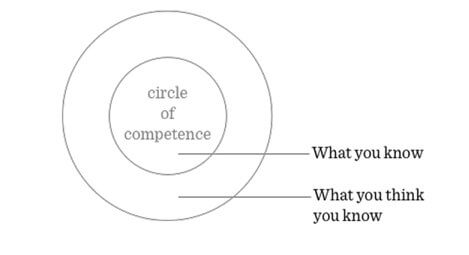
What is The Meaning of Circle of Competence? | RW Education Series
Circle of competence is one of the key concepts that value investors apply to make money from the stock market. Warren Buffett often talks about the circle of competence concept but not many understood it. In this article […]

Life, Relationship, Health, Business & Value Investing – My Thoughts at 26
I have made a lot of mistakes in my life. I have been conned, cheated and have lost money in business deals and investments. Today is my birthday so I thought it would be good to summarize the important lessons I have learned so far about […]

The Return on Invested Capital/ROIC Formula | RW Education Series
Return on Invested Capital is an important formula we should look at when analyzing stocks. ROIC, in short, focuses on analyzing the profitability of a company. What is the formula for ROIC?
Return on invested capital […]