
Investing
Intrinsic Value of Stock: Here’s What It Means Based on Warren Buffett
Chris Lee Susanto, Founder at Re-ThinkWealth.com
6 July 2019

Image source: Flickr
Here’s the thing:
1. Different people may have a different definition of intrinsic value.
2. Even if two people have the same definition of a stock’s intrinsic value, they would most likely not get the same precise value of a company during valuation.
Lets tackle [1] first, then I will go on to [2] later.
What is Warren Buffett’s definition of intrinsic value?
Warren Buffett’s definition of intrinsic value is “the discounted value of the cash that can be taken out of a business during its remaining life”.
Now take a moment to pause and think about the above definition.
Isn’t it logical?
I think that it is easy enough to understand.
Basically, the intrinsic value of any stock is the estimate of future cash flows that a business can produce out of its remaining lifetime.
Now that is where [2] comes about. Remember above I said that even if two people have the same definition of a stock’s intrinsic value, they would most likely not get the same precise value of a company during the valuation?
This is where investing in stocks get interesting and fun.
If we break down the definition properly, there are 3 assumptions or inputs or estimates that an investor needs to make based on this definition of intrinsic value:
1. The future cash flows of the business
2. The number of remaining years the business can last
3. The rate as to which we discount the cash flows to the present value
So first, it means that to be able to get a business’s intrinsic value, we need to be able to predict with quite a high certainty of the business’s future cash flows.
This requires the investor’s understanding of the target business.
The estimated number of years and the rate of return to present value the cash flows need to also have a range.
That is where we can do a sensitivity analysis.
But the key is this: the next time you want to analyze any business to come out with its intrinsic value, you must first ask yourself: Can you get a reliable estimate of the future cash flows of the target business? Can you estimate its future well enough to understand the estimated length of life it can have?
If the answer is no, it is likely that this business is not within your circle of competence and it is best to skip it.
Disclaimer:
The information provided is for general information purposes only and is not intended to be a personalized investment or financial advice.
Important: Please read our full disclaimer.
Read also now:
Re-examining GameStop as a cigar butt stock investing opportunity
Clearly, GameStop management is aiming to reduce reliance on selling video games and pre-owned games by reducing the store counts for this two — while increasing the store counts (as you can see from the chart above) for Collectibles and Technology business (which is currently still at 5.7% and 9.5% of their overall revenue). I think that it is a step in the right direction as even though the collectibles and technology business only accounts for 15.2% of GameStop’s revenue for 2016, it accounted for 36.9% of GameStop’s total […]
Valuation Ratios – The Basics
[…] Not a true cash flow as it excludes CAPEX and working capital. D&A may be added back to net income when calculating cash flows, however, this implicitly assumes that no additional CAPEX is required. A more refined multiple is EV/(EBITDA – CAPEX), though no news source reports this […]
Determining Value: Why Price Is Meaningless, and Multiples are Informative
Investing Lessons [Advanced] Determining Value: Why Price Is Meaningless, and Multiples are Informative Bryan Wang, Re-ThinkWealth Content Expert 23 September 2017 One of the typical responses people give when talking about stocks is..."What's the price?" In the...
10 Mistakes an Investor should Avoid
Investing Lessons [Beginners] 10 Mistakes an Investor should Avoid Benjamin Tan, Content Expert, Re-ThinkWealth 1 September 2017 Every investor has their own investment philosophy and discipline. Each philosophy has its own merit and what is important...
Value Investing And Behavioral Finance
Investing Lessons [Advanced] Value Investing And Behavioral Finance Chris Lee Susanto, Founder and CEO of Re-ThinkWealth 15 July 2017 SUMMARY: Value Investing is inevitably linked to Behavioural Finance Value Investing is a stock methodology practised by many...
Options Selling Strategy – Wk 4 June 2017 [Keryx Pharmaceuticals (NASDAQ: KERX)]
Options Selling Options Selling Strategy – Wk 4 June 2017 [Keryx Pharmaceuticals (NASDAQ: KERX)] Chris Lee Susanto, Founder and CEO, Re-ThinkWealth 24 June 2017 SUMMARY: Options are a form of financial derivatives Options selling strategy have...
Options Selling Strategy – Wk 3 June 2017 (GameStop Inc (NYSE: GME)
Options Selling Options Selling Strategy – Wk 3 June 2017 (GameStop Inc (NYSE: GME) Chris Lee Susanto, Founder and CEO, Re-ThinkWealth 16 June 2017 SUMMARY: Options are a form of financial derivatives Options selling strategy have stocks as...
GameStop Corp (NYSE: GME)– A Cigar Butt Investing Play
Top Articles GameStop Corp (NYSE: GME)– A Cigar Butt Investing Play Chris Lee Susanto, Founder and CEO, Re-ThinkWealth 12 May 2017 SUMMARY: GameStop's valuation is at an all-time low Gross profit margins have been doing well Debt management is good I...
UPDATE: Sold Off All My Stocks In Mobile Telesystems (NYSE: MBT) And This Is What I Learnt From It
Summary Mobile Telesystems (NYSE: MBT) is the biggest stock holdings I had for over two years and it is also the first stock that I bought in my life My absolute gain for this stock is about 34.15% A review of the earnings and revenue growth of MBT indicated an...
[Edited] Importance Of Knowing When To Sell Your Stocks Cannot Be Understated
"Knowing when to sell your stocks is as important-- or even more important-- than knowing when to buy them."- Chris Lee Susanto My Experience I have had experiences in buying stocks of good companies that quickly went to two years high price after I bought it earning...
[Edited] Apple Sued Qualcomm. Here Is Why I Bought It.
In February 2017 I initiated a position on Qualcomm (NASDAQ: QCOM)-- a few days after it was sued by Apple-- when stock price plunged 12%-- for receiving unreasonable royalty fees via leveraging on their monopoly in the chip making industry. Apple sued Qualcomm and I...
My 10 Biggest Takeaways from Warren Buffett and Peter Lynch
Who is Warren Buffett? Born 1930, Omaha, Nebraska Started managing funds in 1956 with the formation of the Buffett Partnership (dissolved in 1969). Now chairman and major owner, Berkshire Hathaway Inc $1,000 invested with Buffett in 1956 would be worth $ 25,289,750 as...

Nasdaq & S&P 500 At A New High – Here’s What It Means
As of today, the Nasdaq & the S&P 500 has hit a new high. Recently, the US economy showed that GDP grew 2.1% annually in the second quarter of this year. It means that consumer is still […]

Get Wealthy Through Stocks (Value Investing Lessons from Pat Dorsey)
Warren Buffett’s definition of intrinsic value is “the discounted value of the cash that can be taken out of a business during its remaining life”. Now take a moment to pause and think about the above definition […]

The Power of Compounding and Early Investing | RW Education Series
Albert Einstein says that compound interest is the eighth wonder of the world. He who understands it earns it and he doesn’t, pays it. Now, what exactly does Albert means by that? The power of compounding is amazing […]

What Are Treasury Bills/Bonds/Notes? | RW Education Series
Just like how companies take on debt from banks and pay interest to them in order to fund their operations, selling U.S. treasury bills/bonds/notes are one way the U.S. government raise funds to finance their […]

“The big money is not in the buying and selling, but in the waiting.”
Recently, I have come into the trap of being too focused on the short term price movements of stocks. A meaningful change that can occur in a company will not happen fast. It will take the fastest months and likely […]
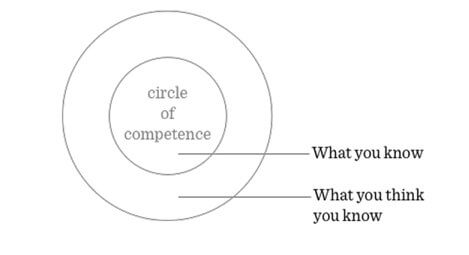
What is The Meaning of Circle of Competence? | RW Education Series
Circle of competence is one of the key concepts that value investors apply to make money from the stock market. Warren Buffett often talks about the circle of competence concept but not many understood it. In this article […]

Life, Relationship, Health, Business & Value Investing – My Thoughts at 26
I have made a lot of mistakes in my life. I have been conned, cheated and have lost money in business deals and investments. Today is my birthday so I thought it would be good to summarize the important lessons I have learned so far about […]

The Return on Invested Capital/ROIC Formula | RW Education Series
Return on Invested Capital is an important formula we should look at when analyzing stocks. ROIC, in short, focuses on analyzing the profitability of a company. What is the formula for ROIC?
Return on invested capital […]