
Investing
Lessons from Ron Baron, The Long-Term Investor Billionaire
Chris Lee Susanto, Founder at Re-ThinkWealth.com
15 May 2020
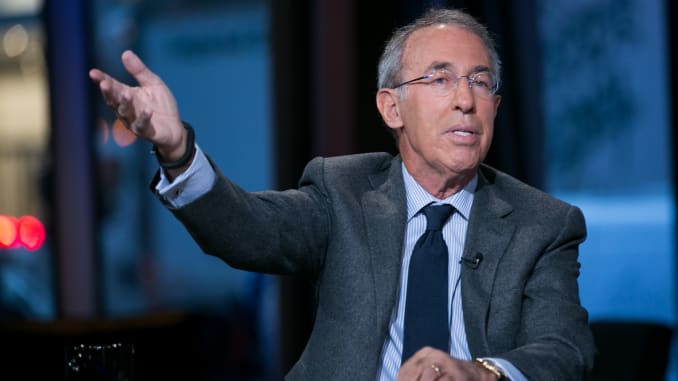
Image source: CNBC
As value investors, a lot of us talk about investing for the long run.
But what does investing in the long run really mean?
As a value investor, I have had companies that I made over 50% in less than 6 months because that company I owned got acquired. I have also had companies that I sold and it went up another 20-25% after I sold.
But have you held a company for 14 years before? I have not, but the Billionaire long-term/value investor Ron Baron has.
Ron Baron is the founder, CEO, and CIO of Baron Capital which he started in 1982.
The investment firm currently manages around $30 billion of AUM.
From my knowledge, since successfully founding and growing his money management firm since 1982 – Ron’s company had made more than $25 billion in profit for his clients.
So what can we learn from Ron Baron, value investing wise?
Based on a CNBC article dated on August 20, 2019, it says:
“With a net worth of $2.2 billion, according to Forbes, Baron has made a fortune by doing extensive research, buying the stocks of companies he feels are undervalued, and keeping them for an average of about 14 years.”
Based on the quote above, we know that Ron holds companies for an average of 14 years.
What I know as an investor is:
[1] To hold a company for an average of 14 years would require us to also decide for 14 years to not sell the company. That would require us to really understand the company well enough in terms of its business value.
[2] It can be really hard in today’s modern times because patience, to be honest, is generally short in supply. In the older days, it is harder to get information.
Today, we are bombarded by information all in the palm of our hands. We have stock prices, minute by minute, and headlines that could easily influence us emotion wise and might result in us making the wrong decision.
[3] But I know that to really outperform and hold a company for so long, we have to invest in companies that have a long-term bright future that we can hold for the long-run. And in the long-run, it means more than 10 years.
It is important that it is a great company with a strong & durable competitive advantage because if it is not, they will only get worse over time (meaning, the longer we hold the company, the more money we are going to lose).
Consistency is also key. Ron Baron suggests that we should not buy and sell based on headlines.
Many people buy at the wrong time and sell at the wrong time because we are emotional.
For Ron Baron, he buys stocks monthly and buys more when the market is fearful.
In this Outlook Business article, Ron Baron shed a few more investing learning points:
“What’s going to happen if interest rates rise and what happens if oil prices go up? Everyone has a point of view about what they think is going to happen and, for the most part, invest in liquid securities. That’s macro investing. We don’t do that.”
“Baron explains that successful investing is not just about finding the right company but also holding on to it as it grows.”
“Baron believes the biggest mistake investors generally make is to avoid paying a small premium for a strong growing business.”
“We invest for the long term and, over time, become quite knowledgeable about the businesses that we invest in.”
“We focus on companies that are smaller. You need liquidity only if you are buying and selling all the time. For example, in the Baron Growth Fund, the average holding period is 13-14 years, while the average holding period for most mutual funds is nine months to a year. So, if you are buying and selling in a very rapid fashion, you need a lot of liquidity. But if you are making investments over an extended period of time, then you need less liquidity. If the business is going to flourish then you will end up making a lot of money. To give you an example, a chunk of our $25 billion profit has come from relatively small number of companies — 15 companies fetched us $11 billion.”
“We look at whether we’ve made a mistake — and it’s never about the price. If we’ve made a mistake in terms of a business plan not working out as expected, we sell. It’s all about the fundamentals of a business and not about the stock price.”
“And if we are wrong, we just sell as fast as we can. Just get out as fast as you can when you make a mistake and, hopefully, not too often. When you make a mistake, you just move on. “
“In short, we try to discover businesses that, first, can become much larger than they are at present. Second, there is something about the business that gives it a sustainable competitive advantage which others can’t duplicate. Third, it’s all about the management team — exceptional, honest, that work hard and are not going to cheat us; they are going to work for us as opposed to themselves”
“Hence, we are always talking with companies, studying the businesses and making sure that our assessment is going in the right direction. If your thesis is correct, you hold the stock regardless of what the price is doing.”
“When I invested in Vail, for the first 10 years we made just 60-70%. In 2006, the stock was still at $26-27 and now it’s $220-230. In the past 12 years we made 8-9x return. So, you have to be patient. You can’t expect when you buy a stock that it keeps going up 1.5% every single month, at the end of 10 years you would have made 4x. You have to be prepared at any point in time to lose 20% of your money, and make sure that you have enough time to make it back. “
See also: 5 Investing Lessons from The Three Kingdom
Again, we learn some of the investment thought processes that Ron Baron has from the above few quotes, they are:
[1] Ron is a bottom-up investor. That means that he does not think about macro, he does not think about the interest rates. He focuses on analyzing the business and buying a stake of it via the stock market.
[2] He mentions that the key to good investing is not only in finding the right company but holding it as it grows.
[3] Value investors have a common connotation that we only buy cheap undervalued companies. But it is not true, Warren Buffett said something along the line that value and growth are both parts of the value of the business. For Ron, he does not mind paying a small premium for a great business.
[4] When Ron makes a mistake, it is always about the fundamentals of the company and not about the stock price. He admits mistakes fast and moves on. And as we can see, he definitely let his winners make up for his mistakes. He said above that majority of his $25 billion profit comes from a relatively small number of companies – 15 companies fetched them $11 billion.
[5] His example with his Vail investment truly epitome the power of long-term investing. If a company is still good and worth holding, it is obvious that Ron will just hold them. That is how he outperforms.
I hope the above article is value-adding to you 🙂
Want Join my FREE Telegram Channel to Get FREE stocks, business, economy and investing knowledge at Your Fingertips?
Legal Disclaimer:
Re-ThinkWealth is a personal value investing & options selling blog. By using this Site, you specifically agree that all the information provided is for general information purposes only and is not intended to be a personalized investment or financial advice.
Important: Please read our full disclaimer.
Some of our most popular articles:
What is Value Investing? – An article I wrote for Value Walk describing in summary what exactly is value investing.
The 100+ Most Intelligent Investing Quotes of All Time – I love quotes. Especially quotes by value investors who had been wildly successful at managing their funds. The list is consistently updated.
The Intelligent Investor Summary (Ultimate Guide) – A very popular article from my site that summarizes concepts of value investing from the father of value investing, Benjamin Graham.
Chris’s latest articles:
Re-examining GameStop as a cigar butt stock investing opportunity
Clearly, GameStop management is aiming to reduce reliance on selling video games and pre-owned games by reducing the store counts for this two — while increasing the store counts (as you can see from the chart above) for Collectibles and Technology business (which is currently still at 5.7% and 9.5% of their overall revenue). I think that it is a step in the right direction as even though the collectibles and technology business only accounts for 15.2% of GameStop’s revenue for 2016, it accounted for 36.9% of GameStop’s total […]
Valuation Ratios – The Basics
[…] Not a true cash flow as it excludes CAPEX and working capital. D&A may be added back to net income when calculating cash flows, however, this implicitly assumes that no additional CAPEX is required. A more refined multiple is EV/(EBITDA – CAPEX), though no news source reports this […]
Determining Value: Why Price Is Meaningless, and Multiples are Informative
Investing Lessons [Advanced] Determining Value: Why Price Is Meaningless, and Multiples are Informative Bryan Wang, Re-ThinkWealth Content Expert 23 September 2017 One of the typical responses people give when talking about stocks is..."What's the price?" In the...
10 Mistakes an Investor should Avoid
Investing Lessons [Beginners] 10 Mistakes an Investor should Avoid Benjamin Tan, Content Expert, Re-ThinkWealth 1 September 2017 Every investor has their own investment philosophy and discipline. Each philosophy has its own merit and what is important...
Value Investing And Behavioral Finance
Investing Lessons [Advanced] Value Investing And Behavioral Finance Chris Lee Susanto, Founder and CEO of Re-ThinkWealth 15 July 2017 SUMMARY: Value Investing is inevitably linked to Behavioural Finance Value Investing is a stock methodology practised by many...
Options Selling Strategy – Wk 4 June 2017 [Keryx Pharmaceuticals (NASDAQ: KERX)]
Options Selling Options Selling Strategy – Wk 4 June 2017 [Keryx Pharmaceuticals (NASDAQ: KERX)] Chris Lee Susanto, Founder and CEO, Re-ThinkWealth 24 June 2017 SUMMARY: Options are a form of financial derivatives Options selling strategy have...
Options Selling Strategy – Wk 3 June 2017 (GameStop Inc (NYSE: GME)
Options Selling Options Selling Strategy – Wk 3 June 2017 (GameStop Inc (NYSE: GME) Chris Lee Susanto, Founder and CEO, Re-ThinkWealth 16 June 2017 SUMMARY: Options are a form of financial derivatives Options selling strategy have stocks as...
GameStop Corp (NYSE: GME)– A Cigar Butt Investing Play
Top Articles GameStop Corp (NYSE: GME)– A Cigar Butt Investing Play Chris Lee Susanto, Founder and CEO, Re-ThinkWealth 12 May 2017 SUMMARY: GameStop's valuation is at an all-time low Gross profit margins have been doing well Debt management is good I...
UPDATE: Sold Off All My Stocks In Mobile Telesystems (NYSE: MBT) And This Is What I Learnt From It
Summary Mobile Telesystems (NYSE: MBT) is the biggest stock holdings I had for over two years and it is also the first stock that I bought in my life My absolute gain for this stock is about 34.15% A review of the earnings and revenue growth of MBT indicated an...
[Edited] Importance Of Knowing When To Sell Your Stocks Cannot Be Understated
"Knowing when to sell your stocks is as important-- or even more important-- than knowing when to buy them."- Chris Lee Susanto My Experience I have had experiences in buying stocks of good companies that quickly went to two years high price after I bought it earning...
[Edited] Apple Sued Qualcomm. Here Is Why I Bought It.
In February 2017 I initiated a position on Qualcomm (NASDAQ: QCOM)-- a few days after it was sued by Apple-- when stock price plunged 12%-- for receiving unreasonable royalty fees via leveraging on their monopoly in the chip making industry. Apple sued Qualcomm and I...
My 10 Biggest Takeaways from Warren Buffett and Peter Lynch
Who is Warren Buffett? Born 1930, Omaha, Nebraska Started managing funds in 1956 with the formation of the Buffett Partnership (dissolved in 1969). Now chairman and major owner, Berkshire Hathaway Inc $1,000 invested with Buffett in 1956 would be worth $ 25,289,750 as...
Re-examining GameStop as a cigar butt stock investing opportunity
Clearly, GameStop management is aiming to reduce reliance on selling video games and pre-owned games by reducing the store counts for this two — while increasing the store counts (as you can see from the chart above) for Collectibles and Technology business (which is currently still at 5.7% and 9.5% of their overall revenue). I think that it is a step in the right direction as even though the collectibles and technology business only accounts for 15.2% of GameStop’s revenue for 2016, it accounted for 36.9% of GameStop’s total […]
Valuation Ratios – The Basics
[…] Not a true cash flow as it excludes CAPEX and working capital. D&A may be added back to net income when calculating cash flows, however, this implicitly assumes that no additional CAPEX is required. A more refined multiple is EV/(EBITDA – CAPEX), though no news source reports this […]
Determining Value: Why Price Is Meaningless, and Multiples are Informative
Investing Lessons [Advanced] Determining Value: Why Price Is Meaningless, and Multiples are Informative Bryan Wang, Re-ThinkWealth Content Expert 23 September 2017 One of the typical responses people give when talking about stocks is..."What's the price?" In the...
10 Mistakes an Investor should Avoid
Investing Lessons [Beginners] 10 Mistakes an Investor should Avoid Benjamin Tan, Content Expert, Re-ThinkWealth 1 September 2017 Every investor has their own investment philosophy and discipline. Each philosophy has its own merit and what is important...
Value Investing And Behavioral Finance
Investing Lessons [Advanced] Value Investing And Behavioral Finance Chris Lee Susanto, Founder and CEO of Re-ThinkWealth 15 July 2017 SUMMARY: Value Investing is inevitably linked to Behavioural Finance Value Investing is a stock methodology practised by many...
Options Selling Strategy – Wk 4 June 2017 [Keryx Pharmaceuticals (NASDAQ: KERX)]
Options Selling Options Selling Strategy – Wk 4 June 2017 [Keryx Pharmaceuticals (NASDAQ: KERX)] Chris Lee Susanto, Founder and CEO, Re-ThinkWealth 24 June 2017 SUMMARY: Options are a form of financial derivatives Options selling strategy have...
Options Selling Strategy – Wk 3 June 2017 (GameStop Inc (NYSE: GME)
Options Selling Options Selling Strategy – Wk 3 June 2017 (GameStop Inc (NYSE: GME) Chris Lee Susanto, Founder and CEO, Re-ThinkWealth 16 June 2017 SUMMARY: Options are a form of financial derivatives Options selling strategy have stocks as...
GameStop Corp (NYSE: GME)– A Cigar Butt Investing Play
Top Articles GameStop Corp (NYSE: GME)– A Cigar Butt Investing Play Chris Lee Susanto, Founder and CEO, Re-ThinkWealth 12 May 2017 SUMMARY: GameStop's valuation is at an all-time low Gross profit margins have been doing well Debt management is good I...
UPDATE: Sold Off All My Stocks In Mobile Telesystems (NYSE: MBT) And This Is What I Learnt From It
Summary Mobile Telesystems (NYSE: MBT) is the biggest stock holdings I had for over two years and it is also the first stock that I bought in my life My absolute gain for this stock is about 34.15% A review of the earnings and revenue growth of MBT indicated an...
[Edited] Importance Of Knowing When To Sell Your Stocks Cannot Be Understated
"Knowing when to sell your stocks is as important-- or even more important-- than knowing when to buy them."- Chris Lee Susanto My Experience I have had experiences in buying stocks of good companies that quickly went to two years high price after I bought it earning...
[Edited] Apple Sued Qualcomm. Here Is Why I Bought It.
In February 2017 I initiated a position on Qualcomm (NASDAQ: QCOM)-- a few days after it was sued by Apple-- when stock price plunged 12%-- for receiving unreasonable royalty fees via leveraging on their monopoly in the chip making industry. Apple sued Qualcomm and I...
My 10 Biggest Takeaways from Warren Buffett and Peter Lynch
Who is Warren Buffett? Born 1930, Omaha, Nebraska Started managing funds in 1956 with the formation of the Buffett Partnership (dissolved in 1969). Now chairman and major owner, Berkshire Hathaway Inc $1,000 invested with Buffett in 1956 would be worth $ 25,289,750 as...