
Investing
To Make Decisions Like Charlie Munger, Understand Your Emotions Well
Chris Lee Susanto, Founder at Re-ThinkWealth.com
1 December 2018

Image source: Value Research
The quality of our thinking creates the quality of our life. If the above sentence is true, then Charlie Munger must have made plenty of high-quality decisions over the course of his lifetime. Charlie is currently worth about US$1.8 Billion. He is the right-hand man of Warren Buffett who is currently worth over US$80 Billion.
—
Who is Charlie Munger?
Charlie Munger was born on January 1, 1924. He is turning 95 years old next year and still is as fit as a fiddle today. He is the vice chairman of Berkshire Hathaway. Currently worth about US$1.8B. Commonly known as Warren’s partner/ right-hand man, he is also the chairman of publisher Daily Journal Corp. and sits on the board of retailer Costco.
A Wall Street Journal article back in 2014 detailed out why investors are in awe of Charlie. Back at a 2014 Daily Journal annual meeting, he shared a lot of things. But his central message is: Investors can reach their fullest potential only by thinking for themselves. “If you stay rational yourself,” he told the crowd, “the stupidity of the world helps you.”
Charlie came from an unlikely background. During World War 2, Charlie left University to become an army meteorologist. After the war, he earned a degree from Harvard Law School. He earned Magna Cum Laude at Harvard Law. It was back in 1959 that he met Buffett at a dinner party. And Buffett convinced Charlie to switch career from law to investing. Investing makes much more money as compared to law.
Not only is Charlie a good investor, but he also happens to be very wise in his approach to thinking about life.
Here are just some of Charlie’s sayings that I learn and model my thinking after.
“Just because you like it does not mean that the world will necessarily give it to you.”
“Spend each day trying to be a little wiser than you were when you woke up. Discharge your duties faithfully and well. Systematically you get ahead, but not necessarily in fast spurts. Nevertheless, you build discipline by preparing for fast spurts. Slug it out one inch at a time, day by day. At the end of the day – if you live long enough – most people get what they deserve.”
“It is remarkable how much long-term advantage people like us have gotten by trying to be consistently not stupid, instead of trying to be very intelligent.”
“The iron rule of nature is: You get what you reward for. If you want ants to come, you put sugar on the floor.”
“If you don’t learn to constantly revise your earlier conclusions, and get better ones…you’re like a one-legged man in an ass-kicking contest.”
Why It Is Important That We Have An Effective Framework for Decision Making
Obviously, Charlie is a smart person. He makes great decisions. And we also make plenty of decisions every day. Unfortunately, most of us do not have a good framework for effective decision making. Without the ability to make decisions well, our investment results will suffer. Furthermore, value investors need to focus on quality over quantity. Because 1 or 2 good ideas a year is more than enough for us. So, having a good framework of thinking is so important for us.
That is why in this article, we will learn about the two-track analysis framework that Charlie uses to make his decisions. And obviously, the two-track analysis works. Because of where Charlie is today, a successful investor with a net worth of about US$1.8 Billion.
To Make Decisions Like Charlie Munger, Use The Two-Track Analysis Framework
“Personally, I’ve gotten so that I now use a kind of two-track analysis. First, what are the factors that really govern the interests involved, rationally considered? And second, what are the subconscious influences where the brain at a subconscious level is automatically doing these things – which by and large are useful but often malfunction?
One approach is rationality-the way you’d work out a bridge problem: by evaluating the real interests, the real probabilities and so forth. And the other is to evaluate the psychological factors that cause subconscious conclusions-many of which are wrong.” – Charlie Munger
The two-track analysis framework recognizes that there are two factors at play when making decisions. The first is the rational factor. And the second is the emotional factors that influences decision making.
Charlie said that the emotional factors can be useful but often malfunction. This means that we have to be aware of the emotional biases that affect our decision making. We should not simply assume something just to reach a conclusion. A conclusion that perhaps, we have already confirmed before thinking about it rationally. In short, we always have to be aware of the subconscious emotional influences at play before making a decision.
The two-track analysis may seem simple. But do not let its simplicity fools you. To apply the two-track analysis framework well, we must first understand what affects us at a subconscious level as a human being. Things such as confirmation bias, mean reversion bias, loss aversion, and authority are some examples of how we can be affected emotionally and make bad decisions. After understanding it, we must be aware when it happens to us.
Common Examples of Emotional Bias Prevalent in Investing:
1. Confirmation Bias
We tend to avoid information that goes against our beliefs. This bias led us to reject pieces of information that could have helped us make better decisions.
Solution: Be open-minded. Listen and purposely search for opposing views. It is better to be wrong and make the right decision than to insist we are right and be wrong.
2. Mean Reversion Bias
We tend to believe if a stock price is far from the mean, it could be a good buy/sell opportunity. But we forgot that means can and will move. The mean reversion thesis does not always happen. The new average or mean price of a stock can move higher or lower.
Solution: Do not be tempted to buy or sell simply because a stock price has fallen or increased by a lot the mean. Dive deeper!
3. Loss Aversion
We as a human being is scared of losing money. We feel more pain from losing money as compared to the satisfaction of winning the same amount. This may lead us to make bad decisions. For example, not selling a stock because we do not want to realize our loss.
Solution: “Should you find yourself in a chronically leaking boat, energy devoted to changing vessels is likely to be more productive than energy devoted to patching leaks.” – Warren Buffett
4. Authority
In authority bias, people tend to follow authority figures blindly. In investing, it is dangerous when we blindly follow the advice of someone or some entity just because they are respected. Just because Warren Buffett buys Apple stock, it does not mean that Apple stock is a good buy for us.
Solution: We have to think independently and make our own decision.
3 Main Scenarios Where Emotions May Influence You in Making The Wrong Decision.
Think About What Will You Do In Each of These Scenarios:
1. You Bought A Stock And Its Price Fell by 50%
A: You did your analysis on a stock. And valued it to be worth $1. So you bought it for $0.80. Next day, the stock price fell by 50% to $0.40 due to bad news. The news does not affect the fundamentals of the company.
B: Same as the above. Just that the news affected the fundamentals of the company. And you revalued the stock to be worth only $0.30 instead of the original $1 you thought it was worth.
What will you do in the above 2 scenarios? Will you sell, buy more or do nothing?
2. You Found An Undervalued Stock
A: You did your analysis on a stock. And valued it to be worth $1. The current stock price is $0.80. You know it is undervalued now. But you think that there is also a possibility of the stock price falling some more. Making it an even better buy.
B: Let’s say you waited and the price went up to $0.90. Most people will not buy it because they anchor their price to the original $0.80 price tag. Now you know your valuation for the stock is $1. You felt a sense of regret you did not buy it back at $0.80.
What will you do in the above 2 scenarios? Will you buy now or wait?
3. You Bought a Stock And It Is Fully Valued Now
You did your analysis on a stock. And valued it to be worth $1. You bought it for $0.80. The stock price went up to $1. You know that there is a chance that the stock price may increase further. But your valuation still says it is worth only $1.
What will you do in the above scenario? Will you sell now or wait?
Different people will have different answers to the above 3 main scenarios. That is because different people have different investment philosophies. Think for yourself what is good for you. Because only you know yourself best.
In Short, Here’s What We Can Learn From The Two Track Analysis Framework
The two-track analysis focuses first on rational factors. It focuses on facts, reasoning, valuations based on fundamentals. It focuses on the truth. Once we have done the rational thinking, make no mistake – we still can make bad decisions if we do not recognize the subconscious influences at play. Because it is the emotions that make bad decisions. Recognize the subconscious influences at play.
Charlie is a remarkably consistent man. As reported by WSJ, back in the late 1980s, when a guest at a dinner party asked Charlie, “Tell me, what one quality accounts for your enormous success?”
Charlie’s reply: “I’m rational. That’s the answer. I’m rational.”
What are your thoughts? Have you had occasions where because of your emotions, you made a bad investment decision? It’s okay if you have. Most importantly, learn from it and don’t repeat it.
Disclaimer:
The information provided is for general information purposes only and is not intended to be a personalized investment or financial advice.
Important: Please read our full disclaimer.
More From Me:
Re-examining GameStop as a cigar butt stock investing opportunity
Clearly, GameStop management is aiming to reduce reliance on selling video games and pre-owned games by reducing the store counts for this two — while increasing the store counts (as you can see from the chart above) for Collectibles and Technology business (which is currently still at 5.7% and 9.5% of their overall revenue). I think that it is a step in the right direction as even though the collectibles and technology business only accounts for 15.2% of GameStop’s revenue for 2016, it accounted for 36.9% of GameStop’s total […]
Valuation Ratios – The Basics
[…] Not a true cash flow as it excludes CAPEX and working capital. D&A may be added back to net income when calculating cash flows, however, this implicitly assumes that no additional CAPEX is required. A more refined multiple is EV/(EBITDA – CAPEX), though no news source reports this […]
Determining Value: Why Price Is Meaningless, and Multiples are Informative
Investing Lessons [Advanced] Determining Value: Why Price Is Meaningless, and Multiples are Informative Bryan Wang, Re-ThinkWealth Content Expert 23 September 2017 One of the typical responses people give when talking about stocks is..."What's the price?" In the...
10 Mistakes an Investor should Avoid
Investing Lessons [Beginners] 10 Mistakes an Investor should Avoid Benjamin Tan, Content Expert, Re-ThinkWealth 1 September 2017 Every investor has their own investment philosophy and discipline. Each philosophy has its own merit and what is important...
Value Investing And Behavioral Finance
Investing Lessons [Advanced] Value Investing And Behavioral Finance Chris Lee Susanto, Founder and CEO of Re-ThinkWealth 15 July 2017 SUMMARY: Value Investing is inevitably linked to Behavioural Finance Value Investing is a stock methodology practised by many...
Options Selling Strategy – Wk 4 June 2017 [Keryx Pharmaceuticals (NASDAQ: KERX)]
Options Selling Options Selling Strategy – Wk 4 June 2017 [Keryx Pharmaceuticals (NASDAQ: KERX)] Chris Lee Susanto, Founder and CEO, Re-ThinkWealth 24 June 2017 SUMMARY: Options are a form of financial derivatives Options selling strategy have...
Options Selling Strategy – Wk 3 June 2017 (GameStop Inc (NYSE: GME)
Options Selling Options Selling Strategy – Wk 3 June 2017 (GameStop Inc (NYSE: GME) Chris Lee Susanto, Founder and CEO, Re-ThinkWealth 16 June 2017 SUMMARY: Options are a form of financial derivatives Options selling strategy have stocks as...
GameStop Corp (NYSE: GME)– A Cigar Butt Investing Play
Top Articles GameStop Corp (NYSE: GME)– A Cigar Butt Investing Play Chris Lee Susanto, Founder and CEO, Re-ThinkWealth 12 May 2017 SUMMARY: GameStop's valuation is at an all-time low Gross profit margins have been doing well Debt management is good I...
UPDATE: Sold Off All My Stocks In Mobile Telesystems (NYSE: MBT) And This Is What I Learnt From It
Summary Mobile Telesystems (NYSE: MBT) is the biggest stock holdings I had for over two years and it is also the first stock that I bought in my life My absolute gain for this stock is about 34.15% A review of the earnings and revenue growth of MBT indicated an...
[Edited] Importance Of Knowing When To Sell Your Stocks Cannot Be Understated
"Knowing when to sell your stocks is as important-- or even more important-- than knowing when to buy them."- Chris Lee Susanto My Experience I have had experiences in buying stocks of good companies that quickly went to two years high price after I bought it earning...
[Edited] Apple Sued Qualcomm. Here Is Why I Bought It.
In February 2017 I initiated a position on Qualcomm (NASDAQ: QCOM)-- a few days after it was sued by Apple-- when stock price plunged 12%-- for receiving unreasonable royalty fees via leveraging on their monopoly in the chip making industry. Apple sued Qualcomm and I...
My 10 Biggest Takeaways from Warren Buffett and Peter Lynch
Who is Warren Buffett? Born 1930, Omaha, Nebraska Started managing funds in 1956 with the formation of the Buffett Partnership (dissolved in 1969). Now chairman and major owner, Berkshire Hathaway Inc $1,000 invested with Buffett in 1956 would be worth $ 25,289,750 as...
Wait, Wait!
I often share insights that I do not share in this blog over at my Facebook page. Don’t forget to like it before you go!

Nasdaq & S&P 500 At A New High – Here’s What It Means
As of today, the Nasdaq & the S&P 500 has hit a new high. Recently, the US economy showed that GDP grew 2.1% annually in the second quarter of this year. It means that consumer is still […]

Get Wealthy Through Stocks (Value Investing Lessons from Pat Dorsey)
Warren Buffett’s definition of intrinsic value is “the discounted value of the cash that can be taken out of a business during its remaining life”. Now take a moment to pause and think about the above definition […]

Intrinsic Value of Stock: Here’s What It Means Based on Warren Buffett
Warren Buffett’s definition of intrinsic value is “the discounted value of the cash that can be taken out of a business during its remaining life”. Now take a moment to pause and think about the above definition […]

The Power of Compounding and Early Investing | RW Education Series
Albert Einstein says that compound interest is the eighth wonder of the world. He who understands it earns it and he doesn’t, pays it. Now, what exactly does Albert means by that? The power of compounding is amazing […]

What Are Treasury Bills/Bonds/Notes? | RW Education Series
Just like how companies take on debt from banks and pay interest to them in order to fund their operations, selling U.S. treasury bills/bonds/notes are one way the U.S. government raise funds to finance their […]

“The big money is not in the buying and selling, but in the waiting.”
Recently, I have come into the trap of being too focused on the short term price movements of stocks. A meaningful change that can occur in a company will not happen fast. It will take the fastest months and likely […]
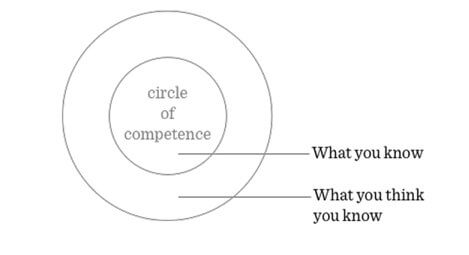
What is The Meaning of Circle of Competence? | RW Education Series
Circle of competence is one of the key concepts that value investors apply to make money from the stock market. Warren Buffett often talks about the circle of competence concept but not many understood it. In this article […]

Life, Relationship, Health, Business & Value Investing – My Thoughts at 26
I have made a lot of mistakes in my life. I have been conned, cheated and have lost money in business deals and investments. Today is my birthday so I thought it would be good to summarize the important lessons I have learned so far about […]