
Investing Lessons [Beginners]
Valuation Ratios – The Basics
Bryan Wang, Re-ThinkWealth Content Expert
28 October 2017
There are two basic forms of valuation ratios – enterprise value multiples, and equity value multiples. What is the difference?
Equity value is essentially the market cap of the firm – what you would pay to acquire the entire equity interest of the firm. However, if the firm is in anyway financed by debt, there is the debt portion too.
Hence the idea of enterprise value – it is the value you would pay to acquire the entire company (equity and debt interest). How do you do this?
1) First, pay off the equity holders (equity value)
2) Pay off the debt holders (bond value)
3) Receive cash on the balance sheet, which offsets the purchase price
Thus, Enterprise Value (EV) = Equity Value + Debt Value – Cash (simplified. We can also less off NCI and add Associates, if significant)
Why is this significant?
When using valuation ratios, the denominator should be a driver of the numerator. For example, using the P/E ratio:
– The denominator is earnings (i.e. net income), which is attributable to equity holders
– The numerator is price, which is what you would pay to buy an equity interest
Price/Sales or Price/EBIT might be used sometimes, but it is ‘impure’ – EBIT and Sales accrue to the entire firm, i.e. *both* equity and debt holders. A better metric might be EV/EBIT or EV/EBITDA (EV and EBIT and EBITDA are all accruing to the entire firm).
EBIT is Earnings Before Interest and Taxes, also known as Operating Profit. EBIT= Revenue – COGS – SGA Expenses
EBITDA is Earnings Before Interest, Taxes, Depreciation & Amortization.
EBITDA = EBIT + D&A
So what are the common multiples?
- Enterprise-based multiples: EV/EBITDA (most common), EV/EBIT, EV/FCFF
- Equity-based multiples: P/E (most common), P/B, P/FCFE
(FCFF = Free Cash Flow to Firm, FCFE = Free Cash Flow to Equityholders)
What is the significance of EV/EBITDA, and when should it be used in place of P/E?
EV/EBITDA is a commonly used valuation measure. It is obtained by taking EBIT (or Operating Profit), and add depreciation & amortization (D&A) back to it, hence EBITDA. Key advantages of EV/EBITDA are as follows:
(+) Removes the effect of capital structure – because EBITDA is before interest expense, the whole firm (i.e. enterprise) is valued independent of capital structure, facilitating comparison across firms with different debt levels
(+) Removes the effect of management’s discretionary calculation of D&A expenses. Depreciation is a management policy, and it can vary greatly among different firms. EBITDA removes this effect, however, please see below for disadvantages
(+) Removes the effect of tax. This is advantageous from an acquisition perspective – if restructuring is involved, the tax rates paid by the company after restructuring might be different, and EBITDA does not make assumptions on tax rates
(+) Unlike earnings, EBITDA is less susceptible to manipulation as it is higher up on the income statement. It does not include extraordinary items, non-operating items or one-time gains/losses
(+) Can be used when a company has negative or zero earnings (assuming EBITDA is still meaningful)
(-) Not a true cash flow as it excludes CAPEX and working capital. D&A may be added back to net income when calculating cash flows, however, this implicitly assumes that no additional CAPEX is required. An more refined multiple is EV/(EBITDA – CAPEX), though no news source reports this
(-) EBITDA is *not* a standardized reporting metric – IFRS and GAAP do not calculate EBITDA, so firm-reported EBITDA numbers do have an element of management discretion
Given all the background knowledge, when should we use a particular valuation multiple?
I suggest that the average investor always starts with P/E ratios – it is a quick and simple way to get an understanding of earnings.
However, if the industry/company is CAPEX-intensive, and has high and differing depreciation/amortization expenses, then EBITDA would be preferred.
Usually, consumer product companies can be reasonably valued using P/E multiples. Telcos and utilities, with their heavier and differing D&A expenses, tend to be valued on an EBITDA basis (dividend yield is also a possible metric)
Disclaimer: The information provided is for general information purposes only and is not intended to be a personalized investment or financial advice.
Important: Please read our full disclaimer.

Is GameStop Doomed? I Visited Their Stores in NY to Find Out
As of the market close on 11 January 2018 at $19.96, I am at a 7.81% paper gain excluding of realized gains I received via dividends and options premium. And GameStop consists of 30.80% of my portfolio – second on the list – with the first being Qualcomm at 40.60% of my portfolio. Naturally, going down to GameStop stores in New […]

Last day of 2017 – A Review of My Investment Journey So Far
This year, the stock market rally would have given many investors with a good profit – the Dow (top 30 company in the united states stock market) up 25%, S&P 500 (top 500 company in the united states stock market) up 19% and Nasdaq are up 28% this year. And I think it is maybe time to be cautious. Or I should say, cautiously […]
Here’s My Opinion on Bitcoin
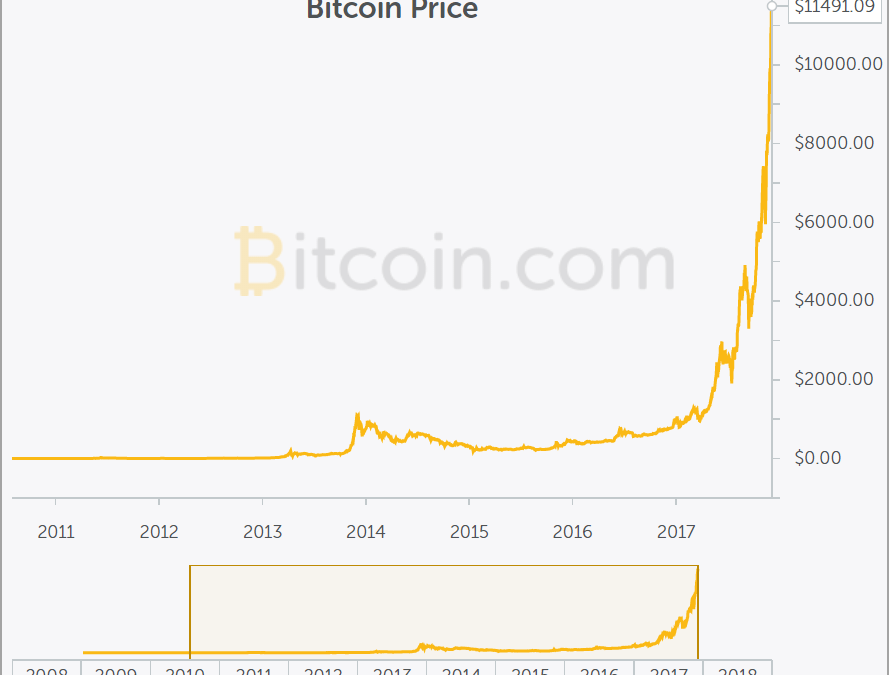
Bitcoin is a currency that was founded/discovered pretty recently in 2009 by a person (still unknown) using the alias Satoshi Nakamoto.The good thing about transacting using Bitcoin is that there will be no middleman required to do the transacting. There is also no fees tagged to transacting with Bitcoin and no requirements […]

What is moat in Warren Buffett’s terms & why it’s important
Moat is important because it protects a company from losing their market share easily which will erode its earnings power over time. This is important for us as investors because we would want the company we invest in to have its earnings grow over time – then the share price will follow – and not the other way round. So, we […]
Want new articles before they get published? Subscribe to our Awesome Community.
And join our Investors Community
A Happy environment for all to share and learn investment knowledge with one another, guided and mentored by Chris Lee Susanto.