Investing
The Return on Invested Capital/ROIC Formula | RW Education Series
Chris Lee Susanto, Founder at Re-ThinkWealth.com
11 April 2019
Return on Invested Capital is an important formula we should look at when analyzing stocks. ROIC, in short, focuses on analyzing the profitability of a company.
1. What is the formula for ROIC?
Return on invested capital = net income/ (total debt + equity used by the company).
2. Where can we find the data needed to calculate ROIC?
We can find the data needed in a company’s annual reports.
If you’d like to find the trailing twelve months data, you can look at it’s past 4 quarterly earnings.
3. Why is ROIC important?
ROIC takes into account both the debt and equity used by the company to generate net income. It is important because it allows us to see a company’s ability to generate a return from employing not only its equity (which is what people normally sees) but also its debt.

For example, the above image shows both Apple and Samsung’s ROIC over the past 10 years. Based on the above ROIC, we can see that:
- Apple’s ROIC has been consistently higher than Samsung’s – And evidently, Apple has been the more successful company over the past decade as compared to Samsung
- Both their ROIC is fluctuating quite widely over the years – this shows that technology companies earnings can fluctuate very widely, even for a well-established and market leading companies like Samsung and Apple
- Apple’s ROIC started dropping since 2012 – the most glorious days of Apple might be over since the iPhone craze days
- Samsung’s ROIC has been increasing in recent times and is near Apple’s now – Samsung might have a higher ROIC than Apple for the first time in over a decade soon
Hence, ROIC can be used as a proxy of the success of a company. After all, most companies’ goal is to generate a return for shareholders.
4. How is ROIC used?
We can compare companies in the same industry and compare their ROIC with one another to see which company has better management of capital to generate returns for the company – and see how consistent they are over the years.
So I normally compare the ROIC of the target company with its competitors (in the same industry and of similar size) against one another.
The company with a higher ROIC tends to be a better company in terms of its ability to generate returns not only for the debt holders (to pay their interest) but also for the equity holders/stockholders.
5. In Summary
ROIC gives a good overall picture of the profitability of any company.
Because ultimately, most companies are made up of a combination of debt and equity. The return on invested capital metric takes into account both capital raised from debt and equity.
Looking at ROIC will allow the investor to analyze the company’s ability in % terms of how well it generates a return for using both debt and equity.
Corrections & Amplifications:
Return on invested capital = net income/ (total debt + equity used by the company) is a simplified version of ROIC for the purpose of this article.
To elaborate further, the total debt and equity used BY the company (as I indicated in the article above) means that it is the total debt and equity actually used and invested for the company.
I did not mean the total debt and equity OF the company which then will be equal to the assets of a company. Which will be more similar to return on assets or “ROA”.
There are many versions and definitions of how we could calculate the “invested capital” part in getting the ROIC of a company. One way is through formula like below:
| Current portion of long-term debt and other borrowings | 270 | 1,718 |
| + Noncurrent portion of long-term debt | 11,317 | 11,031 |
| + Shareholders’ equity | 11,709 | 10,953 |
| + Capitalized operating lease obligations * | 1,339 | 1,187 |
| – Cash and cash equivalents | 2,643 | 2,512 |
| – Net assets of discontinued operations | 2 | 62 |
| Invested capital | 21,990 | 22,315 |
| Average invested capital | 22,152 | 22,608 |
Source: Investopedia
If you’d like to read further on how to calculate the company’s ROIC, you can look at both the operating and financing approach in a Credit Suisse paper here.
Otherwise, calculate what makes sense for you for the definition of “invested capital”.
Disclaimer:
The information provided is for general information purposes only and is not intended to be a personalized investment or financial advice.
Important: Please read our full disclaimer.
Read also now:
Quick Analysis on FB Stock by Re-ThinkWealth.com (August 2021)
Is FB a social media company? An advertising company? Or a chat company? Or a VR company? Online […]
Growth or Value Investing? Why Not Both? – Re-ThinkWealth.com
Both value and growth investing have the same goal: which is to find the biggest opportunity or a gap or […]
Will Carnival Corp Stock Sail Higher in 2021? (June 2021)
“Carnival” based on the Oxford dictionary can also be defined as “a traveling funfair or circus.” The name is apt for a […]
Here Are My Quick Analysis on Palantir Technologies Stock (June 2021)
Palantir is a company that provides large organizations with a minimum of $500 million in revenue the ability to […]
High dividend yield, blue-chip stocks, is it safer? | Re-ThinkWealth.com
Many investors love to invest based on dividend yield alone. They think that dividend stocks are safe, but are all of […]
The Best Investors And Money Managers of All Time [Ultimate List]
The purpose of this article is to compile a list of some of the worlds greatest investors and money managers. We will also […]
How to Invest Like Chamath Palihapitiya
Who is Chamath Palihapitiya? Chamath is a former Facebook executive who became a venture investor. How to invest like Chamath […]
8 Practical Way For Stock Investors To Be Emotionally Intelligent
Scientists have discovered that emotions are generally caused by our own thoughts. That means that two people in the same situation […]
Here Are The Daily Routine That Has Helped Me As A Stock Investor
For stock investors, I am a firm believer in having an optimized routine that supports us emotionally and rationally – so we can hopefully […]
Here’s My Investment Outlook for 2021 (Is It A Year of Recovery?)
2020 has been another great year for my portfolio. My portfolio is up around 81.24% for the year compared to the S&P 500 total […]
Year in Review: The 20 Most Popular Re-ThinkWealth Articles of 2020
20. Does Warren Buffett Invest In Options? Yes, But It’s Not What You Think Most people will not associate The Oracle of Omaha […]
Does Warren Buffett Invest In Options? Yes, But It’s Not What You Think
Options, Weapon of Mass Destruction? Most people will not associate The Oracle of Omaha with options. Because after all, options are […]
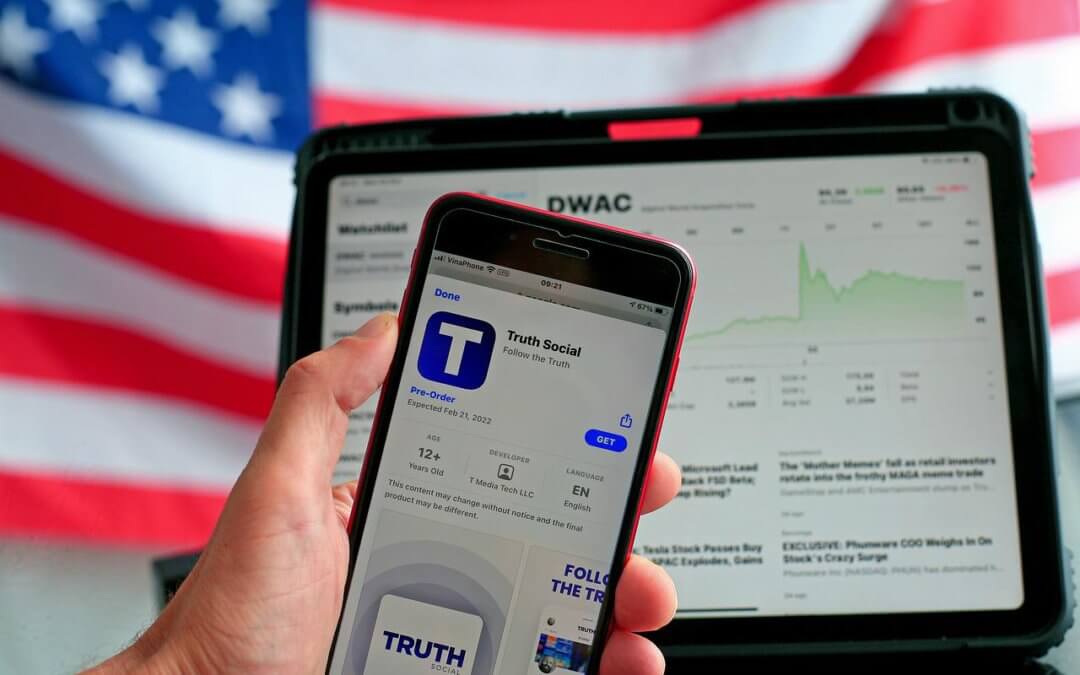
What is Truth Social, Mr. Trump’s Social Media Company?
Truth Social was launched in February 2022. More than one year after Donald Trump was banned from most social media platforms.

The Three US Stocks That Big Funds Are Buying: Booking, Alphabet & Microsoft
The three US stocks that the big fund managers are buying includes Booking Holdings Inc, Alphabet Inc and Microsoft Corp.
Rebranding of VIM logo to communicate our Values better
VIM/Value Investing Mentorship is an investment education […]

Here’s The Value Investing Strategy Warren Buffett Uses In Bear Market
In this article, I will be sharing the value investing strategy and philoso […]

STI ETF: Historical Returns, Dividends, Investment Prospects in 2022
STI ETF or Straits Times Index is the index of the top 30 companies listed in […]

GoTo IPO: Will I Invest in The New Company of Gojek and Tokopedia?
GoTo IPO date is on 11 April 2022. Analyzing their prospectus, will I invest in […]

Russia-Ukraine War: How to Keep a Level Head And Invest Long Term
In this article, I will be sharing my opinion on how to keep a level head and invest […]

I Recently Got Covid. Here’s How It Affected My Investment Outlook
In this article, I will be sharing my journey on recently having acquired COVID-19 and […]